

What is a tender application? Guide for Suppliers

A tender application is a supplier’s formal submission in response to a buyer’s tender notice, explaining how they will deliver the required goods, services, or works and on what terms. It usually includes pricing, technical or service proposals, and evidence of capability such as policies, certifications, and relevant experience. Suppliers must follow the tender instructions and evaluation criteria, submit by the deadline (often through an e-tender portal), and ensure answers are complete and compliant.
This guide covers the complete tender application process, from finding opportunities on UK government portals to writing responses that score well, and highlights common mistakes that lead to disqualification. Whether you're bidding for the first time or tightening up an existing process, it walks through each stage step by step.
The UK public sector is the largest buyer of goods and services in the country. Understanding the scale of the market helps explain why mastering the tender application process is worth the investment.
Procurement spend has risen by 20% since 2020 and is likely to continue growing.
The terminology trips people up at first. A tender is what the buyer publishes. A tender application is what the supplier sends back. The buyer sets the rules, the criteria, and the deadline. The supplier responds within those constraints.
Unlike a sales proposal or informal quote, a tender application gets scored against published criteria. Every response receives marks.
The process is designed to be transparent and competitive, which means generic submissions rarely make it past the first round.
How the tender application process works
The tender application process follows a predictable sequence. While timelines vary depending on the procedure used, the core stages remain consistent across most UK public-sector contracts.
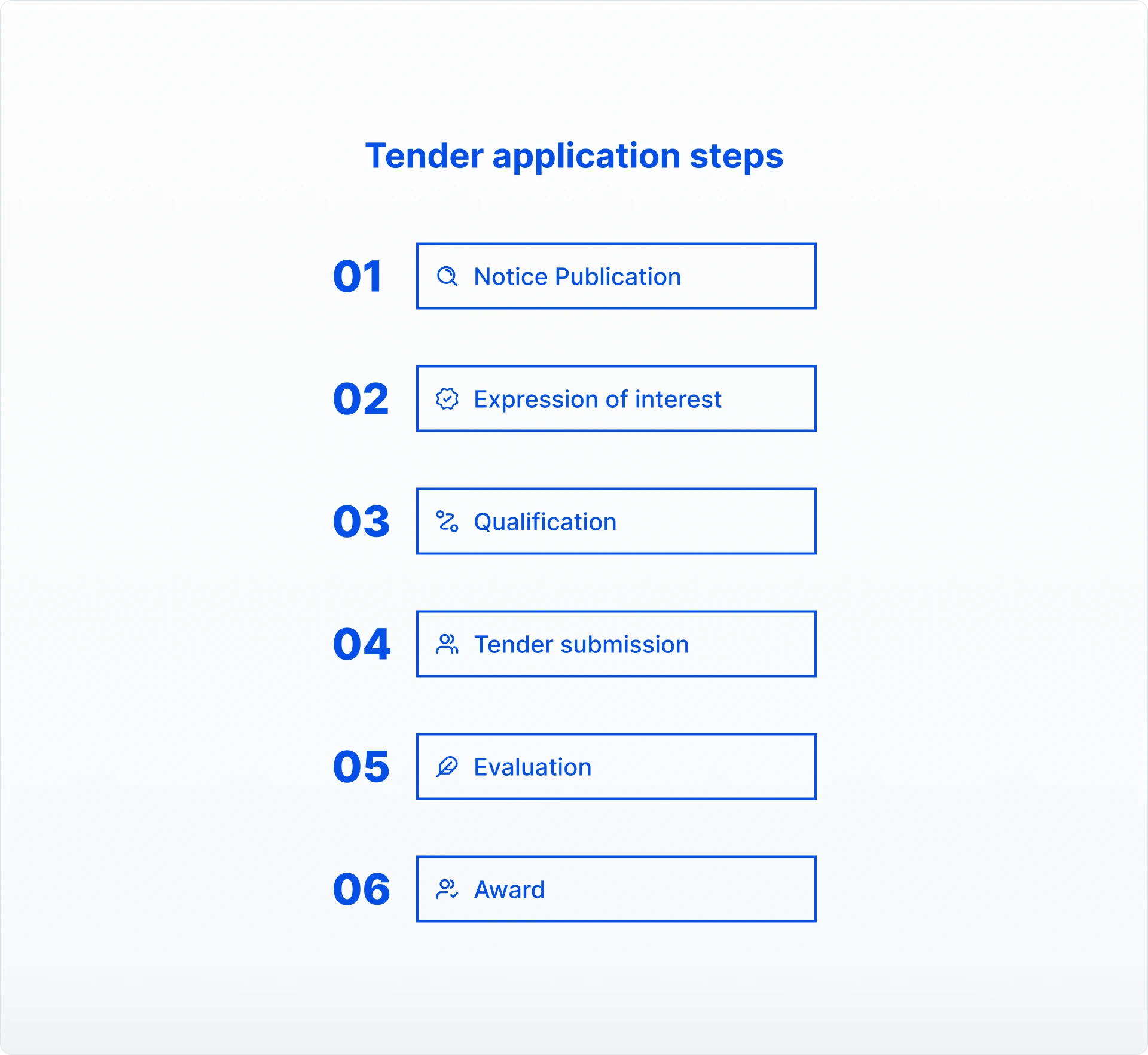
1. Notice publication
The buyer advertises the requirement on official portals, making the opportunity visible to the market. Suppliers can search using keywords, Common Procurement Vocabulary (CPV) codes, and filters for contract value and location. Not every notice will be relevant.
Filtering early by sector alignment, geographic scope, and capability fit prevents your team from chasing opportunities that were never a good match.
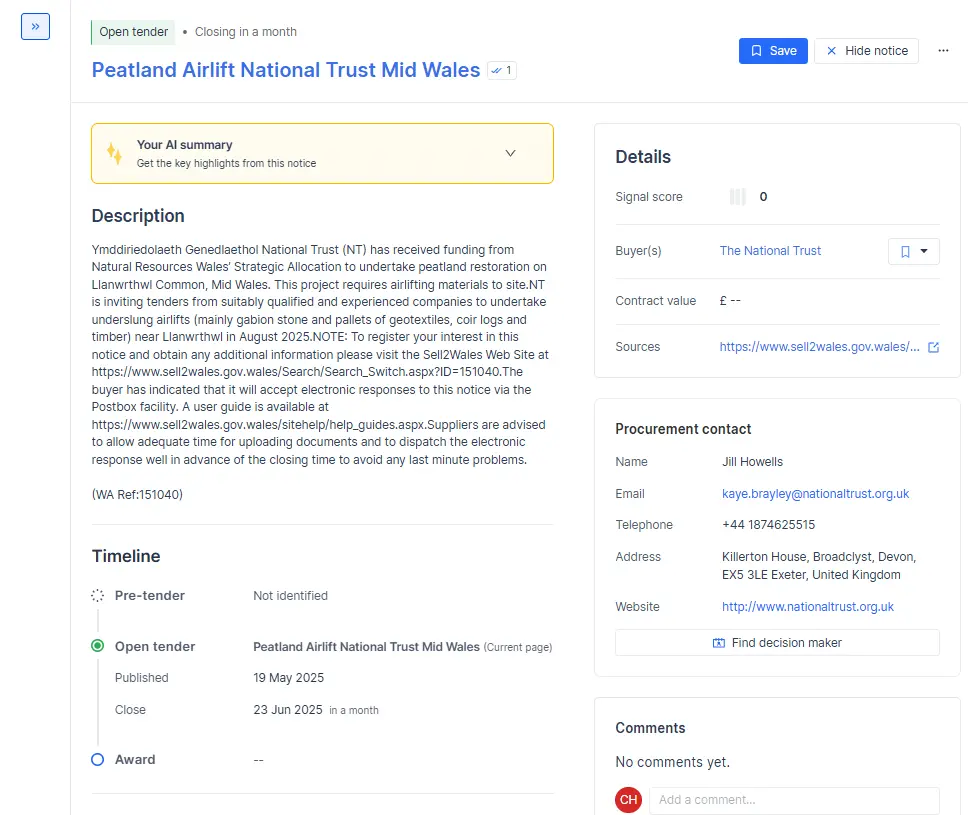
In the screenshot below from Stotles' Tender Tracker, you can see an example of a notice publication from The National Trust, seeking a vendor to airlift materials for peatland restoration.
2. Expression of interest
Suppliers register to access full tender documents and signal their intent to bid. Most portals require a formal expression of interest to access full documents.
Some buyers track interest levels to gauge market response, so registering early can signal serious intent.
For suppliers looking to win a contract, it is necessary to read the full tender documentation before committing resources.
Suppliers will check mandatory requirements, turnover thresholds, accreditations, and past experience requirements to decide whether to proceed.
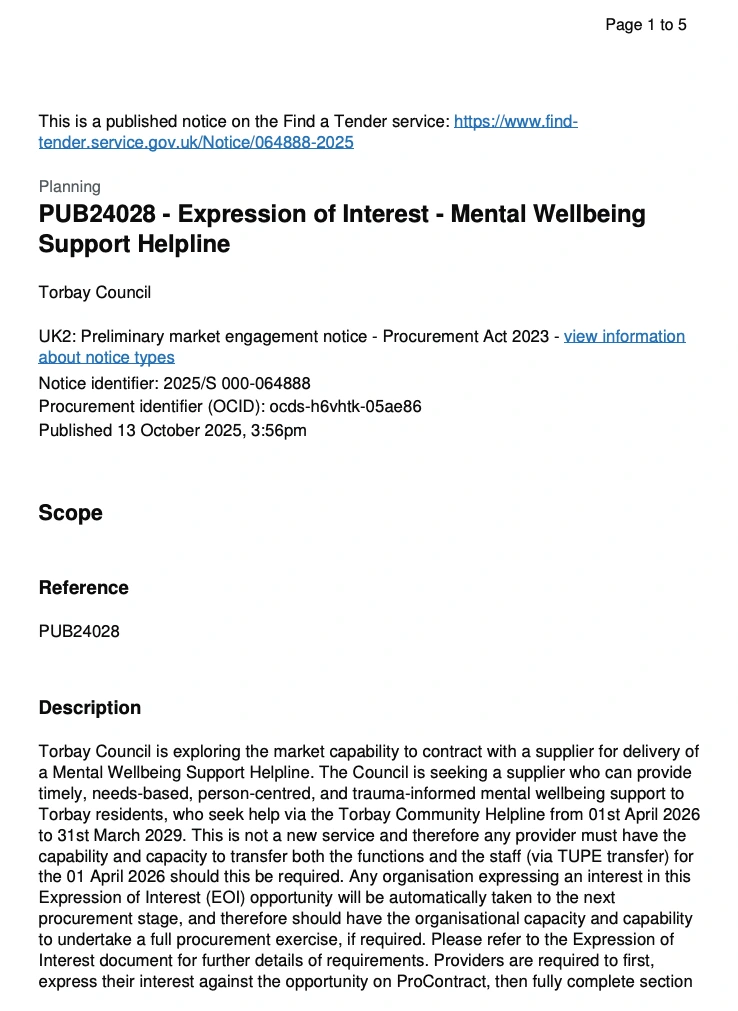
For example, Torbay Council published a preliminary market engagement notice for a Mental Wellbeing Support Helpline, with an estimated cost of £660,000.
Suppliers were asked to express interest via the ProContract e-tendering system and return a completed Expression of Interest form by the deadline, after which they would automatically progress to the next procurement stage.
3. Qualification
Buyers assess basic eligibility through a Selection Questionnaire (SQ), filtering suppliers before the main evaluation.
SQ questions typically cover areas like social value, technical capability, and financial standing, each with specific word limits and weightings.
A realistic bid/no-bid assessment at this stage prevents wasted effort. If the tender requires 3 years of NHS experience and the supplier has none, pursuing it ties up resources that would be better spent elsewhere.
SQ questions typically cover areas like social value, technical capability, and financial standing, each with specific word limits and weightings.
The screenshot below shows how these questions appear in Stotles Bid Studio, where teams can track response progress across each section.
.avif)
4. Tender submission
Qualified suppliers submit their complete response, including technical proposals and pricing.
Verify that all documents are attached and correctly named before submitting. Late submissions are automatically rejected without exception, so submit well in advance to allow for technical issues with portals.
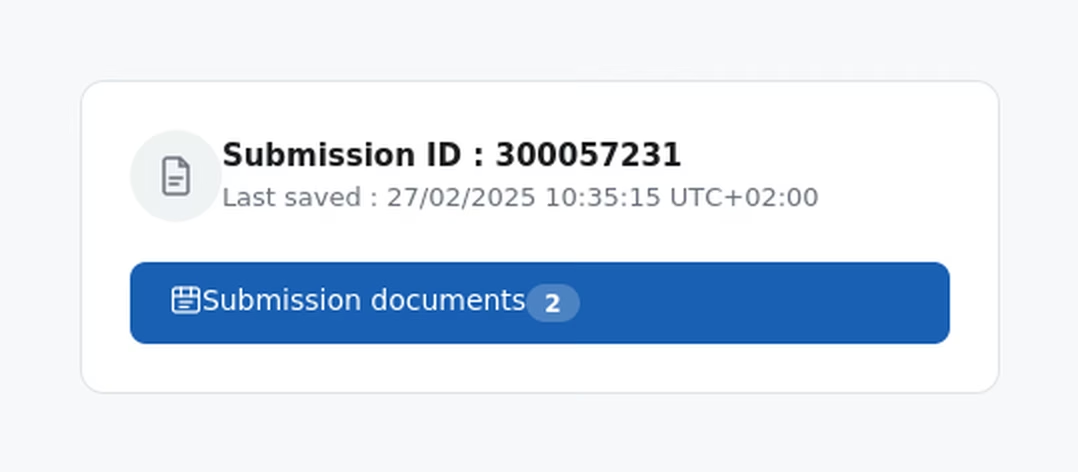
A tender portal will display a confirmation similar to the one below after submission.
5. Evaluation
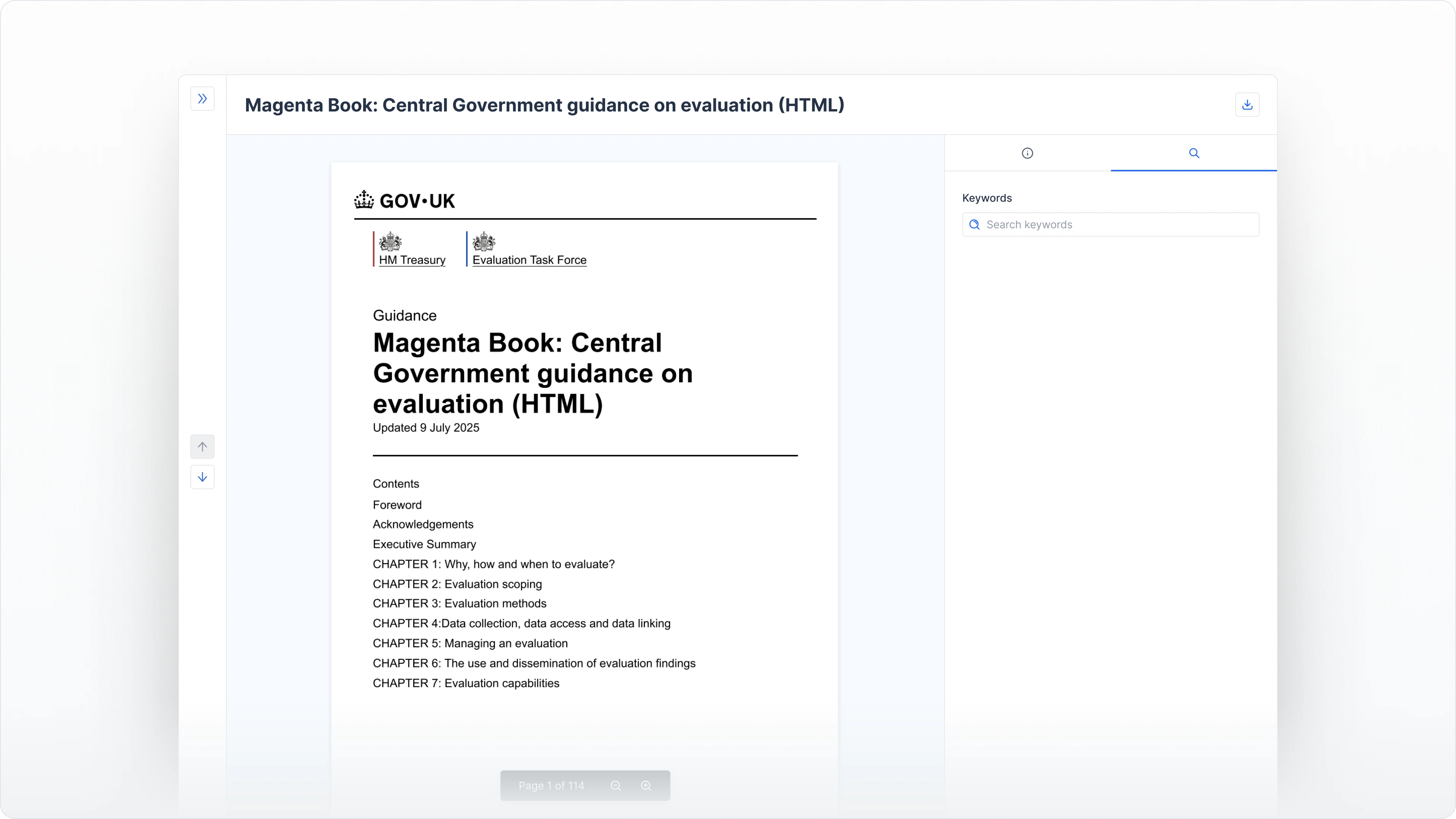
The buyer scores each response against published criteria, typically over several weeks. Below you can see a screenshot of the Government's own Magenta book, a guidebook on conducting tender evaluation.
6. Award
The winning supplier is notified, and unsuccessful bidders can request feedback.
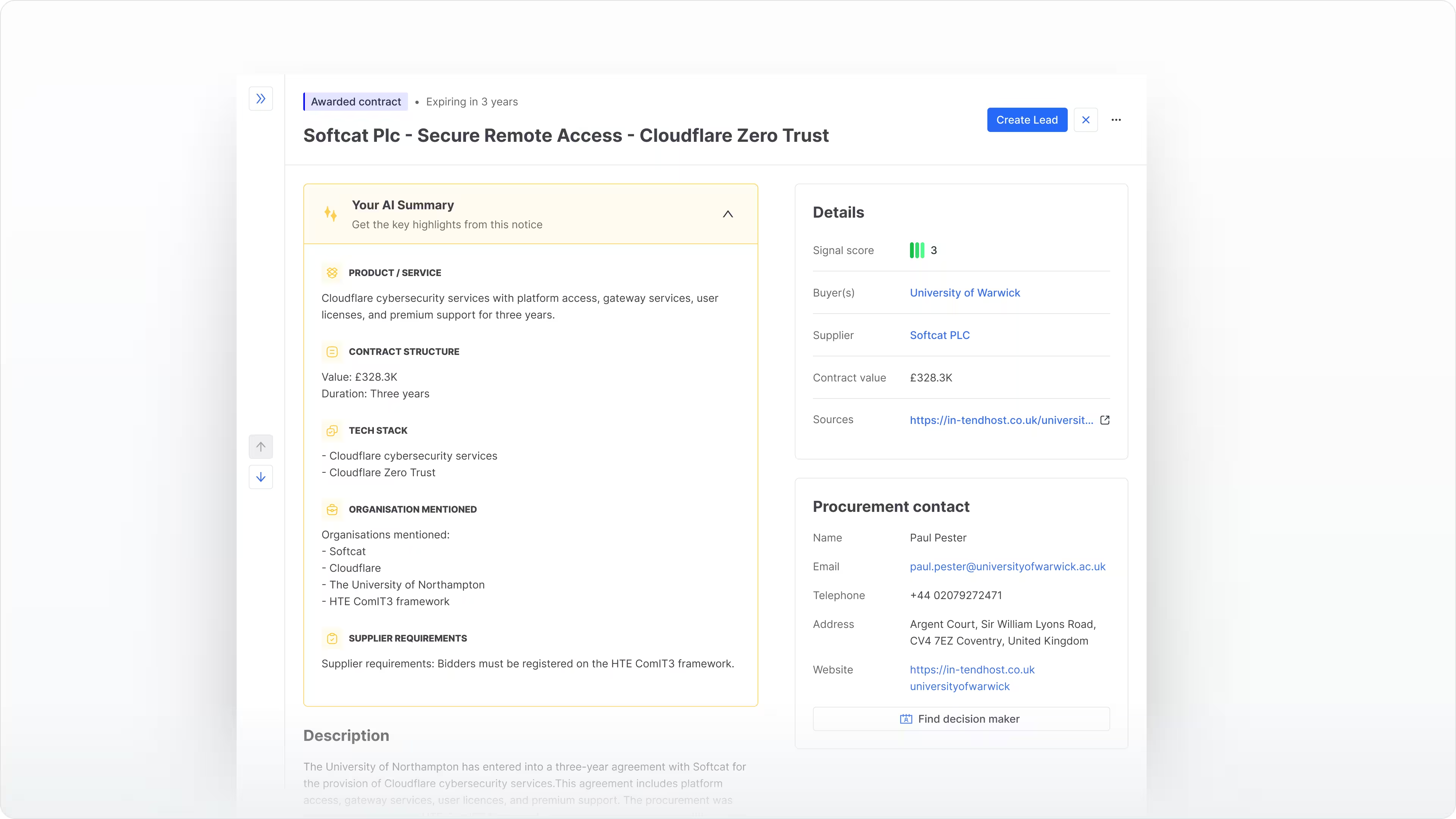
In the screenshot below, you can see an awarded contract to Softcat Plc for Secure remote access.
The whole process can take anywhere from a few weeks for straightforward call-offs to several months for complex contracts.
What happens after you submit a tender application
After submission, a standstill period begins. The buyer may ask clarification questions during evaluation. Notification of the outcome follows, and a standstill period allows unsuccessful bidders to challenge the decision before the contract is signed.
Win or lose, request a debriefing. The feedback is valuable for understanding how your response scored and where to improve next time. Stotles tracks award outcomes and surfaces this intelligence, helping suppliers understand what worked and what didn't across their bid history.
Documents required for a tender application
Incomplete documentation is one of the most common reasons for disqualification. Requirements vary by tender, but certain documents appear consistently. Much of what follows gets submitted as part of the Selection Questionnaire (SQ), so having these ready before opportunities go live saves significant time when deadlines are tight.
Company and financial documentation
Buyers typically request company registration details, audited accounts covering two to three years, insurance certificates (public liability, professional indemnity, and employer's liability), and evidence of tax compliance. Together, these demonstrate financial stability and legal standing.
Technical and capability evidence
Case studies, client references, CVs of key personnel, and methodology statements prove relevant experience. The evidence has to directly address the evaluation criteria rather than describe general capabilities. A case study about delivering IT services to a hospital, for example, carries more weight when bidding for NHS contracts than a generic project summary.
Compliance and regulatory certificates
Sector-specific certifications vary. Common requirements include ISO standards, Cyber Essentials, DBS checks where relevant, equality and diversity policies, environmental policies, and evidence of GDPR compliance. For technology suppliers, SOC 2 compliance is increasingly expected, particularly for contracts involving data handling or cloud-hosted services. Missing a mandatory certification results in automatic exclusion. Create a master folder for frequently requested documents, and keep certificates, policies, and case studies up to date so you're not scrambling when a relevant tender drops.
Common tender application mistakes to avoid
- Missing mandatory requirements: Automatic exclusion follows. Create a checklist before submission covering all required documents, certifications, and signed declarations.
- Submitting generic responses: Evaluators recognise recycled content. Tailor every response to the buyer's stated needs and priorities.
- Poor formatting and document organisation: Unclear structure makes the evaluation difficult. Follow the buyer's formatting instructions precisely.
- Failing to verify compliance before submission: Conduct a final review against all mandatory requirements, word counts, and file formats. A second pair of eyes catches err
Types of tender procedures for your next application
Not every tender follows the same route. The procedure used determines how many stages are involved, who can bid, and how long the process takes.
Open and restricted procedures are the most common routes. The key distinction is whether suppliers go through a shortlisting stage before submitting a full response. Framework call-offs and Dynamic Purchasing Systems both offer faster routes, but frameworks require prior membership, while DPS remains open to new suppliers throughout its lifetime.
How to write a winning tender application
Understand the evaluation criteria
Every tender publishes how responses will be scored, typically split between quality and price. Allocate writing effort proportionally to the weighting of each criterion.
A section worth 40% of the quality score deserves more attention than one worth 10%.
Answer every question directly
Evaluators score against specific prompts. Answer the actual question asked, not a related topic. Use the same language and structure as the question.
If the buyer asks for "three examples of similar projects," provide exactly three, not two or five.
Provide evidence for every claim
Assertions without evidence receive low scores. The STAR format (Situation, Task, Action, Result) works well for case studies. Reference named clients, specific outcomes, and quantifiable results where possible.
"Reduced processing time by 30% for a local authority" carries more weight than "improved efficiency."
Make responses easy to score
Use clear headings that mirror the tender structure. Bullet points help with key information. Evaluators read dozens of responses, so accessibility improves scores.
A well-organised response makes the evaluator's job easier, which tends to reflect positively in scoring.
Start before the tender drops
The best tender applications don't begin when the notice is published.
By the time a tender hits Find a Tender or Contracts Finder, the buyers have already shaped the specification, consulted the market, and often have a preferred approach in mind. Suppliers who engage during that shaping phase consistently outperform those who wait.
The signals are public if you know where to look.
Stotles' survey of 100+ suppliers selling into the UK public sector found that relationships, not product or pricing, are the number one barrier to winning work.
A council's cabinet meeting minutes might reference a failing waste collection contract six months before it goes to re-tender.
A Prior Information Notice from an NHS trust signals an upcoming digital transformation programme.
A contract expiry date on an existing IT managed services deal tells you exactly when the buyer will need to go back to market. Board papers, requests for information, public consultations, and spending data all reveal what buyers are planning before formal procurement begins.
Take a concrete example. An IT services supplier spots that a county council's existing network infrastructure contract expires in eight months.
They pull the original contract award to understand the incumbent, the contract value, and the scope. They read the council's digital strategy and find references to cloud migration as a priority.
They identify the IT director and head of procurement through published org charts.
Armed with that context, they request a pre-market engagement meeting, reference the council's own strategic priorities, and position their approach around the specific pain points the council has publicly flagged. When the tender eventually publishes, they've already shaped how the buyer thinks about the requirement.
Stotles Sales Studio pulls these signals into a single workspace.
Contract expiry dates, buyer spending history, published pipeline notices, organisational contacts, and award data all sit alongside live tenders, enabling suppliers to build a qualified pipeline months ahead of the competition.
Move fast when the tender goes live
Pre-engagement builds the advantage. The next step is converting it into a submission without losing momentum. The buyer intelligence gathered during pre-engagement should carry straight through to the bid team, with no duplicate research and no context lost.
Qualify the opportunity against your capabilities before committing resources. Review the evaluation criteria, mandatory requirements, and scoring weightings so your team can make a bid/no-bid decision quickly. Once you commit, assign sections to subject matter experts, track progress against the submission deadline, and keep reviews moving without defaulting to email chains and version-control chaos.
AI-assisted drafting tools can generate a strong first draft for each scored question, so bid writers spend their time tailoring rather than starting from scratch.
Stotles Bid Studio connects this workflow from qualification through to drafting, with buyer intelligence from Sales Studio flowing directly into the bid response.
Where to find tender opportunities
Stotles aggregates tenders from across all major UK portals into a single searchable feed, alongside buyer intelligence, contract expiry data, and pre-tender signals. Instead of manually monitoring dozens of sites, suppliers can search, filter, and qualify opportunities within a single workspace.
Thousands of tenders are published every month across Find a Tender and Contracts Finder alone. The chart below shows monthly publication volumes, with clear seasonal peaks, activity typically dips over summer and spikes in the new year as buyers push to meet spending targets.
UK government tender portals
If you prefer to search portals directly, here's where to look. UK law requires public sector buyers to advertise contracts above certain procurement thresholds on official portals.
Find a Tender publishes above-threshold contracts. Contracts Finder covers lower-value opportunities in England. Devolved administrations operate their own portals: Public Contracts Scotland, Sell2Wales, and eTendersNI.
Framework-specific opportunities
Frameworks like G-Cloud and Crown Commercial Service agreements publish call-offs separately from main portals. Only suppliers who already hold a place on the framework agreement can bid on call-offs.
Frameworks offer a faster route to contract because the buyer has already pre-qualified the supplier pool. However, winning a framework place requires a separate application process, often months before any call-offs appear.
For more about how Stotles can help you start your next tender application, see the video below on finding opportunities before they go to tender:


Want a custom report?