

What is procurement tender documentation?

Procurement tender documentation is the set of documents a buying organisation issues to invite bids and explain exactly what suppliers must deliver and how the buyer will evaluate offers. It usually includes the specification or statement of requirements, instructions to bidders, pricing schedules, terms and conditions, and evaluation criteria. Suppliers use it to decide whether to bid and to submit a compliant, comparable response. Tender documentation is often treated as confidential during the process, with sharing and disclosure controlled by the buyer and applicable procurement rules.
Procurement tender documentation sets out everything a supplier needs to know to bid management for public sector contracts. It includes the tender notice, technical requirements, CPV codes, pricing templates, evaluation criteria, and legal terms.
These documents ensure transparency, enforce fairness, and uphold compliance throughout the procurement process. For suppliers, understanding the documentation is critical; it’s where you identify what the public sector buyer wants, how your response will be judged, and the standards you must meet to stay eligible.
If you’re new to the process, it helps to first understand what a tender is and how opportunities are published in the UK market.
Tender documents vs tender documentation
It’s important to distinguish between two similar terms:
- Tender documents: Issued by the buyer, these set out the contract scope, rules, and evaluation process. These are the actual files published by buyers for suppliers to respond to, including the instructions, scope, pricing, and submission requirements.
- Tender documentation: Submitted by the supplier, this includes the bid response, pricing, compliance forms, and supporting materials. These include the broader universe of materials related to procurement.
A typical procurement tender pack issued by the buyer could include:
1. Opportunity and process documents
- Invitation to Tender (ITT) – Outlines the opportunity, timelines, scoring weights, and rules for submitting a compliant bid. It sets the overall direction of the procurement and explains how the buyer will evaluate responses.
- Request for Quotation (RFQ) – A lighter, price-focused alternative to an ITT, used for simpler or lower-value requirements. It still defines deadlines, deliverables, and required format.
- Instructions to Tender / Tender Notice – These documents act as the procedural guide. They clarify submission channels, document structure, word limits, portal rules, and any disqualification risks. The tender notice gives the headline summary of the opportunity.
- Specification or Scope of Work – Describes the technical or service requirements in detail. It defines outputs, deliverables, KPIs, standards, and the performance levels the buyer expects bidders to meet.
- Pricing Schedule or Template – A structured cost breakdown that ensures all tenderers and bidders price the same elements consistently. Often includes mandatory formulas or volume assumptions.
2. Selection and compliance documents
- Selection Questionnaire (SQ) – Confirms eligibility, experience, and financial standing. Buyers use it to check that bidders meet the minimum legal and professional requirements before evaluating the technical response.
- Declarations and Certificates – Anti-collusion statements, insurance evidence, accreditations, data protection assurances, or safeguarding documents. These validate compliance with statutory and contractual obligations.
- Financial and Standing Checks – Some tenders include templates for turnover ratios, credit scores, or risk assessments to ensure the supplier is financially stable enough to deliver the contract.
3. Evaluation documents
- Evaluation Guidance – Explains how written responses will be scored, including weightings, panel expectations, and what constitutes a high-quality answer.
- Evaluation Scoring Matrix – Shows the criteria and sub-criteria, making it clear which parts of the service matter most to the buyer.
4. Timetables and checklists
- Tender Timetable – A schedule outlining deadlines for clarifications, submissions, site visits, interviews, and expected award dates.
- Submission Checklist – Ensures bidders upload all required documents in the correct format before final submission.
5. Contract and legal documents
- Draft Contract or Model Terms – Allows bidders to understand the contractual obligations they will accept if successful, including liabilities, service levels, termination rights, and performance management.
- Data Processing or GDPR Appendices – Required when handling personal data. Explains security measures, responsibilities, and compliance requirements.
6. Award and outcome documents
- Intention to Award Letter – Notifies bidders of the provisional result and allows for standstill or feedback periods.
- Award Notification – Confirms the final decision and formally closes the tender process.
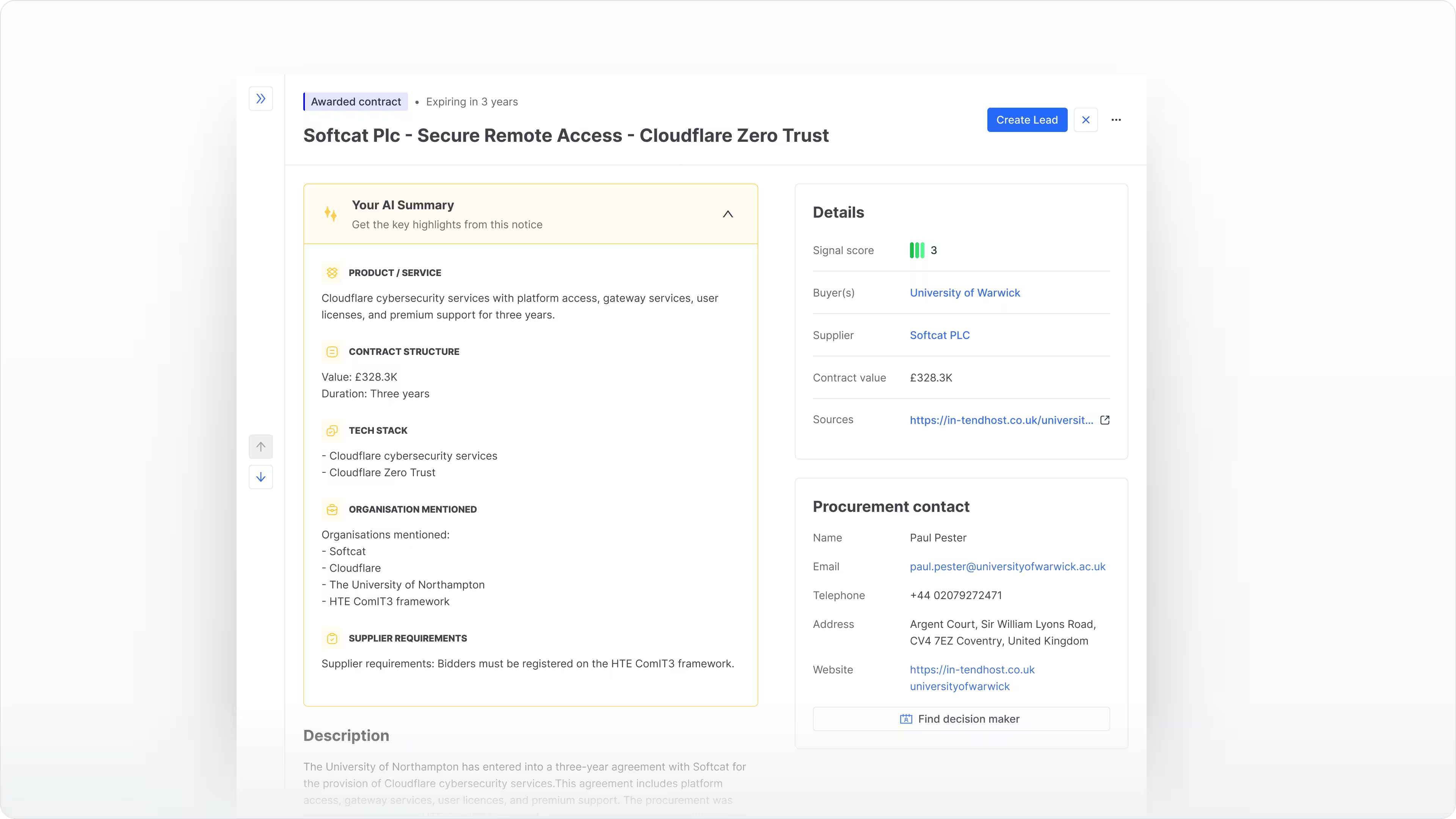
If a contract is directly awarded, the government buyer is required to publish a transparency notice. Previously, under the Public Contracts Regulations of 2015 act, buyers published VEAT notices.
Core Components and How to Read Them
Every tender opportunity comes with a detailed set of documents, but knowing how to read them strategically can be the difference between a winning bid and a disqualified one.
Invitation to Tender (ITT)
The Invitation to Tender (ITT) lays the groundwork for the entire bidding process. It typically includes the contract overview, evaluation criteria, submission instructions, and procurement timeline. This is where buyers tell you what they need, how bids will be scored, and when decisions will be made.
For example, an ITT for a digital transformation contract might state:
“Submissions will be evaluated 60% on quality, 40% on price. Suppliers must demonstrate experience delivering multi-year cloud migration projects to local government clients.”
This tells you to focus not only on pricing but on evidencing prior work. A compliant response mirrors the structure of the ITT, directly referencing each requirement in the same order. Suppliers should also cross-check the ITT with relevant government framework agreements; for instance, buyers using G-Cloud may pre-define terms you’ll need to address.
Knowing that the contract uses a pre‑approved framework, such as those managed through the Crown Commercial Service (CCS) Government Procurement Service Frameworks, will often mean you must align your terms with that framework’s standard conditions.
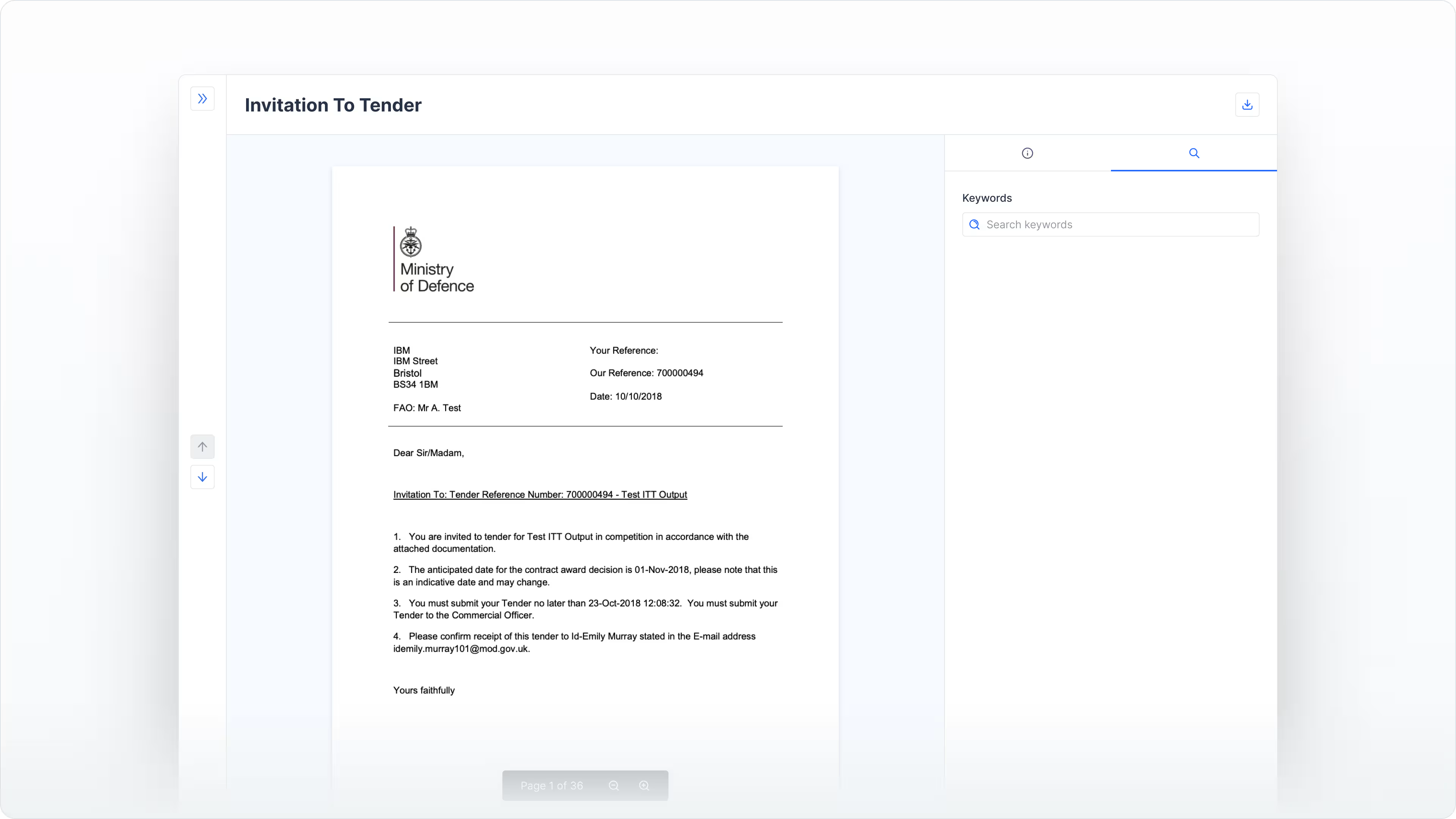
Below you can see an invitation to tender example from the Ministry of Defence invitation to tender:
Specification and Scope of Work
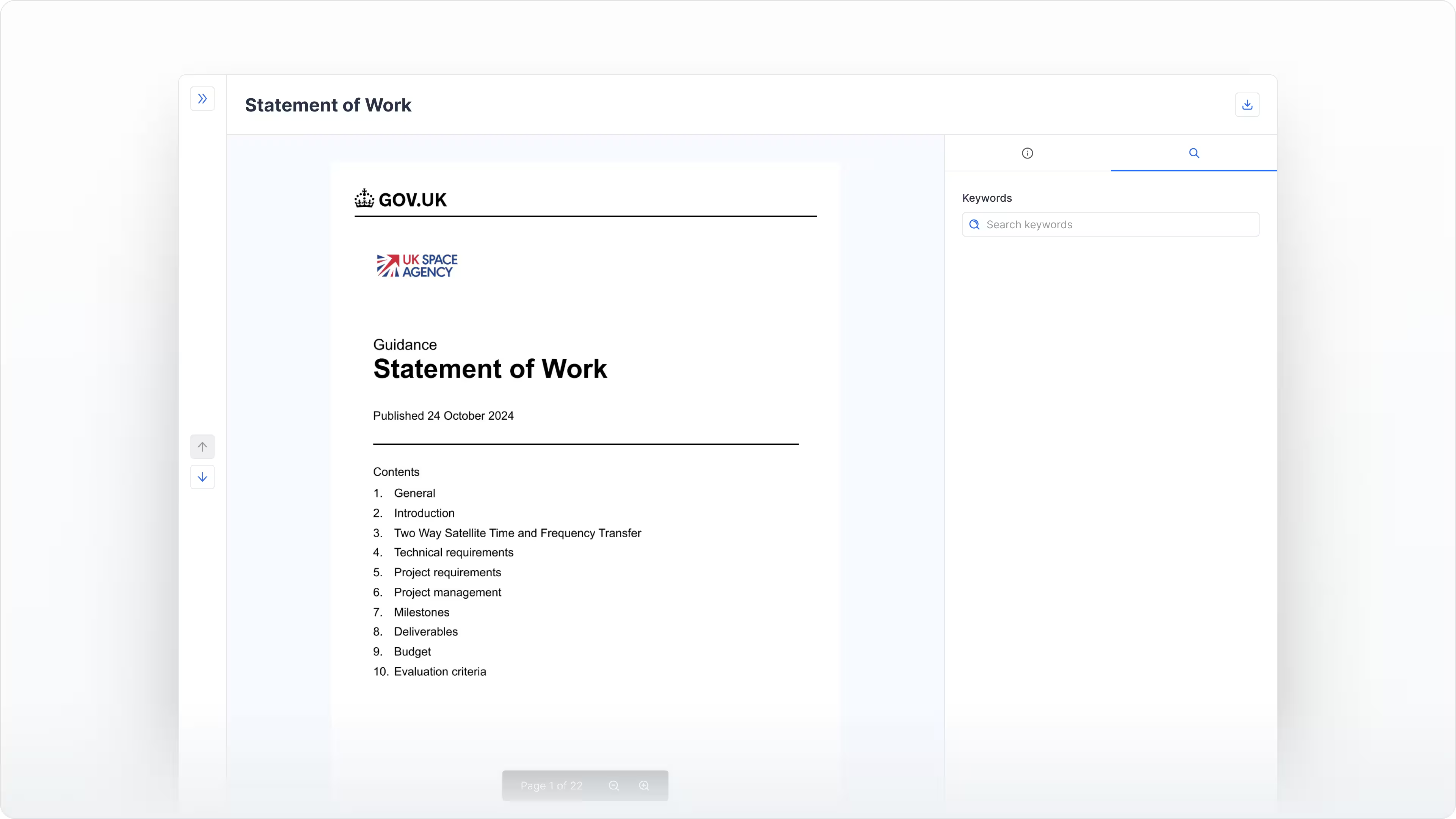
The specification outlines the exact goods or services being procured, while the scope of work defines how, when, and where delivery is expected to occur. This section requires close reading. Misinterpreting the scope leads to inaccurate pricing or unfeasible delivery promises.
Let’s say a buyer specifies:
“Monthly onsite maintenance of 150 secure printers across 12 regional offices, with response time under 4 hours.”
This has operational implications - can you staff regionally? Do you have spares in stock? Do you need to partner with a subcontractor in certain postcodes? Each technical detail influences your pricing model and fulfilment plan.
A strong supplier response will explain not just that they can deliver, but how - for example: “We maintain a stock of 40 spare printers across three depots to meet SLAs within 3 hours.” This level of detail shows alignment and risk awareness.
Pricing and Financial Documentation
Public sector pricing templates are rarely flexible. Buyers use them to compare bids directly. That means your figures need to be clear, justified, and in the exact format requested. Mistakes - like missing a subtotal, or mislabelling VAT - can lead to rejection on technical grounds.
A common layout might include tabs for:
- Unit rates
- Annual totals
- Optional extras
- Assumptions
Understanding the evaluation weighting is key. If quality counts for 70% and price 30%, a cheaper bid won't compensate for weak technical delivery. But if the ratio is 50/50, price optimisation becomes critical.
Here’s an anonymised example from an actual ITT:
“Cost breakdown must include itemised labour, infrastructure, and contingency costs. Price-only submissions will be disqualified.”
This tells you to explain your costs. Suppliers who treat this as a spreadsheet exercise miss the opportunity to tell a value story. A useful tip: write a short pricing rationale, even if not requested, to justify assumptions and demonstrate maturity.
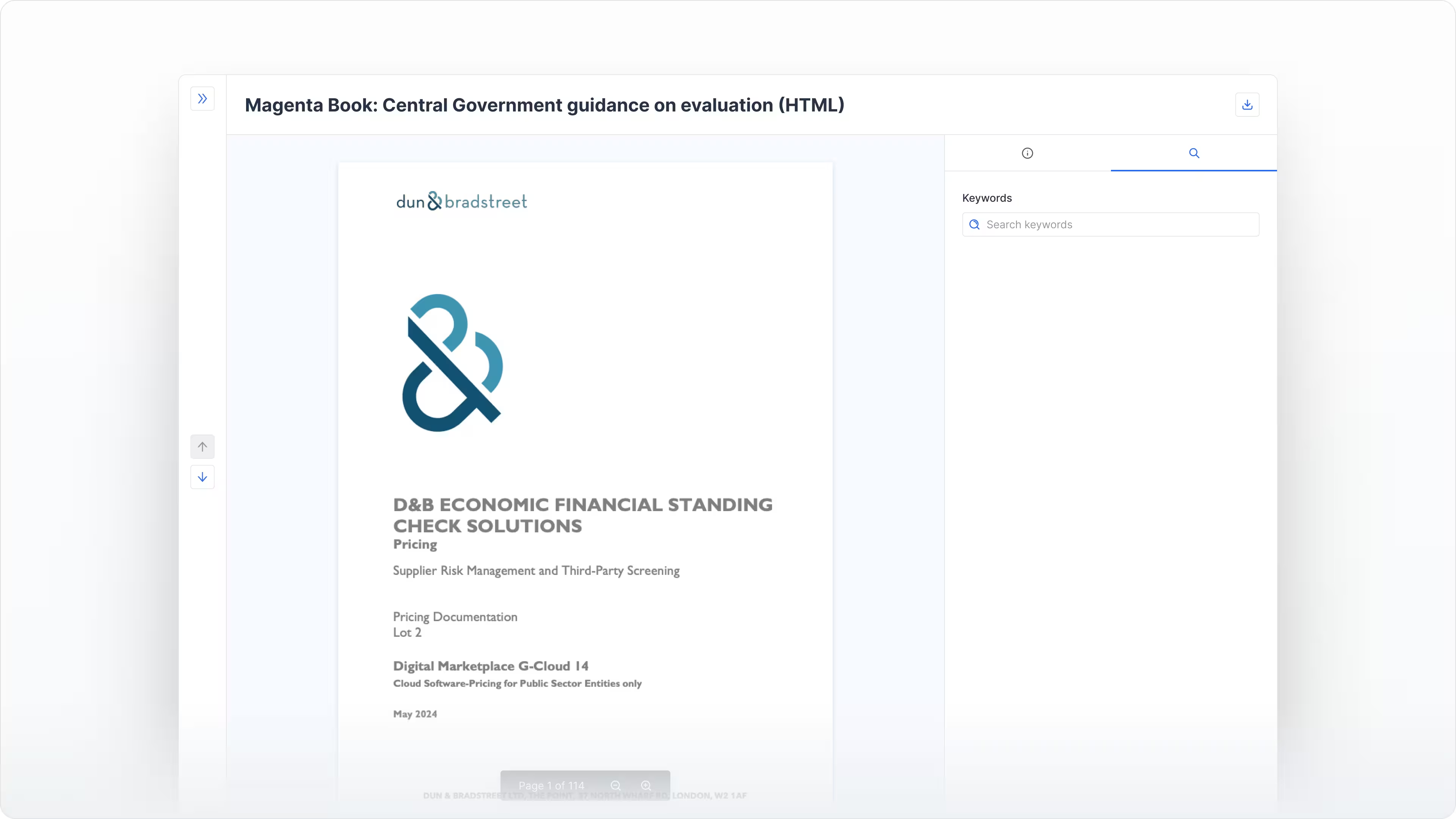
Below is an example of a supplier providing financial standing check:
Compliance, Declarations, and Confidentiality
This section is where suppliers often lose marks - or get disqualified - because of small omissions. Buyers require signed forms for eligibility, economic standing, and declarations of interest. Examples include:
- Form of Tender
- Anti-collusion certificate
- Economic and financial standing (turnover thresholds, credit checks)
- Relevant certifications (Cyber Essentials, ISO)
Now to the question: Is procurement tender documentation confidential? The short answer is, not always. In the UK, Freedom of Information (FOI) legislation may apply once contracts are awarded. That means your submitted documents could be disclosed to third parties.
To protect sensitive information, suppliers must clearly mark proprietary content as “confidential” and explain why its release would cause commercial harm. For example:
“Section 5.3 contains pricing methodology proprietary to XYZ Ltd and is submitted in confidence under Section 43 of the FOI Act.”
Mismanaging confidentiality has real consequences. Buyers may redact less than you expect - or not at all. Make sure your bid team understands how to handle FOI risks, especially if you're revealing cost models or IP.
For further guidance, recent changes introduced under the Procurement Act 2023 are reshaping disclosure practices and tender evaluation transparency.
Preparing Tender Documentation Step by Step
To submit a competitive and compliant bid, you need more than good intentions. You need structure. Understanding what is procurement tender documentation is only the first step - preparing it correctly means coordinating people, tools, and deadlines with precision.
1. Review Buyer Requirements in Detail
Before drafting anything, read all issued documents - not just the ITT, but the annexes, pricing templates, and contract terms. Highlight:
- Mandatory criteria (e.g., accreditations like ISO 9001 or turnover thresholds)
- Submission instructions (page limits, naming conventions, formats)
- Evaluation structure (e.g., 60% technical, 40% price)
Pro tip: Search for the words “must”, “required”, and “will result in disqualification” - these signal non-negotiables. One missed requirement can invalidate the entire bid.
2. Align Commercial, Legal, and Technical Inputs
A winning bid reflects cross-functional alignment. Assign clear roles:
- Commercial lead: Prepares the pricing and validates cost assumptions.
- Legal/compliance: Reviews declarations, confirms you meet terms and conditions.
- Technical lead: Maps your solution to the buyer’s scope of work.
For example, if the specification requests on-site delivery in 30 local authorities, your ops lead must confirm coverage, and your legal adviser should review the insurance limits in the draft contract.
Everything must line up - a compliant offer is one where price, service model, and risk acceptance are fully aligned.
3. Use Templates and Automation Tools
Manual processes break under pressure. UK procurement frameworks increasingly use:
- Bid libraries for case studies, team bios, and compliance forms.
- Response templates with pre-filled formatting, section headings, and boilerplate content.
- Automation tools like RFP response software or document version trackers.
These tools reduce duplication and prevent deadline-day chaos. Still, templates need reviewing: always tailor them to the buyer’s language and remove irrelevant content.
4. Plan with Checklists and Response Planners
Without project management, even good bids go sideways. Build a checklist that covers:
- Every buyer requirement
- Assigned owner and reviewer for each section
- Deadlines for draft, review, and upload
Downloadable response planners can help your team track progress and keep accountability tight across contributors.
Pro tip: Schedule your internal submission deadline 48 hours before the buyer’s deadline. That buffer can absorb last-minute formatting errors, signature issues, or unexpected clarifications.
This is general guidance. Check local procurement rules or legal counsel for requirements in your jurisdiction.
Common Mistakes to Avoid
Public buyers reject or downscore bids for issues that are easy to prevent, yet they occur frequently across UK tenders. A strong submission starts by understanding where suppliers usually slip. These mistakes weaken credibility, reduce compliance scores and, in some cases, remove a bid from consideration entirely.
Common mistakes include:
- Missing mandatory attachments such as declarations, certificates, financial accounts or signed forms, which can trigger automatic disqualification.
- Inconsistent data between sections, for example, pricing totals that do not match the breakdown or delivery commitments that contradict the service plan.
- Ignoring formatting rules, including page limits, naming conventions, font sizes or templates issued by the buyer.
- Submitting generic responses that fail to address evaluation criteria or do not mirror the structure of the scoring matrix.
- Overlooking submission instructions by uploading in the wrong file format or missing deadlines on e-procurement portals.
A well-prepared internal review process prevents these issues and strengthens compliance. Treat the buyer’s instructions as mandatory, check each document line by line and confirm that every section aligns with the evaluation criteria.
Managing Tender Documentation Efficiently
Handling procurement responses at scale requires more than folders and spreadsheets. As opportunity volumes grow, so does the complexity of managing past submissions, reusable content, and compliance materials.
Without a system in place, teams risk errors, duplication, or missed deadlines. Here’s how to manage documentation effectively:
- Use digital bid management platforms to centralise all past and current submissions, case studies, accreditations, team CVs, and pricing models. This makes it easy to find, update, and reuse high-quality content across bids.
- Establish a single source of truth - one shared location that holds your most up-to-date policies, templates, and boilerplate responses. This reduces errors caused by outdated files and ensures bid consistency.
Adopt AI-driven tools like Stotles’ Tender Tracker and Bid Studio, which automatically surface relevant tenders, map requirements to previous answers, and streamline response creation. These platforms increase speed without sacrificing compliance or quality.
Conclusion
Creating structured, compliant procurement tender documentation is essential for winning public sector contracts. Each section of your response must align with buyer requirements, meet formatting rules, and clearly demonstrate value.
Disorganised or inconsistent bids waste valuable opportunities. Platforms like Stotles’ Tender Tracker and Bid Studio help teams stay accurate, fast, and competitive.
Discover three proven strategies to win government tenders and start managing your bids with confidence and control.


Want a custom report?