


What is a framework agreement?

A framework agreement is a pre-arranged set of terms between one or more buyers and one or more suppliers that sets the rules for awarding future contracts during a defined period. It is not usually a commitment to buy a fixed volume; instead, the buyer places orders later through “call-off” contracts, either directly or via a mini-competition. For suppliers, a place on a framework can create a route to repeat work, but each call-off may still require bids and performance against the agreed terms.
Government buyers, like Crown Commercial Service, the Ministry of Defence, or other local or central body, use frameworksto make repeat purchases faster and with less admin, providing a structured routes to market.
Framework agreements support efficient and compliant procurement by replacing individual tenders with quick, structured call-offs. They also help buyers avoid legal risks by working only with pre-approved suppliers. Many government departments rely on procurement frameworks to reduce complexity, save time, and increase market confidence.
For further insights, see Stotles' guide to understand the procurement act 2023 key changes to frameworks.
How a Framework Agreement Works in Public Procurement
A framework agreement sets the legal and commercial terms for future contracts between public buyers and approved suppliers. It allows buyers to purchase goods or services without repeating a full open tender process. The framework outlines who qualifies, what can be bought, and under what terms.
Buyers then use call-offs or mini-competitions to award contracts as needed.
Key features of a framework agreement:
- Fixed duration, usually up to 4 years
- Defined scope of goods, services, or works
- No guaranteed spend required from the buyer
- Pre-approved supplier list based on initial tendering
- Call-off process allows for mini-competitions or direct awards
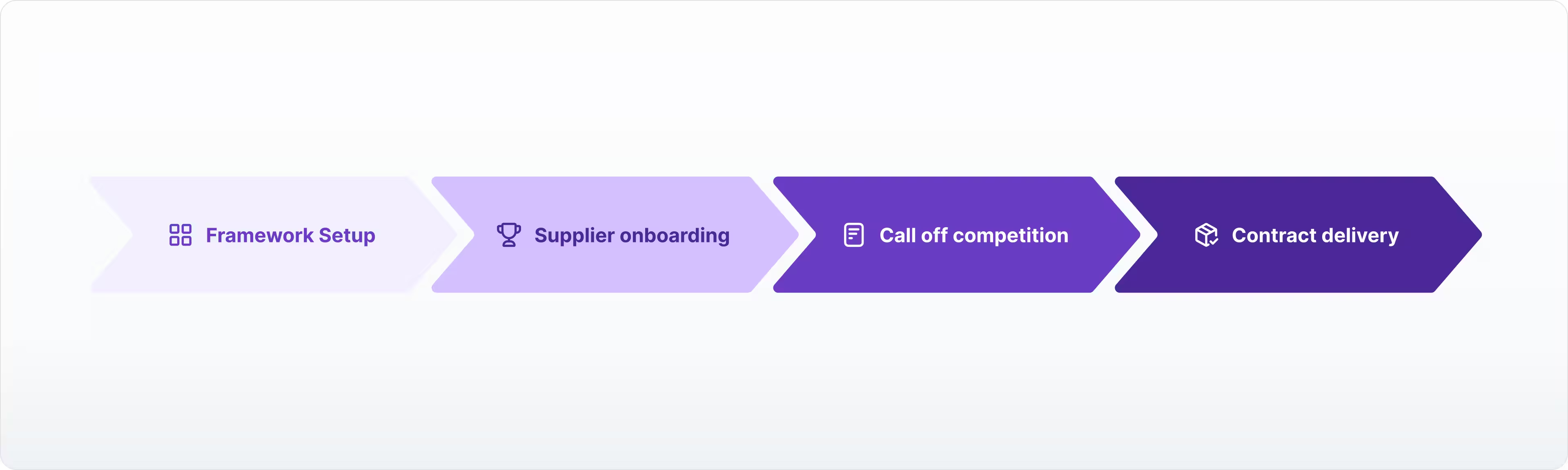
The below diagram explains the order for which a framework agreement is created and then how it delivers a contract.
What is a call-off in a framework agreement?
Call-off contracts are legally binding agreements awarded under a framework agreement. Each call-off represents a specific purchase or project, for example, supplying laptops to a school trust, and allows buyers to contract directly with a pre-approved supplier.
Instead of restarting the entire tender process, the buyer issues a call-off using terms already defined in the framework, including pricing structures, service levels, and legal obligations. Buyers may use direct awards or run mini-competitions, depending on the framework rules and internal policy.
For instance, within the G-Cloud 14 framework, a large framework for buying cloud services, the buying authority (Crown Commercial Services) might run a mini-competition to select a supplier for a service.
The authority compares responses only from bidders and tenderers listed in that framework, using the agreed evaluation process.
Compared to the full public tendering process, call-offs typically involve fewer steps and lower administrative burden. However, buyers still carry responsibility for ensuring compliance, transparency, and value for money within the call-off process.
Under the Public Contract Regulations Act of 2015, buyers were required to publish a VEAT notice and implement a 10 day response window after directly awarding a contract. Today, VEAT notices have been replaced by the transparency notice.
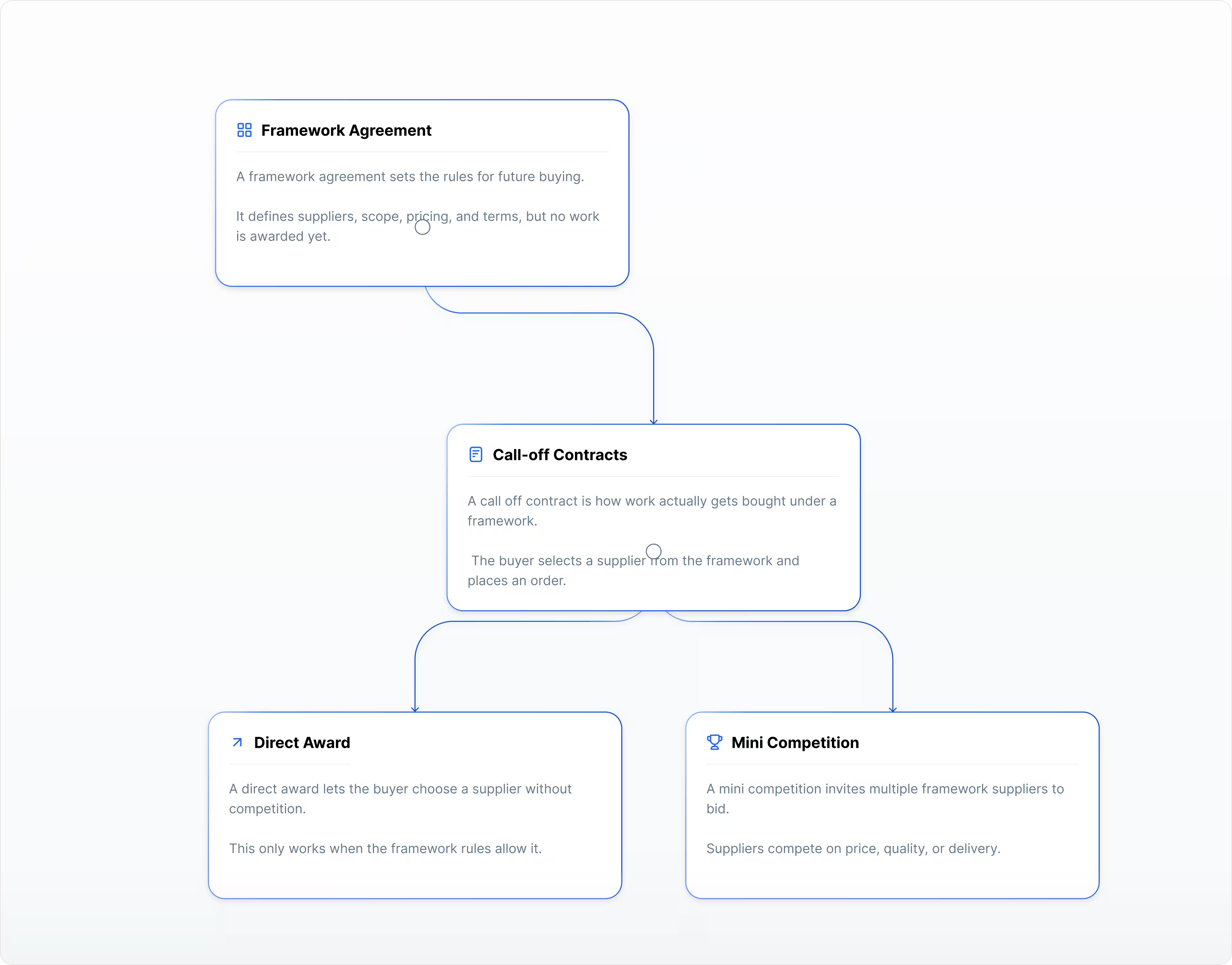
For a visual representation of a call-off contract, please see the below diagram:
To understand the nuances between call-offs and a more traditional tender process, see this Guide for Understanding What is a Tender.
Types of Framework Agreements
Public sector buyers use different models of framework agreement procurement, each suited to specific market conditions and organisational needs. Understanding the options and steps to joining the framework helps suppliers align with the right opportunities and avoid mis‑targeting. Below is a breakdown of the key types and when each comes into play.
Single‑Supplier vs Multi‑Supplier Frameworks
A single‑supplier framework awards the contract to a single supplier, who delivers all call‑offs under the agreed terms. Buyers often use this for specialist services or goods where continuity, a single point of contact, and economies of scale matter. For instance, a local authority might appoint one facilities‑management provider across all its sites for four years.
In contrast, a multi‑supplier framework allows multiple suppliers to be included in a single agreement. Buyers run mini‑competitions or direct awards among themselves when a call‑off arises. This model suits categories where demand varies or suppliers’ capabilities differ.
As one guide notes, multi‑supplier frameworks allow the buyer to "select from a qualified pool based on performance, pricing or suitability for a specific need".
Centralised vs Local Frameworks
Centralised frameworks, such as those run by Crown Commercial Service, cover multiple public sector bodies nationwide. They provide access to a large buyer base, standardised terms and high visibility.
Local frameworks, by contrast, are set up by a single contracting authority or regional consortium and focus on local needs, often with fewer suppliers and more tailored requirements. Use centralised frameworks when you seek scale and shared terms; use local frameworks when you specialise in regional or niche service delivery.
Which Model Do Government Buyers Choose?
- Choose a single‑supplier framework when the service is highly specialised, quality risk is high, or you need assured delivery across the full scope.
- Opt for a multi‑supplier framework when demand is unpredictable, you expect different supplier specialities, or you want the opportunity to innovate within each call‑off.
- Participate in centralised frameworks when you can serve a wide geographic area, deliver standardised services and maintain compliance across multiple customers.
Target local frameworks when you have a strong regional presence, niche expertise and prefer shorter contract duration with potential renewal flexibility.
Framework Models Under the Procurement Act 2023
This table shows how the new Procurement Act 2023 framework expands on traditional models, enabling greater flexibility through DPS and Dynamic Market Models.
How to Join a Framework Agreement
Public sector buyers follow a defined process when setting up a framework agreement, and suppliers must pass each stage to secure a place on it. The process is competitive and governed by public procurement regulations.
Below is a step-by-step summary of how suppliers can successfully join a framework, from early engagement to complete onboarding.
- Engage before the opportunity goes live
Attend market engagement sessions, ask clarification questions, and build visibility with the buyer. Early engagement helps you shape your strategy and understand the buyer’s challenges before the framework is published. Oftentimes, buyers will release relevant tender documents, including meeting minutes and pre-tender documents to give an indication of their requirements. - Monitor and respond to the contract notice
Find live framework opportunities on platforms like Find a Tender or Contracts Finder. Read the contract notice in detail, including CPV codes, scope, value, and submission deadlines. This is your first signal of the buyer’s requirements. - Complete the Selection Questionnaire (SQ)
Fill out the SQ to prove you meet the basic eligibility criteria. This includes financial standing, insurance, declarations, and previous experience. Incomplete or inaccurate responses can disqualify you at this early stage. - Respond to the Invitation to Tender (ITT)Submit a full bid response, including pricing, method statements, and quality responses. The ITT outlines how the buyer will score each section, so structure your submission carefully and provide evidence against each criterion.
- Undergo evaluation and await award
The buyer scores all compliant bids using the published criteria. If successful, you’ll receive a notification of award and may enter into the framework agreement immediately or after a standstill period.
Start implementation and onboarding
Sign the contract, complete onboarding steps (e.g. provide insurance certificates, agree on KPIs, upload catalogue items), and prepare to receive call-offs. Buyers may expect you to attend kick-off meetings or training before the framework goes live.
Benefits of Framework Agreements
Framework agreements give both buyers and suppliers clear operational, commercial, and compliance advantages. The points below outline the most valuable benefits in UK public procurement.
- Faster procurement: Buyers issue call-offs instead of launching full tenders, which shortens timelines and allows rapid purchasing in categories with recurring needs.
- Cost savings: Buyers leverage aggregated demand to secure stronger pricing, while suppliers reduce bid management costs by responding once rather than to repeated tenders.
- Lower risk for buyers: All suppliers pass financial, technical, and compliance checks during framework entry, which reduces the likelihood of delivery failure or non-compliance later.
- Greater transparency and compliance: Framework rules apply consistently across all call-offs, supporting adherence to UK procurement regulations and simplifying audit trails.
More predictable revenue for suppliers: Approved suppliers gain regular access to call-offs, which stabilises pipeline planning and strengthens long-term relationships with public bodies.
Challenges and Limitations
Framework agreements offer substantial advantages, but they also create constraints that suppliers must understand before investing time in joining them.
- Limited flexibility: Buyers lock in scope, terms, and commercial structures at the start, which restricts adjustments when technology, policy, or operational needs evolve.
- Restricted access for new suppliers: Once a framework closes, new entrants cannot join until it expires, which limits opportunities for SMEs or innovative suppliers that were not ready at launch.
- Risk of outdated pricing or specifications: Long framework durations can freeze pricing or technical requirements that no longer reflect current market conditions or inflationary pressures.
Internal competition and revenue uncertainty: Multi-supplier frameworks create competition at the call-off stage, so suppliers may secure a place but still struggle to win consistent work without strong performance and visibility.
Framework Agreements vs Dynamic Purchasing Systems (DPS)
While both models help public buyers procure goods and services efficiently, framework agreements and Dynamic Purchasing Systems (DPS) differ in structure, flexibility, and supplier access.
A framework agreement sets fixed terms, a closed supplier list, and a defined duration (usually up to four years). Once awarded, no new suppliers can join. Buyers select from this pre-approved list using mini-competitions or direct awards. Frameworks suit stable, high-value, or complex contracts where buyers want control and compliance from the start.
A DPS, by contrast, is fully electronic and remains open to new suppliers at any time. There’s no limit to supplier numbers, and buyers run a competition for each purchase. DPS works best for frequently purchased, low-complexity goods like office supplies or transport services, where flexibility and market access matter more than upfront control.
The Procurement Act 2023 expands this approach with dynamic markets and new procurement rules, allowing even more agile, open-access frameworks designed for rapidly changing sectors or innovative suppliers.
Real-World Examples
Several major UK organisations manage high-impact framework agreements that simplify procurement, reduce duplication, and give suppliers structured routes to market. Below are three key examples and a real use case that highlights the value of frameworks in action.
The Back Office Software 2 Framework
This framework is operated by Crown Commercial Service (CCS) Frameworks lets public bodies source SaaS solutions using standard pricing, security compliance, and contract templates - cutting months off the usual procurement timeline.
Digital Outcomes 6 (DOS6)
Offered by the Crown Commercial Service, Digital Outcomes 6 gives buyers a fast and compliant way to bring in teams or individuals who design, test, and build digital services. It supports agile delivery, user research, and bespoke development, with a strong SME supplier base and clear contract terms that protect IP and speed up mobilisation.
Technology Services 4
Also delivered by the Crown Commercial Service, Technology Services 4 provides a flexible route to buy the full range of technology services. It covers strategy, design, transition, and operational support, helping buyers source everything from service desks to major transformation programmes through a single structured agreement that supports both SMEs and larger providers.
G Cloud 14
Run by the Crown Commercial Service, G Cloud 14 offers a simple digital route to purchase cloud software, hosting, and support from pre-approved suppliers. Buyers use a searchable catalogue to shortlist and award quickly, avoiding lengthy procurements while benefiting from standard terms and clear pricing across listed services.
To understand how to prepare for a framework, this market analysis offers a How to guide for preparing for G-Cloud 14.
Below is an example of the old G-Cloud 13 framework in the Stotles platform.
.avif)
Conclusion: Why Frameworks Matter
A well-structured framework agreement streamlines public sector procurement by reducing repeat tendering, ensuring regulatory compliance, and enabling faster collaboration between buyers and pre-approved suppliers.
Frameworks support transparent, rules-based buying while giving suppliers predictable access to long-term opportunities. They help public bodies save time, cut costs, and stay audit-ready without compromising competition. As procurement evolves under the 2023 reforms, understanding frameworks is essential for staying competitive. To stand out on a framework see our guide for recommendations and insights on UK frameworks.
To search a full database of frameworks, you can use the Stotles framework module within the Stotles app.
Framework Agreement FAQs
What are framework agreements in public procurement?
Framework agreements are arrangements that allow public sector buyers to purchase goods or services from pre-approved suppliers without running a full tender each time. They set the terms for future contracts rather than committing to immediate spend.
How do framework agreements work?
A buyer sets up a framework through a competitive tender. Approved suppliers join for a fixed period. When work is required, the buyer awards a call-off either through a direct award or a mini-competition, depending on the framework rules.
Is a framework agreement legally binding?
Yes, but only in part. The framework agreement is legally binding in how buyers and suppliers must operate. A binding delivery contract is created only when a call-off is awarded.
What is the difference between a framework agreement and a contract?
A framework agreement sets the terms for future contracts but does not require the buyer to buy anything. A contract is formed only when a call-off is awarded under the framework.
Does being on a framework agreement guarantee work?
No. Being appointed to a framework does not guarantee any volume of work or spend. Suppliers still need to win call-offs or mini-competitions issued by buyers using the framework.
Can new suppliers join a framework after it starts?
No. Traditional framework agreements are closed once awarded. New suppliers cannot join until the framework expires. If ongoing access matters, buyers and suppliers may use a Dynamic Purchasing System instead.
How long do framework agreements last in the UK?
Most UK framework agreements last up to four years. Under the Procurement Act 2023, some open frameworks may last longer, provided they reopen at set points to allow new suppliers to join.
Are framework agreements only for large companies?
No. Many frameworks are structured into lots by region or service type to support SME participation. Public sector buyers increasingly design frameworks to improve access for smaller and specialist suppliers.


Want a custom report?