

What is tender writing? Explanation for suppliers

Tender writing is the process of preparing a structured bid response to a buyer’s tender (such as an Invitation to Tender) to win a contract. It involves explaining how you will deliver the requirements, providing evidence of capability, setting out pricing, and completing all mandatory forms and declarations. Good tender writing focuses on compliance, clear answers to evaluation questions, and persuasive but factual proof, because buyers score responses against published criteria and may reject non-compliant submissions.
The quality of your written submission determines whether you win or lose private or public sector contracts, regardless of how strong your actual solution is.
This guide covers the types of tender documents you will encounter, the step-by-step process for writing a response, and the common mistakes that cost qualified suppliers winnable contracts.
For the UK public sector, the opportunitity for suppliers is massive. Good tender writing is the difference between winning and losing a contract.
Tender writing vs sales proposals
Tender writing involces crafting response answers to specific questions set by the buyer, demonstratingyour capability to deliver. Generally, the practice follows strict formatting rules.This differs from a typical sales proposal.
In a tender, evaluators score what you write, not what they assume about your company. A vague answer scores poorly even if your team could deliver brilliantly in practice. The written document is often the only thing standing between you and a multi-year contract.
Why tender writing wins or loses revenue
Qualified suppliers lose winnable contracts every week because of weak tender writing. The technical capability exists, the pricing is competitive, yet the written response fails to communicate either clearly.
Public sector buyers evaluate what appears in the submission. They cannot award points for capabilities you forgot to mention or evidence you failed to include. A single lost contract can represent hundreds of thousands of pounds in revenue. Over time, a pattern of near-misses adds up to a significant drag on growth.
Types of tender documents
Different procurement documents serve different purposes. Recognising which type you are responding to shapes your entire approach.
Request for Proposal
A Request for Proposal (RFP) invites suppliers to propose a solution to a problem. The buyer outlines objectives but leaves room for innovation. Price is one factor among several, and evaluators often weight technical approach and quality heavily. RFPs are common for complex projects like IT implementations or consulting engagements.
Invitation to Tender
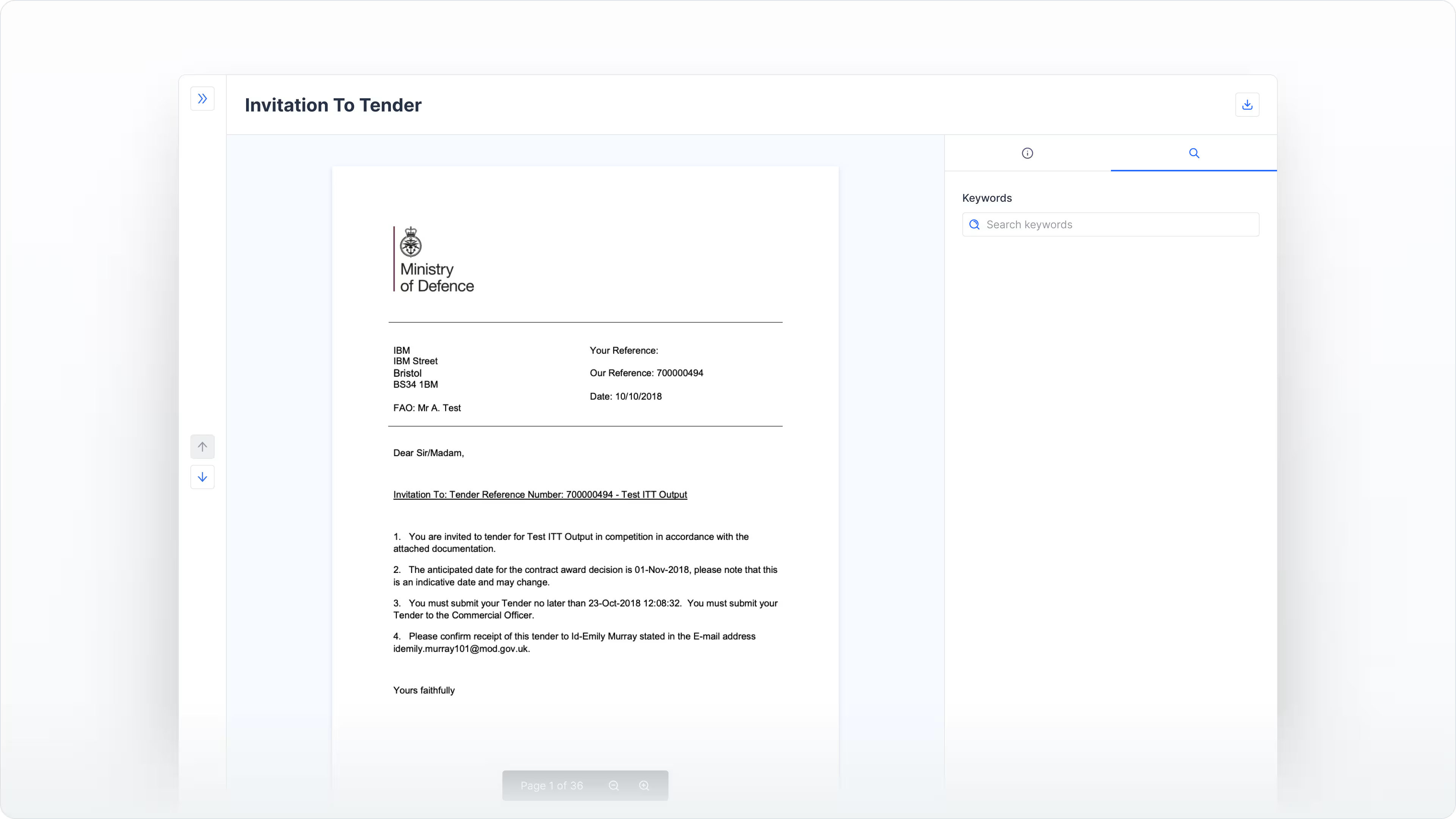
An Invitation to Tender (ITT) is more prescriptive. The buyer has already defined exactly what they want. Suppliers respond by explaining how they will deliver it and at what price. The focus is on demonstrating capability within a fixed scope. Below you can see an example ITT displayed in the Stotles platform from the Ministry of Defence.
Request for Quotation
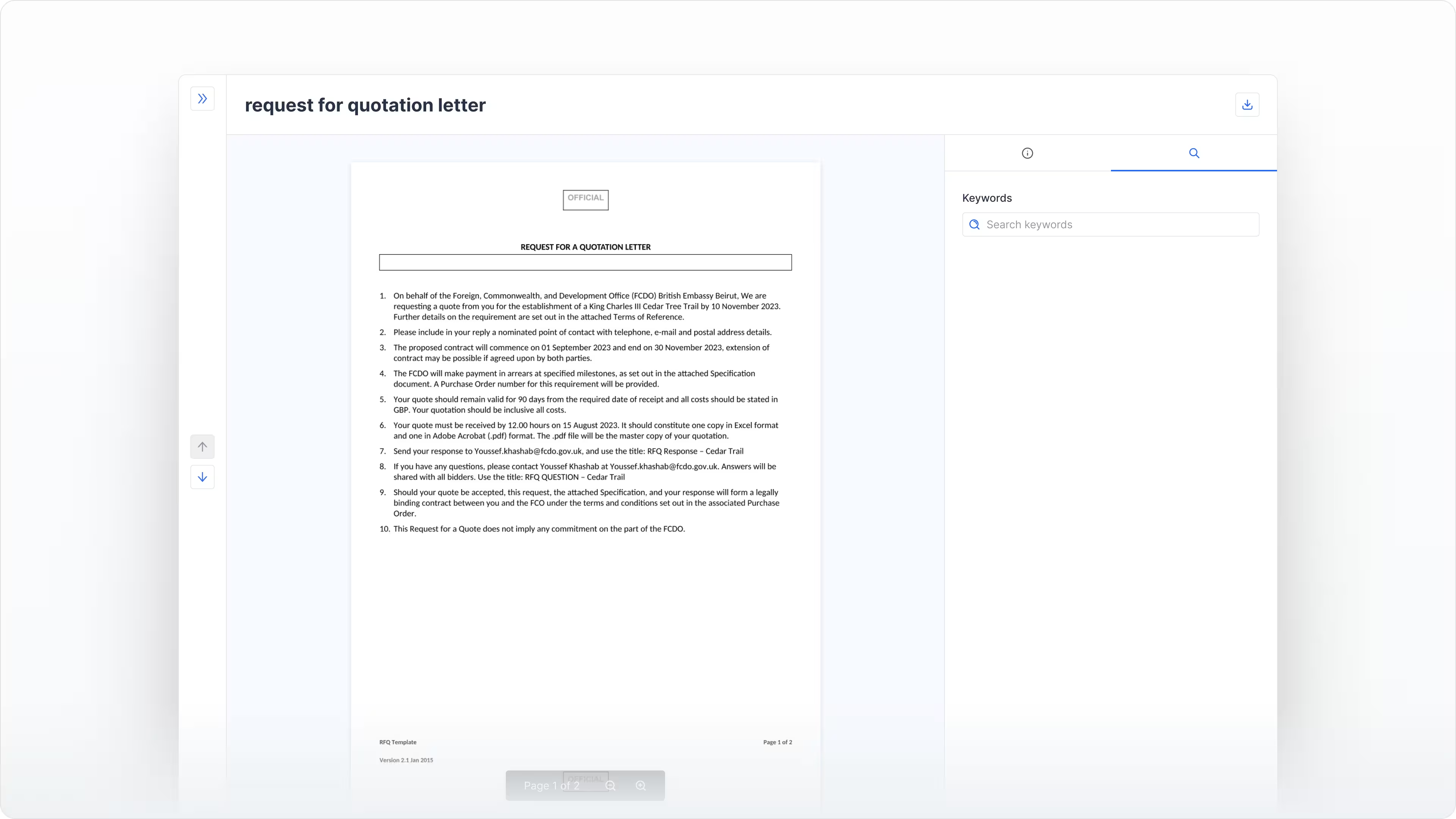
A Request for Quotation (RFQ) is used for straightforward purchases where the buyer knows precisely what they need. The decision is heavily weighted towards price. Response timelines are typically short, often just one to two weeks. In the below screenshot from the Stotles platform, you can see an example Request for Quotation letter from the Foreign, Commonwealth, and Development office.
Framework call-offs
Framework call-offs occur when a supplier is already on an approved framework agreement. The buyer invites a mini-competition or makes a direct award for a specific piece of work. Only pre-qualified suppliers can respond, and timelines are often very tight.
Key elements of a winning tender
Evaluators look for specific components in every submission. Five elements consistently separate winning bids from losing ones.
- Clear requirement mapping: Every part of your response addresses a specific requirement from the tender documents. Cross-reference your answers directly to the buyer's specification so evaluators can match your response to their scoring criteria.
- Compelling value proposition: Tailor your message to the buyer's stated priorities and challenges. Generic capability statements score lower than responses that show you understand the buyer's specific context.
- Evidence-based credibility: Claims without proof score poorly. Relevant case studies, client testimonials, certifications, and performance data demonstrate you can deliver what you promise.
- Competitive pricing: Your pricing balances being competitive enough to win with being sustainable enough to deliver. A transparent cost breakdown builds trust and justifies your price.
- Compliant structure and formatting: Follow the buyer's specified format, page limits, and word counts exactly. Non-compliance can lead to disqualification before your solution is even considered.
How to write a tender step by step
A structured process helps ensure a compliant, high-quality response. Here is a practical sequence from opportunity discovery to submission.
1. Analyse the tender documents and buyer history
Read the entire tender pack thoroughly. This includes terms and conditions, technical specifications, and evaluation criteria. At the same time, research the buyer. What have they purchased before? Who is the incumbent? What are their strategic priorities? Stotles provides buyer intelligence and contract history to inform your approach before you write a single word.
2. Make a bid or no-bid decision
Before investing significant time, formally qualify the opportunity. Consider your alignment with the core requirements, the likely competition, your realistic probability of winning, and your team's availability. Deciding not to bid on un-winnable tenders protects your resources for better-fit opportunities.
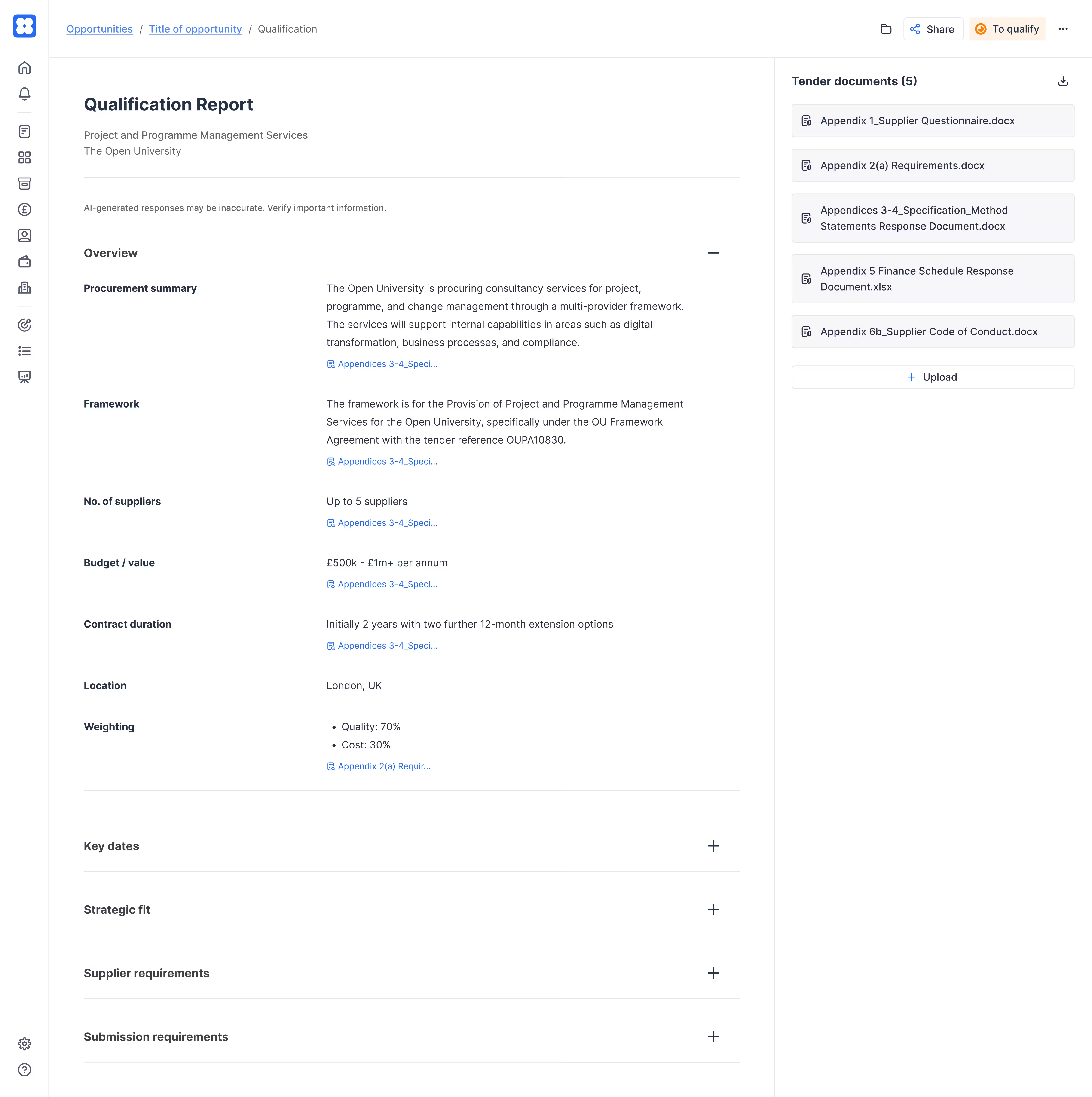
Stotles can automatically create a bid/no-bid qualification report that references your internal content library, the buyer requirements and any other relevant information. Deciding whether to bid is the first step of tender writing and a great deal of time and money rides on the viability of given bid.
3. Plan your response structure
Create a detailed outline that mirrors the tender's structure and evaluation criteria. Identify which sections carry the most weight in the scoring. If "Technical Solution" is worth 50% of the marks, it deserves the most attention and word count.
4. Assign roles and deadlines
Assign a bid manager to coordinate the response, and divide sections among subject matter experts. Establish a project timeline with internal deadlines for first drafts, reviews, and finalisation.
5. Draft each response section
Answer the specific question asked in each section. Lead with the most important point. Use the buyer's own language and terminology from the tender documents to show alignment with their perspective.
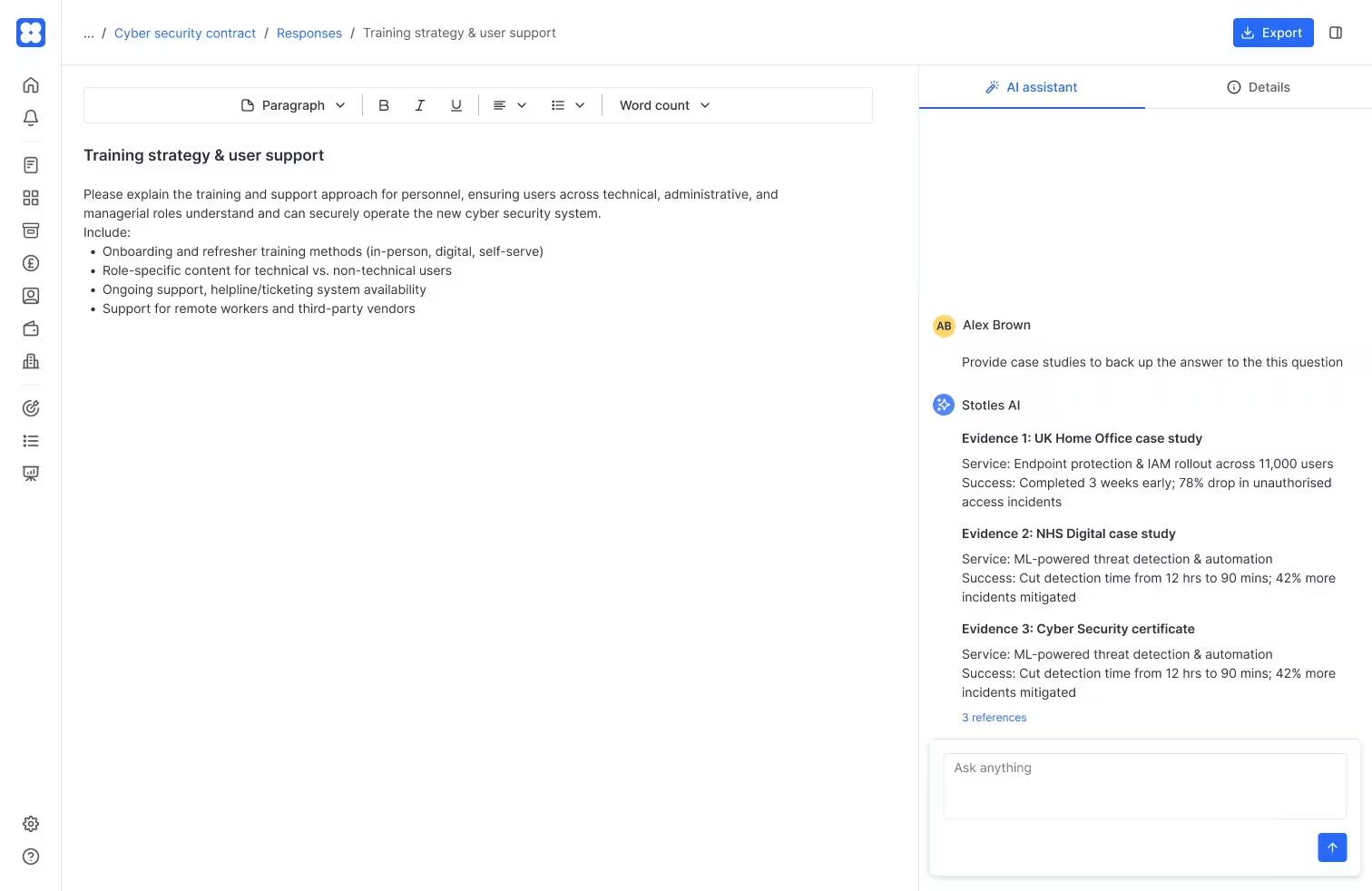
AI can help speed up bid response drafting. Using your content library, Stotles creates AI-powered analysis to craft winning responses that address all bid requirements and showcase your competitive advantages
6. Review for compliance and quality
Implement a multi-stage review. First, a compliance check ensures every requirement has been addressed. Second, a quality review assesses persuasiveness and clarity. Finally, proofread for spelling, grammar, and formatting errors.
7. Submit before the deadline
Plan to submit well before the final deadline. This allows a buffer for technical issues with the procurement portal. Late submissions are almost always rejected without review, regardless of the reason.
Tender writing tips for higher win rates
Beyond following the core steps, a few practices consistently improve the quality of written tenders.
Start with the evaluation criteria
Reverse-engineer your response by focusing on how it will be scored. Allocate the most time and word count to the highest-weighted sections.
Answer the specific question asked
Avoid pasting generic marketing text. Read each question carefully and provide a direct, relevant answer. Concise and on-point beats comprehensive but irrelevant.
Use evidence over claims
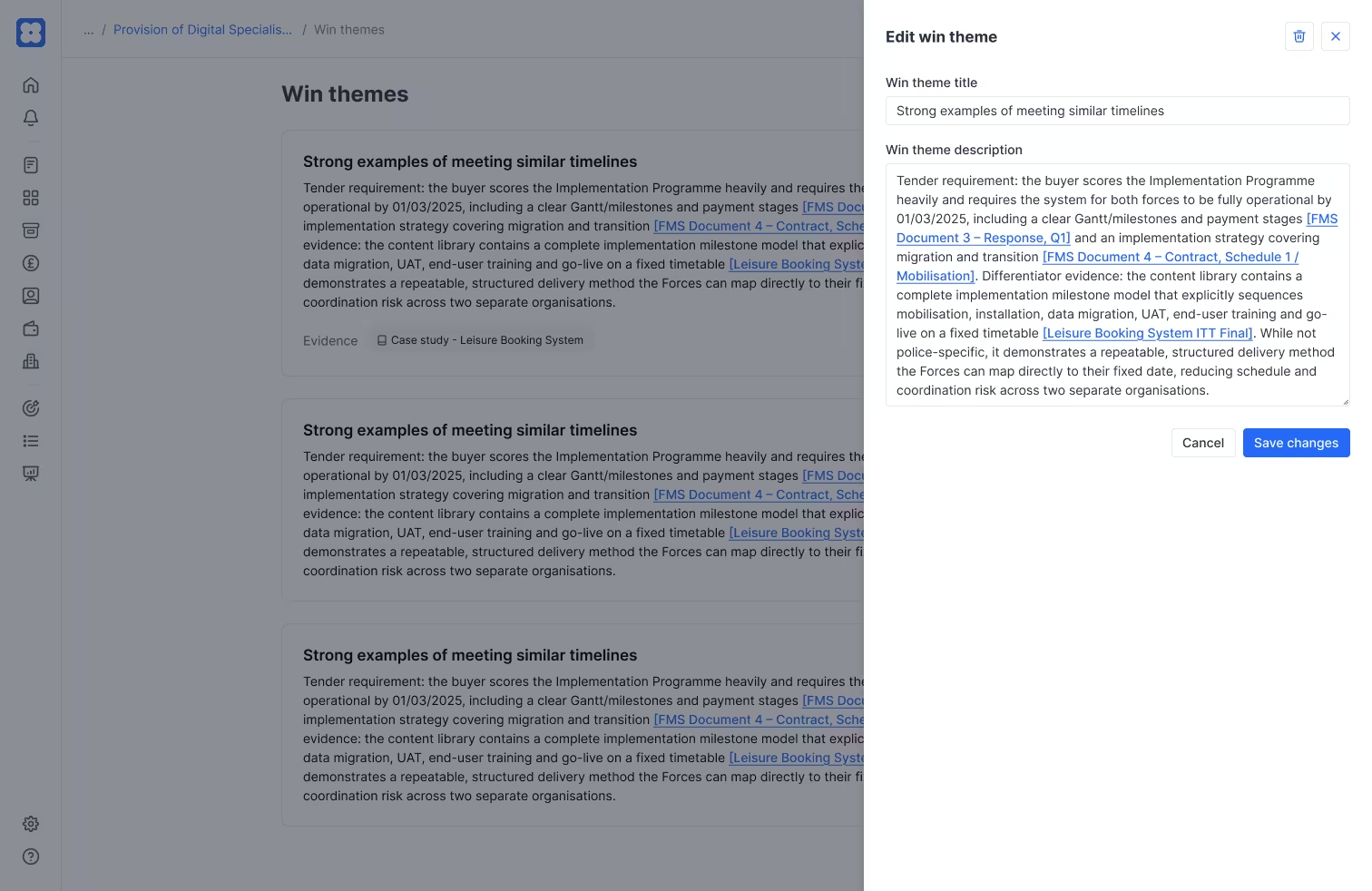
"We delivered a similar project for Organisation Y, achieving a 15% cost saving" is stronger than "we are an experienced provider." Evaluators want proof, not promises. Stotles can help you identify win themes that are differentiators in your bid to win a given tender:
Write for skim readers
Evaluators read many submissions. Use clear headings, short paragraphs, and bold text to highlight key points. A well-structured document is easier to score.
Build a reusable content library
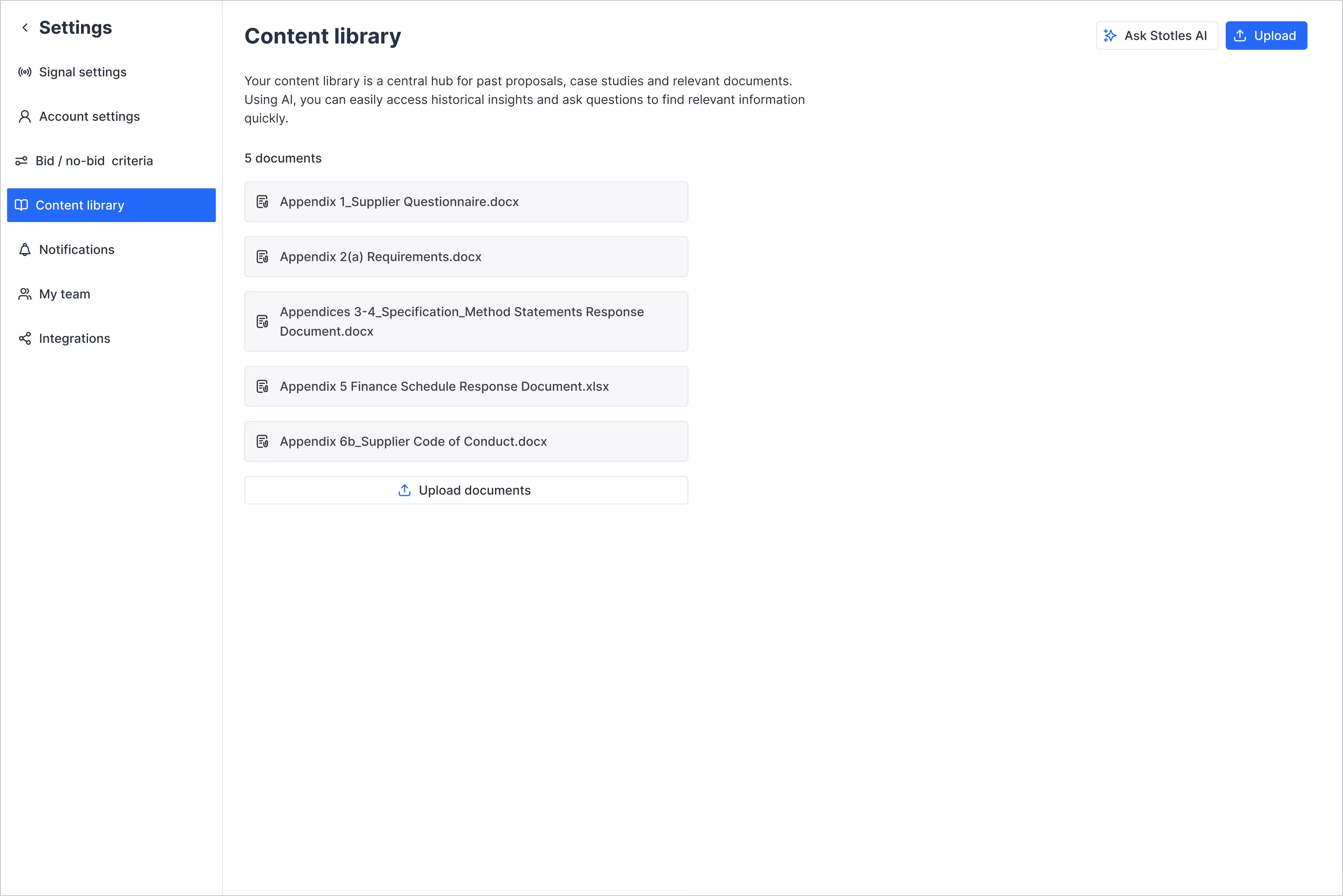
Maintain pre-approved content including company information, policies, staff CVs, and case studies. This reduces time pressure and allows focus on tailoring each response. Stotles has a dedicated space for your content library, where you can upload past proposals, case studies, and other relevant documents. Updating and growing a the content library allows the Stotles AI to drive more accurate bid/no-bid qualification and better AI-responses to auto-draft bid responses.
Common tender writing mistakes to avoid
Many qualified suppliers lose winnable contracts through avoidable errors.
Missing mandatory requirements can lead to automatic disqualification or a zero score for that section. Writing generic responses without tailoring to the specific buyer makes your bid seem irrelevant. Poor time management leads to rushed final sections and inadequate reviews.
Weak or missing evidence results in low scores. Inconsistent formatting and tone from multiple contributors appears unprofessional. Finding tenders too late leaves no time for a quality response or early buyer engagement. Stotles tracks contract expiries and buyer signals to surface opportunities months before tender publication.
Tools and platforms for tender writing
Technology supports the tender writing process from discovery to submission.
Tender discovery and tracking platforms aggregate opportunities from hundreds of portals into a single, searchable feed. Stotles also provides buyer intelligence, incumbent supplier details, and contract award history to give your bid strategic context.
Document collaboration software such as Google Docs or Microsoft SharePoint enables multiple contributors to work on the same response with version control and commenting.
AI-powered bid writing tools can assist with generating first drafts and checking compliance. These work best when guided by human experts and tailored with your organisation's knowledge.
Content and knowledge management systems act as a central repository for reusable bid content, making the creation process faster and more consistent.
How to align your response with evaluation criteria
The single most important factor in winning a tender is aligning your response directly with the buyer's evaluation criteria. Buyers publish how they will score responses, typically applying the most economically advantageous tender (MEAT) principle. Your entire submission benefits from being structured to make it easy for them to award you maximum points.
Weight your effort and word count towards the sections with the highest value. Use the buyer's own language throughout your response. Clear signposting, such as headings that match the criteria, helps evaluators find answers quickly.
UK public sector tender writing requirements
Bidding for UK government contracts involves specific compliance rules.
The Procurement Act 2023 introduces new transparency requirements, competitive procedures, and rules around assessment criteria. Suppliers bidding on new procurements will encounter these changes.
The Procurement Act 2023 fundamentally changed where and how tenders are published. Monthly publications on Find a Tender peaked at approximately 2,200 in February 2025, then fell sharply as the new regime took effect, a shift every tender writer working in the public sector needs to understand. (Source: Stotles)
The Public Contracts Regulations 2015 still apply to many live contracts and frameworks initiated before the new Act takes full effect.
Social value requirements are increasingly weighted in UK public sector tenders. Common themes include environmental impact, local employment, apprenticeships, and SME engagement.
How to measure tender writing performance
Tracking key metrics reveals the effectiveness of your bid team and approach over time.
Win rate and conversion metrics compare bids submitted versus contracts won. Segment by contract value or sector to identify where you perform best.
Time and cost per bid measures the resource investment required and helps calculate return on investment for bidding activities.
Feedback analysis involves requesting and reviewing feedback from buyers on unsuccessful bids. Systematic review identifies recurring weaknesses and informs training and content improvements.
Build a scalable tender bid writing process
Consistent success requires moving from reactive, ad-hoc bidding to a systematic capability. The core elements include clear bid/no-bid criteria, defined roles and responsibilities, a well-maintained content library, structured review protocols, and post-submission analysis for continuous improvement.
Early pipeline visibility gives your bid team the time needed for high-quality, tailored responses. Stotles combines early-stage tender tracking with buyer intelligence and workflow tools to support a scalable tender bid writing process.


Want a custom report?