CPV (Common Procurement Vocabulary) codes are a standardised classification system for labelling public procurement notices, so suppliers can find relevant tenders. The system has 9,454 eight-digit codes (plus a check digit) in a five-level hierarchy, and UK and EU buyers have had to use them on published tenders and awards since 2006.
Structure: the first two digits set the division (e.g. 45000000 construction work), and each further digit narrows it down, e.g. 45213320 for railway transport buildings used in the HS2 stations programme.
Multiple codes: one tender can carry many codes. The Euston Station Over Site Development contract has 33 across construction, real estate and architectural services.
Rules: CPV requirements carried over from PCR 2015 into the Procurement Act 2023.
Limitations: buyers often misclassify notices or use only broad codes. For example, a jet fuel storage pipeline notice was tagged only as "construction work".
Because CPV searches alone miss relevant tenders, suppliers should combine CPV codes with keyword search and relevance scoring across all portals.
Common Procurement Vocabulary codes
The Common Procurement Vocabulary is a standardised, hierarchical classification system designed to label public procurement tenders/contracts so bidders can search tenders and identify relevant notices.
The system consists of 9,454 codes structured in a five-level tree hierarchy. Each 8-digit code has a description of the type of works, supplies or services that are featured in the contract.
Originally, conceived in the EU, the system is used for categorising government contracts across Europe and the United Kingdom.
Since 2006, every published EU or UK government tender or awarded contract is required to label the good or service being procured with a Common Procurement Vocabulary code (CPV code).
In the UK, Common Procurement Vocabulary codes help classify over £400 billion of public sector spending each year including: IT services, construction projects, medical equipment, or professional consulting.
Indeed, CPV codes sit at the heart of how government contracts are categorised and found.
To search, find, or browse individual codes or categories, head over to the Stotles CPV Code Finder.
Keep reading to learn more about how the system works.
How Common Procurement Vocabulary codes work
Every code follows a clear structure that makes it easier for buyers and suppliers to describe, find, and compare public sector opportunities.
Each CPV code is made up of up to 8 digits, built on two layers, grouped to create a hierarchy:
Main category (first 2 digits): the core classification system used in procurement notices. It’s organised as a tree structure of up to eight digits, with each level narrowing the description of goods, works, or services. Broad sector (e.g. Construction, IT Services, Medical Equipment).
Subcategories (next 6 digits): optional attributes ( numbers) that add extra detail about the nature, use, or qualities of the item or service. Subcategories create a more detailed descriptions that narrow down the specific goods or services.
The Common Procurement Vocabulary code structure
Each CPV code is a numeric sequence made up of eight digits plus a check digit (shown after a hyphen). The numbers form a hierarchy, moving from the broadest sector down to very specific products or services.
The more digits you include, the more specific the classification. This makes it easier for buyers to describe exactly what they need and for suppliers to quickly find relevant tenders:
First two digits define the broad sector. Construction work covers all forms of construction activity, from residential and commercial buildings through to highways, bridges, and utility installations.
Group
45200000-9
Third digit splits the division into more specific groups. Works for complete or part construction and civil engineering work includes new-build projects, major infrastructure, and large-scale civil engineering.
Class
45210000-2
Fourth digit provides further detail. Construction work for buildings narrows to enclosed building structures, excluding open civil engineering works like roads, pipelines, or tunnels.
Category
45213000-3
Fifth digit narrows within the class. Construction work for buildings relating to transport covers purpose-built transport buildings such as stations, bus terminals, airport buildings, and freight depots.
Sub-category
45213300-8
Sixth digit adds specificity. Buildings associated with transport distinguishes between road transport facilities (e.g. bus stations, 45213310) and railway transport facilities (e.g. station buildings, 45213320).
Sub-category
45213320-2
Seventh and eighth digits for fine-grained specificity. Construction work for buildings relating to railway transport targets station buildings, signal boxes, and maintenance depots. This is the code used in tenders like the HS2 Phase One Stations programme.
Can a government tender have multiple CPV codes?
Yes. Any government tender, framework, or dynamic purchasing system can have one or many associated CPV codes. Since the CPV classification system is essentially tagging or labelling tenders, it often makes sense to add multiple codes, especially for complex projects. A single tender could have dozens of associated CPV codes.
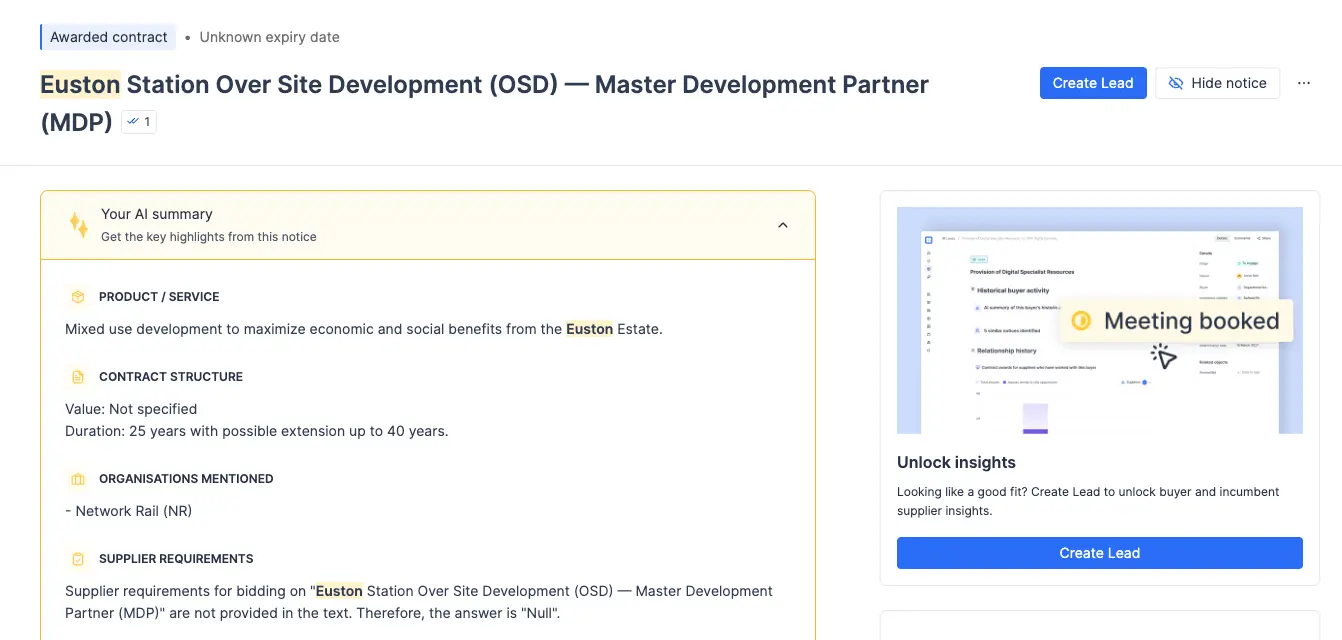
For example, let's look at the awarded contract below titled "Euston Station Over Site Development (OSD) - Master Development Partner (MDP)."
This is a 25-year contract from Network Rail for mixed-use development to maximise economic and social benefits from the Euston Estate, with a possible extension up to 40 years.
Euston Station Awarded Contract
This contract has 33 associated CPV codes spanning three different divisions because the scope of work crosses construction, real estate development, and architectural and engineering services. The table below groups those codes at the division and group level to show the breadth of expertise required.
Division
Group
What it covers in this contract
45000000 Construction work
45200000 Complete or part construction
Major civil engineering and building works across the Euston Estate, including new-build structures and large-scale infrastructure.
45210000 Building construction work
Construction of enclosed buildings including multi-dwelling residential blocks, flats, multi-functional buildings, office blocks, and commercial premises above and around the station.
45213000 Buildings relating to transport
Purpose-built transport buildings including railway station facilities, multi-modal transport interchange structures, and associated commercial space.
45215000 Residential homes
Construction of residential care or supported living accommodation as part of the mixed-use development.
70000000 Real estate services
70110000 Development services
Development of both residential and non-residential real estate across the Euston Estate, including planning, financing, and delivery of new property.
70120000 Buying and selling
Sale and disposal of developed real estate assets as the project matures over its 25-year term.
71000000 Architectural and related services
71200000 Architectural services
Advisory, design, and building architecture services for the over-site development, including outdoor areas and public realm.
71240000 Architecture, engineering & planning
Integrated architectural, engineering, and planning services to coordinate across the mixed-use programme.
71300000 Engineering services
Consultative engineering and construction services covering structural, mechanical, and civil engineering disciplines.
71400000 Urban planning & landscape
Urban planning and landscape architectural services for public spaces, streetscapes, and green infrastructure around the development.
71500000 Construction-related services
Supporting construction services such as site supervision, quantity surveying, and project management across the programme.
How CPV codes fit into UK public procurement rules
CPV codes are deeply embedded in the legal framework governing public sector procurement in the UK. Every regulated procurement process requires buyers to classify their contract notices using CPV codes, which is why these codes appear in nearly every live tender.
Previously, the Public Contracts Regulations 2015 would have delineated requirements for CPV codes. Today, PCR 15 has been replaced by the Procurement Act of 2023, which has similar CPV related requirements.
In short, CPV codes are a key filtration mechanism for finding both open tenders and framework agreements. New models like Dynamic Purchasing Systems (DPS) and Dynamic Markets introduce more flexible ways for suppliers to join approved lists and compete for work. However, buyers still rely on CPV codes to organise these categories and ensure transparency.
Where you can search for CPV codes
There are dozens of official UK government procurement portals where you can search for CPV codes:
Find a Tender. The UK’s primary system for regulated procurement. From February 2025, Find a Tender includes both above and below threshold notices across most public sector bodies.
Public Contracts Scotland. The portal for devolved Scottish procurement, especially for below-threshold tenders not captured in Find a Tender.
Sell2Wales. The dedicated platform for public sector contracts in Wales.
While these portals hold the source data, the current structure of public procurement portals often means suppliers are missing tenders. Tenders are spread across 100+ portals and are difficult to find and filter.
Because there are so many different portals, government suppliers will often use a free or paid service like the Stotles tender search engine to find relevant tenders in a single place.
The full CPV codes list
The European Union still maintains the full CPV codes list and remains the standard used by UK buyers when publishing public tenders.
Because the list includes thousands of codes across all industries, many suppliers use a full reference list when identifying the right codes for their business or setting up search alerts.
This version reflects the latest EU release as of 2025 and remains in active use across UK procurement systems.
If you want to make sure you're seeing the right tenders at the right time, solutions like the Stotles Platform and our Tender Tracker can help you search by CPV codes and uncover hidden opportunities. If you're new to public sector procurement, start by learning how to find tenders and basic procurement tender documentation. Understanding how the government goes to market is helpful for learning how CPV codes play a key role in the tender process.
When CPV codes are not enough
In theory, CPV codes streamline the entire procurement process. They create a shared language for buyers and suppliers across sectors and regions. Broad categories like 72000000 (IT services) or 48000000 (software packages) help suppliers find opportunities aligned to their business, while subcategories offer more detail.
But in practice, CPV codes do not always work as intended.
Many buyers misclassify their tenders, include typos, or ommit sub-categories necessary to label a properly contract. They often select broad, catch-all categories or simply choose the wrong codes. A contract that should sit under a specific software subcategory might only be tagged at the high level, with only the first two digits for the category code.
Consistent mislabeling or ommited sub-categories, make it easy for suppliers to miss tenders that they are well-suited to win.
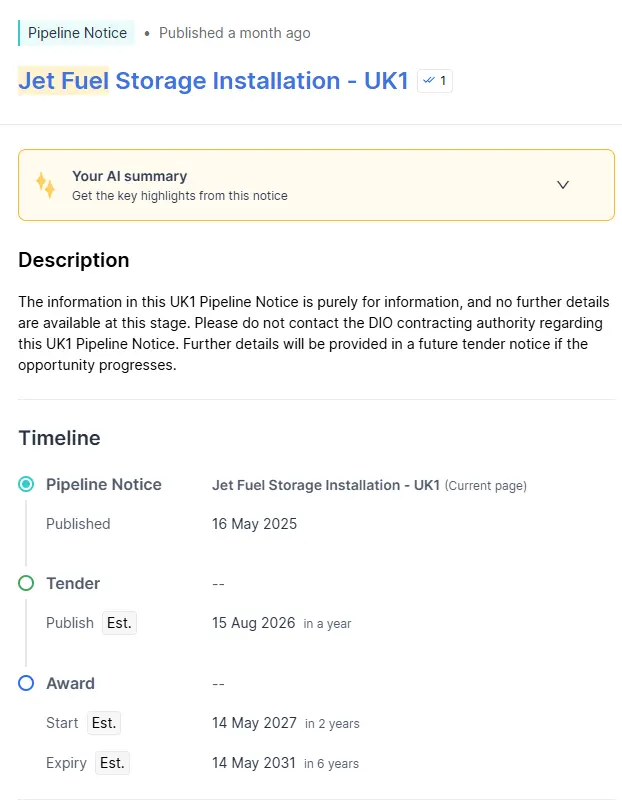
Jet Fuel Storage Installation tender published in the Stotles app
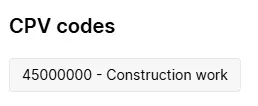
The associated CPV code is the broad category of construction work alone.
CPV code in the Stotles platform for Construction work
Storage of jet fuel is an incredibly delicate and specialised contract that only a few government contractors are likely able to do.
Categorising jet fuel storage at the divison classification of construction work also includes work like scaffolding or road repair. Clearly, by not labeling this contract with the appropriate subcategory for the work, the CPV code attached is not doing enough to label this contract.
The buyer could have easily added the below codes to label the contract properly:
09131000: Aviation kerosene
09131100: Kerosene jet-type fuels
In short the propensity of human laziness, errors, or data deficiencies can make CPV code searches unreliable, especially if you are targeting niche services or emerging technology categories. Furthermore, limited keyword search functionality make it more challenging for suppliers to identify every opportunity that aligns with their business.
This is where keyword search becomes essential. Keywords add precision, capturing opportunities that codes alone may overlook.
Stotles tender portal combines 10 different search functionalities including, CPV codes, keyword search logic, associated buyers, contract value, etc. to give suppliers a more accurate, complete view of active tenders. The platform takes your pre-filled relevancy filters and adds a relevancy score to indicate just how closely a contract aligns with a suppliers interests, past wins, and capabilities.
You see what matters to your business without depending on perfect classification from buyers.
Why many suppliers use a tender platform
Because these government sites sit across different portals and don’t always allow for flexible tender searches, many suppliers turn to tender platforms like Stotles to simplify the process.
Platforms like this combine contract data from multiple government sources into a single view. You can search by CPV code, apply keyword filters, and set up alerts to track new tenders as they’re published. This helps suppliers stay on top of relevant opportunities without having to manually monitor multiple portals each day.
Here is how you perform a CPV-code based search with Stotles.
Log into your account
Stotles Log in
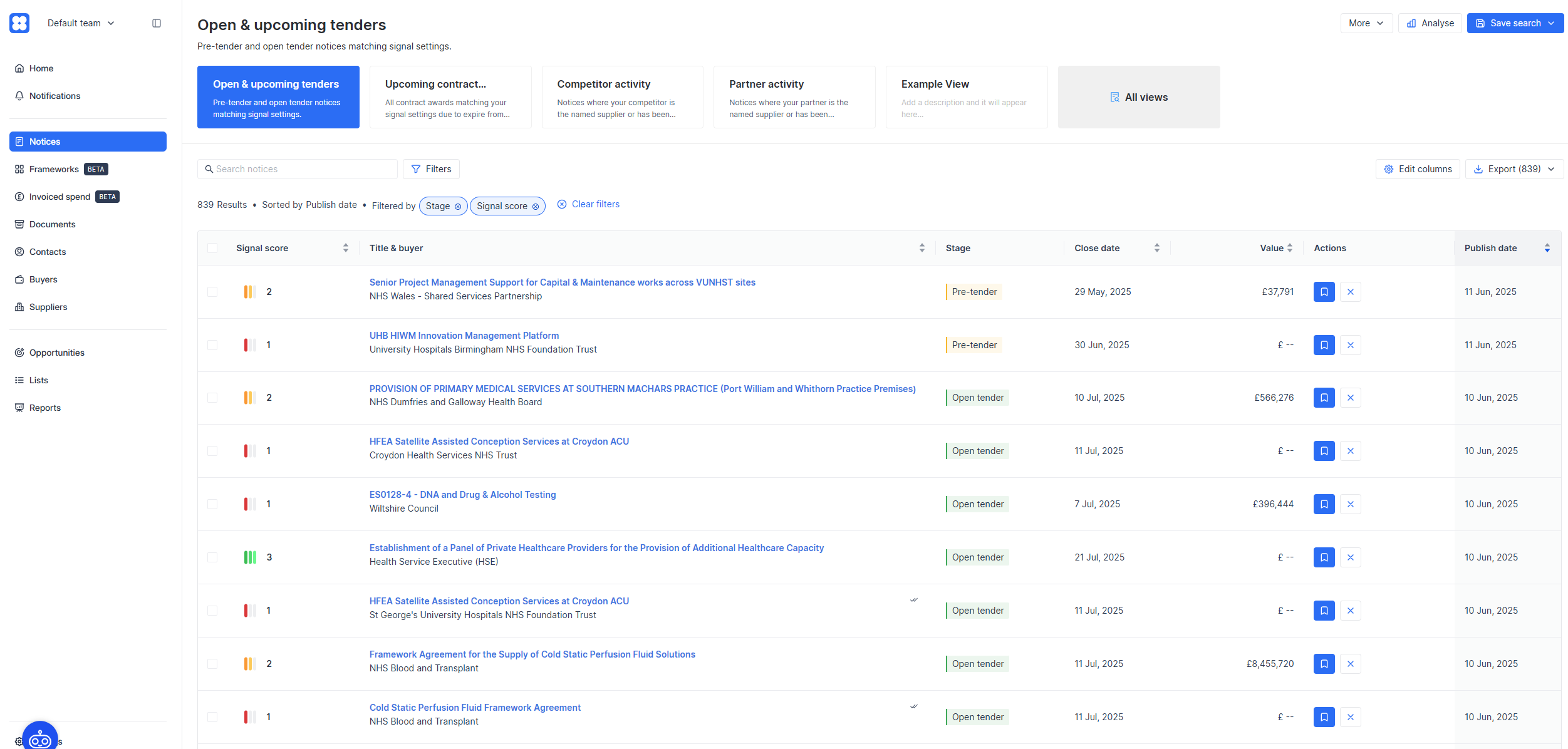
Go to the Notices section
Stotles Platform Notice Section
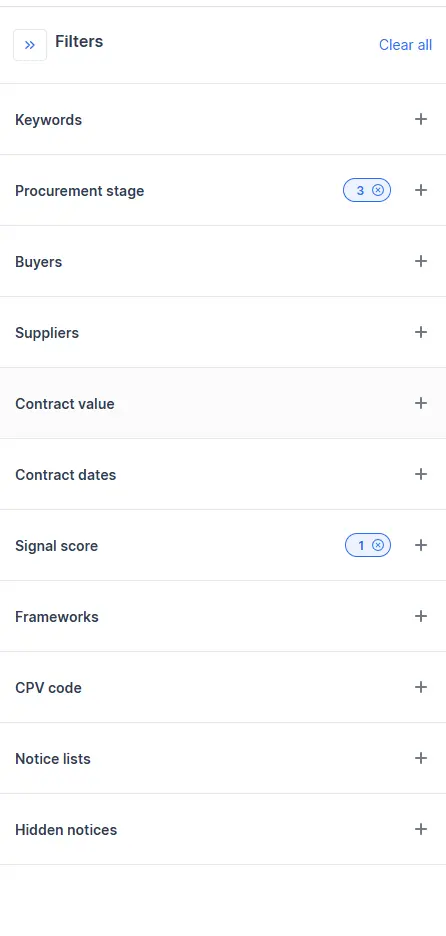
Click the filter button which will open up the complete filter view
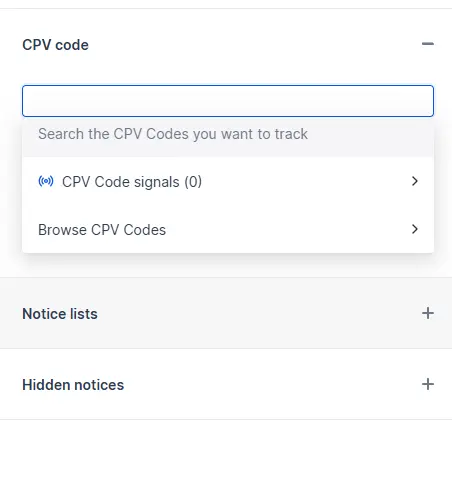
Filters4. Search by CPV code, either numerically or by keyword title
CPV Codes Search
Final thoughts: Turn CPV codes into tender wins
Finding public sector tenders is a challenge. Even with CPV codes, suppliers still face misclassified notices, fragmented portals, and the constant risk of missing opportunities. Surfacing tenders early is critical, which is why many suppliers rely on tender alerts and innovative search tools to stay ahead.
But finding a tender is only the first step. Winning it requires a clear strategy, targeted positioning, and a consistent bid management approach.
That’s where many suppliers build out their full approach using platforms like Stotles. Beyond surfacing tenders, Stotles helps suppliers:
Build qualified pipelines aligned to their services
Monitor buyer behaviour and upcoming opportunities
Prioritise tenders based on fit and readiness
Align sales teams around real, actionable opportunities
Public procurement rewards suppliers who stay organised, plan ahead, and engage early. CPV codes help you get into the right arena. Strategy and execution turn opportunities into revenue.
Dive into the platform Stotles to see how you can filter all government notices by CPV code and keywords relevant to your business.
EXPERT VOICE
EXPERT VOICE
Now you know how CPV codes work, put yours to use. Search live tenders by CPV code in the Stotles tender search tool.


.webp)