Blog Post
Procurement Monthly: September 2026
Written
September 28, 2026
by
Dallán

Blog Post
Procurement Monthly: September 2026
Written
September 28, 2026
by
Dallán
Blog Post
Procurement Monthly: September 2026
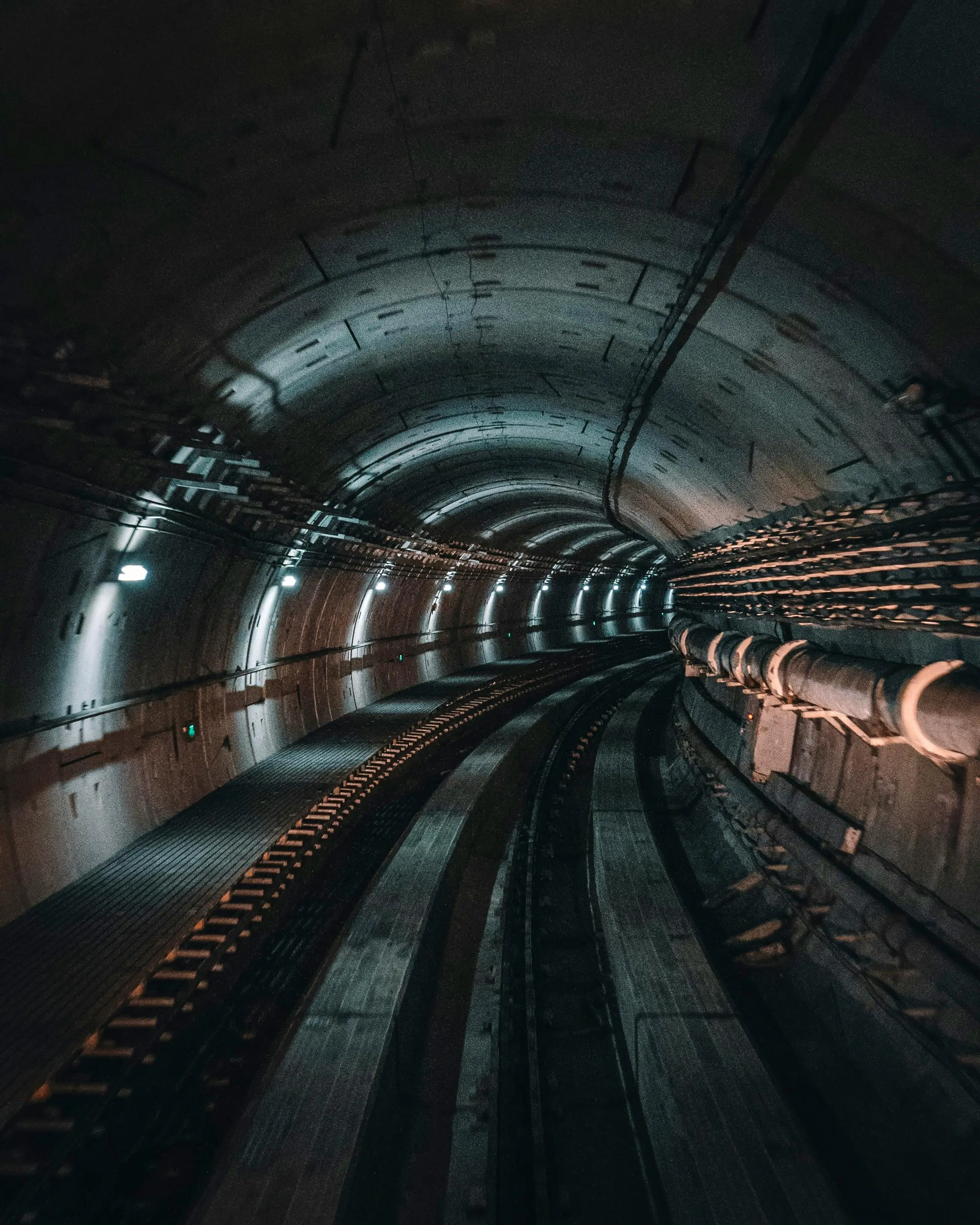
This guide covers the Chiltern tunnel's route, construction method, portal design, environmental impact, and the contractors who delivered it.
Civil engineering works wrapped up in January 2026 after nearly five years of construction.
A surface route through the Chiltern Hills was never really an option. Building above ground would have destroyed ancient woodland, cut through communities, and triggered fierce political opposition.
The route passed through the Chilterns Area of Outstanding Natural Beauty (AOTN), is a nationally protected landscape. Residents in the Chilterns and MPs representing them were adamant that the HS2 route not damage the AOTN, citing lifestyle disruptions, as well as a desire to preserve the area for future generations..
Thus, the government deemed tunnelling underneath the Chilterns as the only path forward after the project was scoped.
The tunnel runs from its south portal near the M25 in the Colne Valley to its north portal at South Heath, tucked between Great Missenden and the village. The entire route passes beneath the Chilterns AONB.
In the below Google Maps view, you can see the exact location of the Chiltern Tunnel on the HS2 route.
For a broader view of where the Chiltern Tunnel fits within the full HS2 route, this HS2 Route Map guides provides an interactive overview of all stations, tunnels, and cost stories by projects.
The original contract for the Chiltern Tunnel was awarded in July of 2017 as a part of the Main Works Civils Contracts (MWCC) framework agreement for HS2 phase 1, comprising seven major, geographically split, two-stage and design-and-build contracts (lots) for constructing all 140 miles of high speed railway.
The complete MWCC contract framework was awarded for £11.85 Billion pounds to 23 different suppliers across the seven different lots.
The Chiltern tunnel was placed in Lot C1, covering 21.6km of the route including two major projects between the Chiltern Tunnel and Colne Valley Viaduct.
In total, the original contract was for £1.6 Billion pounds; however, it is important to note that the tunnel was meant to be only a part of the £1.6bn contract and not the whole scope.
Before the Chiltern contract was awarded, nine organisations were shortlisted for the award in March of 2016. At the time the C1 lot was estimated to cost between £800m – £1.3bn, according to Rail UK.
In just a year, the contract was awarded for £1.6bn.
So what happened?
There were many reasons why the Chiltern Tunnel overran its budget in the 10 years since the contract was awarded, but the first reason was the tunnel kept growing.
According to the BBC, opposition came from Tory MPs representing unhappy Chilterns residents. MPs demanded expensive tunnels and cuttings to keep the new trains out of sight. Preserving the rolling hills meant more money went on engineering and tunnelling.
During parliamentary scrutiny of the HS2 Bill, the tunnel was extended 2.6km north in August 2015.
This extension replaced a planned cut-and-cover section and saved around 12 hectares of woodland, including Farthings Wood. Every extension reduced environmental and political risk, but it also added cost.
By the time the Chiltern tunnel was completed, it was 10 miles long (16km).
This was representative of the whole project.
11 tunnels were commissioned between London and Birmingham, burying the line for 32 miles of the 140 mile track. There were 50 viaducts
In 2019–2020, Oakervee Review examined HS2 in 2019–2020 for waste.
The review found the project cost had risen roughly £6 billion across all of HS2. As a part of that cost overrun, the Chiltern Tunnel was flagged as being a major cost driver, specifically for spoil disposal.
In digging the tunnel, deep cuttings on either side of the tunnel had produced enormous volumes of chalk spoil that could not be reused directly.
HS2 found a creative solution: using 3 million cubic metres of chalk to create new chalk grassland habitat on the Colne Valley Western Slopes. Clever, yes, but it added both cost and complexity to an already stretched budget.
In 2024, the government estimated that the overall remaining cost for HS2 between Birmingham and London was £45 and £54 billion, a 337% increase on the original project. If the Chiltern Tunnel's portion of the overall budget remained constant, then the tunnel cost roughly £5.3 billion.
The Chiltern was constructed by Align JV, a joint venture of Bouygues Travaux Publics, Sir Robert McAlpine Ltd, and Volker Fitzpatrick delivered the Chiltern Tunnel under Contract C1.
Now that civil engineering is complete, the tunnel is moving into fit-out and rail systems. This phase brings new procurement across the procurement lifecycle for mechanical and electrical systems, track installation, overhead electrification, signalling, communications, and ongoing maintenance contracts.
Two tunnel boring machines (TBMs) named Florence and Cecilia excavated the twin bores. Built by Herrenknecht, each machine weighed around 2,000 tonnes. A TBM is essentially a self-contained underground factory: it bores through rock, lines the tunnel with concrete segments, and grouts them into place, all in one continuous operation.
Crews of 17 operatives worked each shift, supported by over 100 people at the main compound near the M25. On average, the machines advanced 16 metres per day. Florence broke through at the north portal on 27 February 2024, and Cecilia followed on 22 March 2024.
The numbers give a sense of scale:
A typical TBM drive covers 5–6km before the machine is removed or repositioned. This 16km drive pushed well beyond normal limits and required technical innovations never before used in the UK. The machines launched from a site near the M25 in May 2021 and worked continuously for nearly three years.
The south portal near the M25 features something new for UK rail: a porous portal. This is a curved, tapered concrete structure with perforated walls designed to reduce the pressure wave, sometimes called "tunnel boom," that forms when high-speed trains enter a tunnel. Without a porous portal, trains entering at 200mph would create a sonic boom effect that disturbs nearby communities.
Hidden low into landscape, earth-coloured zinc cladding, calcareous grassland roof
Both portals are topped with calcareous grassland roofs, a habitat native to the Chilterns. Ancillary buildings at each portal house mechanical and electrical equipment, wrapped in breathable louvre facades for natural cooling.
The north portal sits hidden low into the landscape between Great Missenden and South Heath. It is only partially visible from a nearby footbridge.
Over 20 hectares of new woodland, shrubs, and wildflowers were planted around the portal to blend the railway into the countryside. Species typical to the Chilterns, including Beech, Oak, Yew, Holly, and Dog Rose, were chosen for the planting scheme.
Chalk excavated during tunnelling was combined with recycled concrete and aggregates to create new habitat at the Colne Valley Western Slopes. The project reused 3 million cubic metres of chalk to establish 138 hectares of chalk grassland, woodland, and wetland.
The restoration work included 65,000 trees and shrubs from 32 local species, plus 4km of new footpaths, cycling routes, and bridleways. On paper, it sounds like a net positive. However, the Chilterns Conservation Board has stated that HS2 will have "a significant and lasting negative impact" on the Chilterns National Landscape.
Concerns remain about sinkholes that have appeared above the TBM route at Hyde Heath. Environmental groups have also raised questions about the impact on the chalk aquifer and the River Misbourne, one of nine internationally important chalk streams in the Chilterns.
HS2 is one of the largest sources of public sector procurement in the UK, with an estimated 400,000 supply chain opportunities across Phase 1.
The Chiltern Tunnel illustrates how a single asset drives activity across the supply chain. Delivery runs from a £1.6bn+ main works package down to smaller specialist contracts covering tunnelling, spoil management, environmental mitigation, and systems integration.
The challenge is that most of those opportunities do not sit in one place.
Contracts are published through Find a Tender, HS2's own supplier portal, and through the Tier 2 joint ventures who subcontract significant work packages; however aggregating and connecting contracts is difficult.
This is where Stotles comes in.
Stotles aggregates all of this into one platform. For HS2, you can see a view of several example contracts:
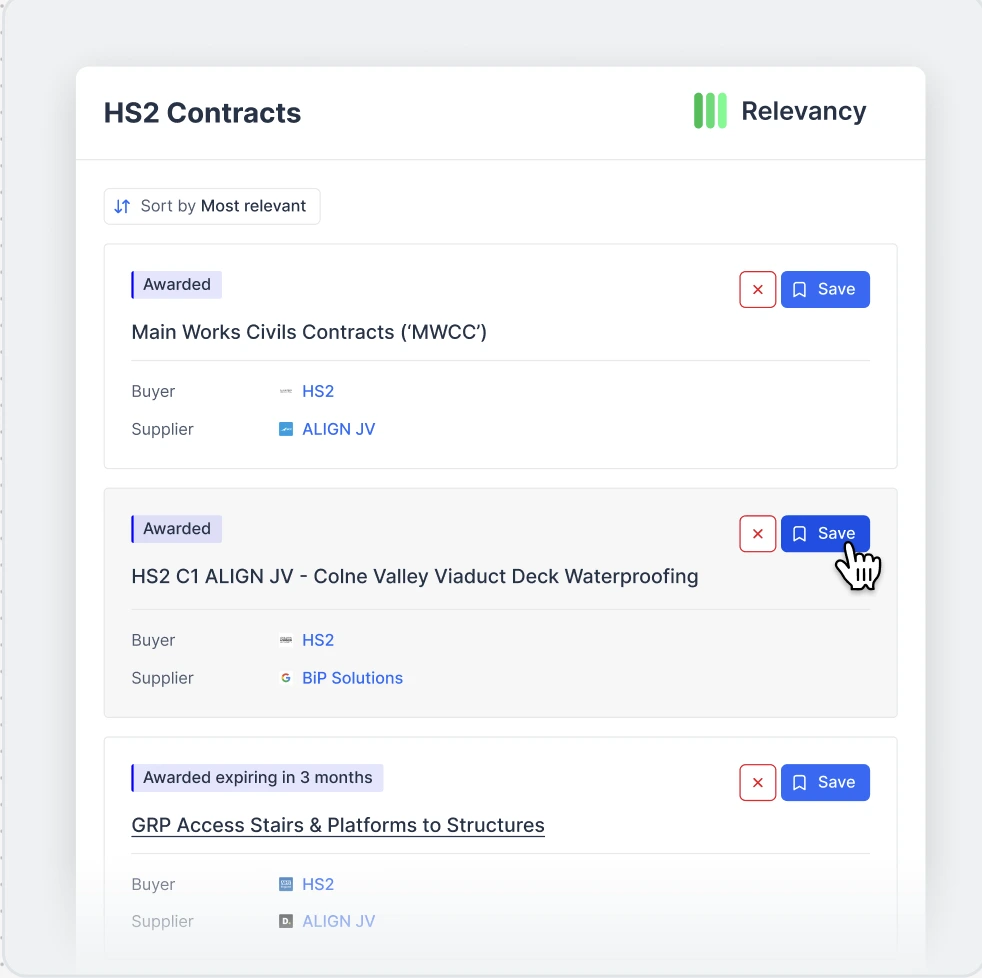
For a preview of what that looks like in practice, see this HS2 Ltd buyer profile guest pass showing open tenders, recent contract awards, upcoming expiries, and procurement patterns.
HS2 is not estimated to be finished until the mid 2030s, so there is plenty of work left for suppliers to win amongst the existing framework agreements.
For those contractors interested, a partner play with a joint venture working on the project could be the way forward.
As a reference, here is an example EKFB JV buyer profile which covered subcontracting activity on the adjacent section north of the Chiltern Tunnel.