

B2G: The Complete Guide to Business-to-Government Sales

B2G (business-to-government) is when a company sells goods or services to a government body, usually through a public procurement process. From a supplier’s perspective, B2G work often involves responding to tenders, meeting compliance and evaluation rules, and contracting under public terms. It differs from B2B because the “customer” is a public authority and buying decisions must follow transparent procedures, budgets, and regulatory requirements.
This guide covers how B2G sales work, what makes government buying different from commercial markets, and practical strategies for building pipeline and winning contracts. B2G (business-to-government) describes commercial transactions where private companies sell products, services, or solutions to government agencies.
The model involves formal procurement processes, longer sales cycles, and strict compliance requirements.
In return, it offers high-value contracts and stable revenue for suppliers who learn to navigate it.
The B2G business model
B2G is a business model where private sector companies provide goods, services, or information to federal, state, or local government agencies.
The term sits alongside B2B (business-to-business) and B2C (business-to-consumer) as a distinct market category with its own rules, buyers, and commercial dynamics.
Government agencies purchase everything from cloud software and cybersecurity services to construction projects and management consulting. Public sector procurement represents one of the largest buying markets in any economy, creating significant addressable market for suppliers across multiple sectors.
Gross public sector procurement spending in 2024/25. (Source: Public Expenditure Statistical Analyses 2025, HM Treasury)
In the United States, the Federal Government alone, spends roughly $750 billion on procurement.
What distinguishes B2G from other sales models is the regulated nature of the buying process. Government buyers operate under public accountability, so procurement decisions follow formal procedures, published evaluation criteria, and transparency requirements. Suppliers compete through formal tendering processes rather than relationship-based negotiations alone.
How B2G differs from B2B and B2C
The mechanics of selling to government differ fundamentally from commercial sales. Getting clear on the differences early helps suppliers avoid costly mistakes and set realistic expectations. By nature, selling to government, is far more regulated than private business transactions and the same tactics for selling a good or service to another business or consumer often do not apply in B2G sales motions.
B2B vs B2G
B2B sales typically involve relationship building, product demonstrations, and iterative negotiations that can speed up deal closure. B2G procurement, on the other hand, follows mandated processes with defined timelines, published criteria, and legal requirements for fair competition. For example the vast majority of procurement is regulated by the Procurement Act of 2023, which established formal procurement objectives that contracting authorities must have regard to: delivering value for money, maximising public benefit, sharing information so suppliers can understand procurement decisions, and acting with integrity.
Government buyers cannot simply choose a preferred supplier. They evaluate submissions against pre-published criteria and document their decisions for audit purposes. This creates both constraints and opportunities: suppliers who understand evaluation methodology can craft more competitive responses.
B2A (business-to-administration) is sometimes used interchangeably with B2G. Both terms describe the same commercial relationship between private suppliers and public sector buyers. B2G is more common in UK and US contexts, while B2A appears occasionally in European procurement discussions.
B2C vs B2G
Consumer purchasing decisions happen quickly, often driven by individual preference or impulse. Government buying involves committees, budget approvals, and formal evaluation panels. In short, a B2C transaction can happen with a quick button click, where B2G transactions can take significantly longer. Additionally, the amount of money involved in a B2G transaction is often significant, with transactions ranging in the millions and tens of millions of pounds.
A single B2G contract might require sign-off from procurement officers, budget holders, technical evaluators, and senior leadership. The complexity extends timelines, yet contracts, once won, tend to be more stable than consumer relationships.
How B2G sales work
Government procurement follows a structured procurement lifecycle designed to ensure fair competition and value for public money. Each stage presents different engagement windows for suppliers.
Government procurement stages
The typical procurement journey moves through defined phases:
- Need identification: A government department recognises a requirement, often triggered by policy changes, contract expiries, or operational gaps
- Market engagement: Buyers research potential solutions through supplier days, release prior information notices, and initiate informal conversations
- Tender publication: The open tender appears on procurement portals with specifications, evaluation criteria, and submission deadlines
- Evaluation: Procurement teams score submissions against published criteria, often including quality assessments and pricing analysis
- Award: The contract goes to the winning supplier, with results published for transparency
- Contract management: Ongoing delivery, performance monitoring, and relationship management through the contract term
Here's the critical insight: by the time a tender publishes, buyers have often already formed preferences.
Early engagement during market research phases creates a competitive advantage. Suppliers that are consistently successful in the B2G space oftentimes begin with attempts to act as a resource to the government entity as the entity crafts the tender.
Buyer and supplier roles in B2G
Government buying involves multiple stakeholders with different priorities. Procurement officers manage the formal process and ensure compliance. Commissioners define requirements based on policy objectives. Budget holders control spending authority. End users influence specifications based on operational needs.
On the supplier side, sales teams build relationships and identify opportunities. Bid managers coordinate tender responses. Subject matter experts provide technical content. Delivery leads ensure proposed solutions are actually deliverable.
Why B2G matters
Government represents a substantial, stable market that rewards suppliers who invest in learning how it works. It's also a fundamental requirement for delivering the infrastructure that makes up modern life. Government buyers purchase everything from paper clips to fighter jets using procurement funds. Roads, bridges, and train tracks are all funded by tax payer money and the work to build and maintain all of this infrastructure is dependent on private suppliers awarded government contracts.
The scale of the UK public sector market is hard to overstate. Across central government, local authorities, the NHS, education, and blue light services, public bodies collectively spend hundreds of billions of pounds a year with private suppliers. Indeed, the volume of contracts awarded has been climbing steadily.
Government contracts represent large individual deals that are predictable.
of suppliers report winning contracts lasting 1–3 years. (Source: 2025 State of Public Sector Procurement, Stotles)
A further 19% lock in deals of 3–5 years.
High entry hurdles create defensible positions for suppliers who break in. Success relies on incumbent advantage, track records, and deep institutional relationships, which means the biggest suppliers tend to dominate.
The chart below shows who's winning IT consultancy contracts since the Procurement Act went live.
You can see that multi-national companies with global reach tend won the most amount of contracts, perfectly illustrating how procurement can often be structured to favour large suppliers.
B2G examples
Government agencies purchase across virtually every category of goods and services.
Technology and digital services include cloud hosting, cybersecurity, software development, IT support, and digital transformation consulting. The G-Cloud framework alone facilitates significant technology procurement annually.
Just how dominant is G-Cloud? Across all technology framework contracts awarded between January 2022 and October 2025, G-Cloud 13 and G-Cloud 14 combined account for 63% of all awards, making it the single most important route to market for tech suppliers.
Professional services and consulting cover management consulting, legal services, audit, HR services, and training. Frameworks like Management Consultancy Framework 3 provide structured routes to market.
Construction and facilities management encompasses building construction, maintenance contracts, cleaning services, and security.
Large capital projects and ongoing operational contracts represent significant spend categories.
The table below gives a real-world view of what this looks like in practice. The spend figures come from the National Audit Office’s analysis of recorded spend through Crown Commercial Service frameworks for common goods and services in 2022 to 2023.
This is not total UK public procurement spend, but it is a clean, consistent snapshot of discretionary buying routed through central frameworks.
How to start winning B2G work
Winning B2G work requires a different approach than commercial sales. The following steps outline a practical path to building government revenue.
1. Identify your target market
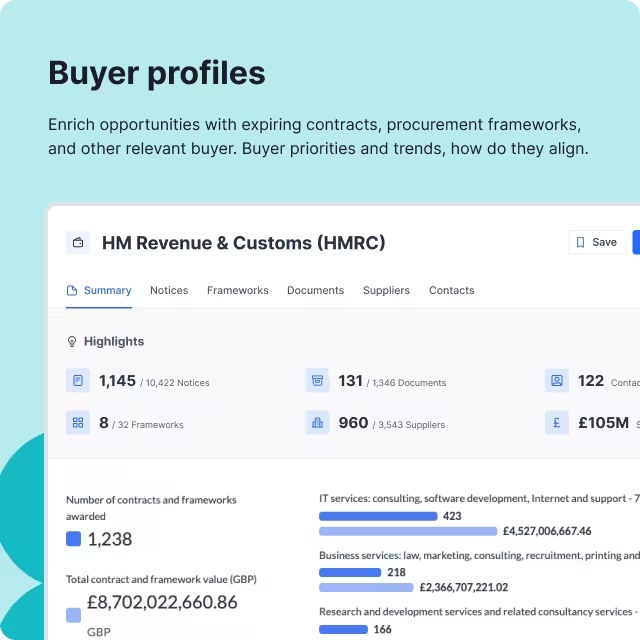
Start by researching which government departments or agencies buy what you sell. Historical contract award data reveals spending patterns, typical contract values, and incumbent suppliers.
This analysis helps focus effort on realistic opportunities rather than chasing everything. Below, you can see example screenshots from the Stotles platform showing aan an HMRC buyer profile and a view of suppliers by number of awarded contracts.
.avif)
2. Engage buyers before tender publication
The most successful government suppliers engage 6 to 18 months before tender publication.
During this window, buyers are researching solutions, defining requirements, and forming preferences. Early conversations can shape specifications and build buyer confidence in a particular approach.
3. Get on relevant frameworks
Framework agreements are pre-approved supplier arrangements where government buyers can purchase without running full procurement competitions.
he table below shows which government procurement frameworks drive the most technology procurement activity. G-Cloud 13 leads by volume with 97 contracts, but Technology Products & Associated Services 2 dominates by value at £628m, illustrating how different frameworks serve different procurement needs, and why getting on the right one matters.
In Stotles, you can search and click into individual frameworks to learn more about suppliers on the framework, buyers using the framework, and the number of call-offs used in the framework.
.avif)
4. Build relationships with decision makers
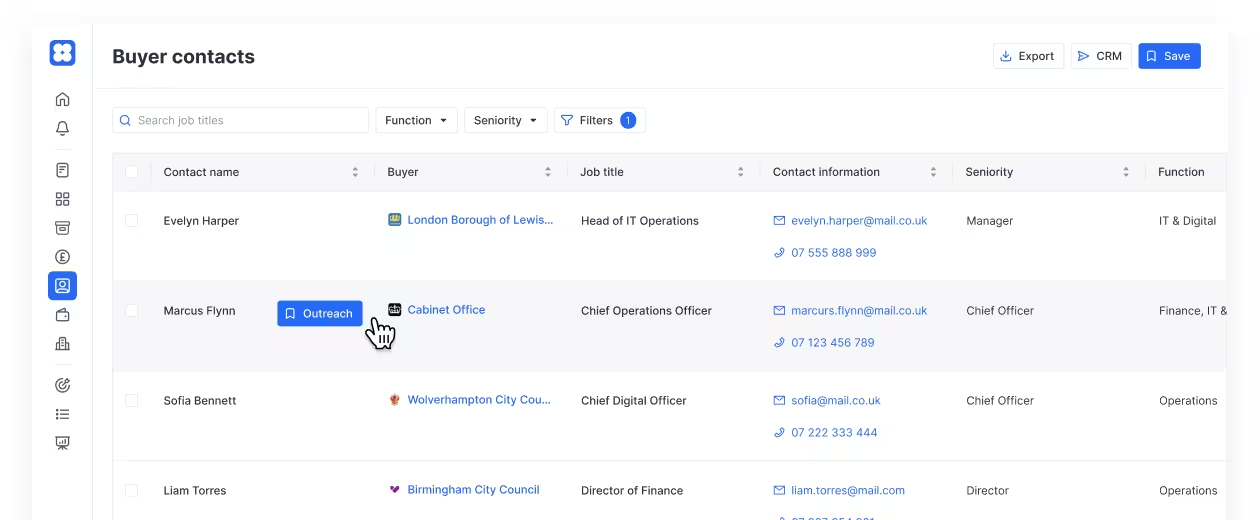
Identify commissioners, budget holders, and end users who influence procurement decisions. Relationships matter even in formal procurement, particularly during early market engagement phases when buyers are still defining requirements.
In Stotles, you can search and find decision maker contacts at relevant government agencies to start the conversation faster.
5. Submit winning bids
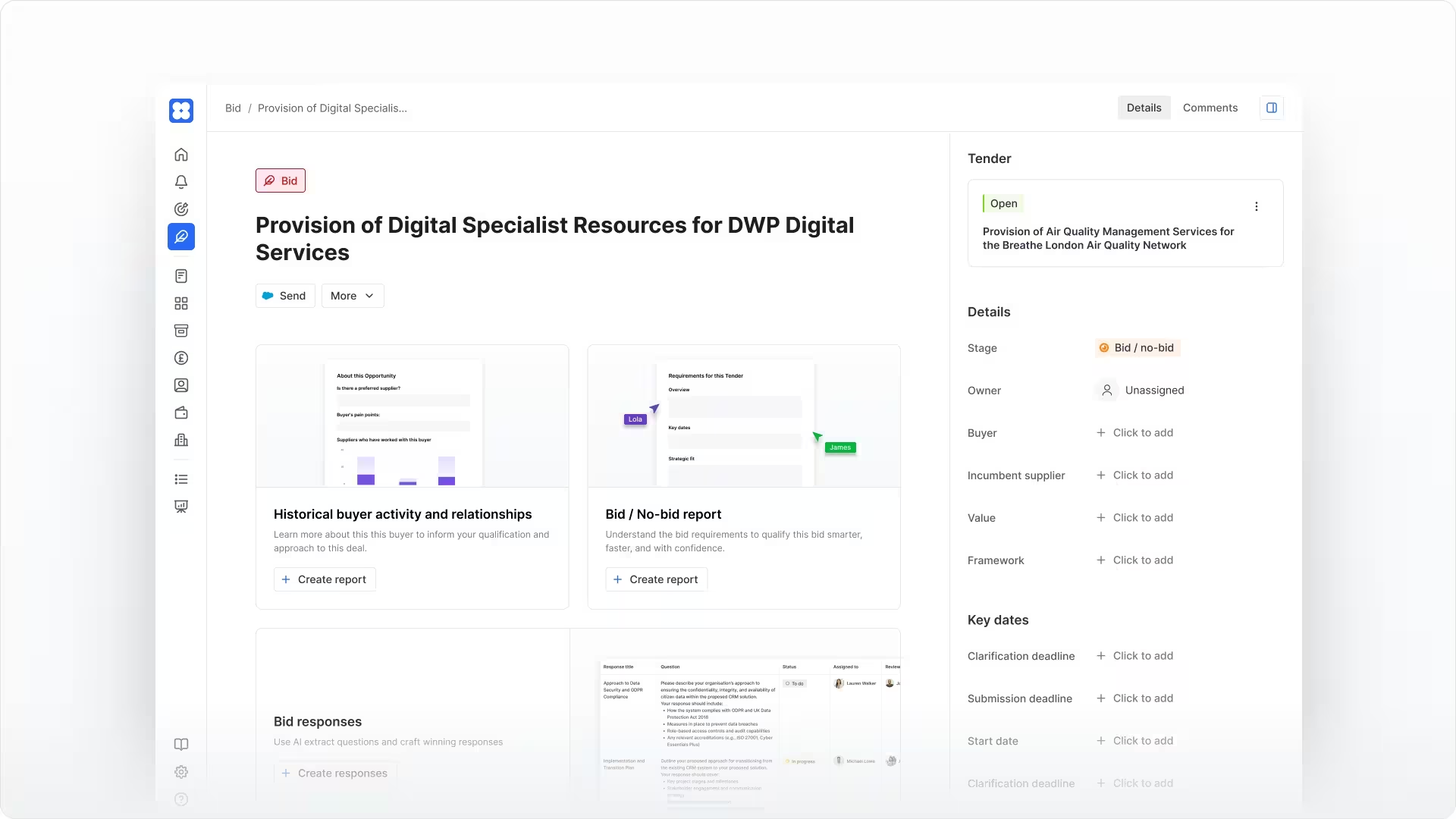
Effective bid writing responds directly to published evaluation criteria, demonstrates relevant experience through specific case studies, offers competitive pricing, and ensures full compliance with submission requirements.
Generic responses rarely win. In Stotles, suppliers can get a first draft that is 75% completed using AI-driven bid responses .
B2G challenges and risks
Government sales present genuine difficulties that suppliers benefit from understanding before committing resources.
Incumbent advantage means existing suppliers have relationship capital, performance track records, and deep understanding of buyer needs. Breaking in as a new supplier requires patience and strategic positioning.
Long sales cycles extend from initial engagement to contract award over 12 to 24 months or longer. Suppliers benefit from pipeline depth and cash flow to sustain this timeline.
Complex procurement compliance requires submissions that meet format requirements, address mandatory criteria, and comply with regulations. Non-compliant bids get rejected regardless of solution quality.
Resource-intensive bidding consumes significant time and expertise. Complex tenders can require weeks of senior resource, and win rates are often low, making cost per win substantial.
B2G sales strategies
Reactive tender chasing produces inconsistent results. Proactive pipeline building creates sustainable government revenue.
Building early pipeline means tracking signals that indicate future procurement: policy announcements, budget allocations, and strategic plans. Suppliers who engage during this phase can influence requirements and position as preferred solutions before competitors see the opportunity.
Tracking contract expiries and renewals creates predictable pipeline. Every government contract eventually expires and gets re-tendered. Contract award data reveals when renewals are likely, allowing suppliers to plan engagement accordingly.
Qualifying opportunities before investing prevents wasted effort. Not every tender is worth pursuing. An effective bid/no-bid process considers competitive landscape, incumbent position, fit with capabilities, and resource requirements.
B2G marketing strategies
Government marketing differs from commercial marketing. Buyers operate under scrutiny and follow fair processes, so promotional approaches that work in B2B often fall flat.
B2G content marketing positions suppliers as experts through white papers, case studies, and thought leadership. Content helps buyers understand solutions before procurement begins. The key is genuine usefulness rather than promotional messaging.
Account-based marketing for government buyers targets specific departments or agencies with tailored campaigns. This requires understanding buyer priorities, budget cycles, and strategic objectives.
Public sector events and engagement provide direct access to buyers through industry events, government-hosted market engagement sessions, and supplier days. These are legitimate channels for relationship building within procurement rules.
B2G opportunities for small businesses
SMEs can compete effectively for government contracts through several routes.
Set-asides and reserved contracts specifically target smaller suppliers. Some government contracts are reserved for SMEs or social enterprises, creating protected competition.
Framework participation for SMEs opens access to call-off contracts. Many frameworks include SME lots or actively encourage smaller supplier participation.
Subcontracting routes to market provide entry through partnership with prime contractors. Supply chain requirements often create opportunities for specialist SMEs on large contracts.
With the role out of the Procurement Act, the UK government has significantly overhauled its procurement system to make it more accessible for Small and Medium-sized Enterprises (SMEs). As of April 1, 2025, all central government departments must set and publish three-year targets for direct spending with SMEs. In the table below, you can see how the new requirement will affect overall SME spending.
Where to find B2G opportunities
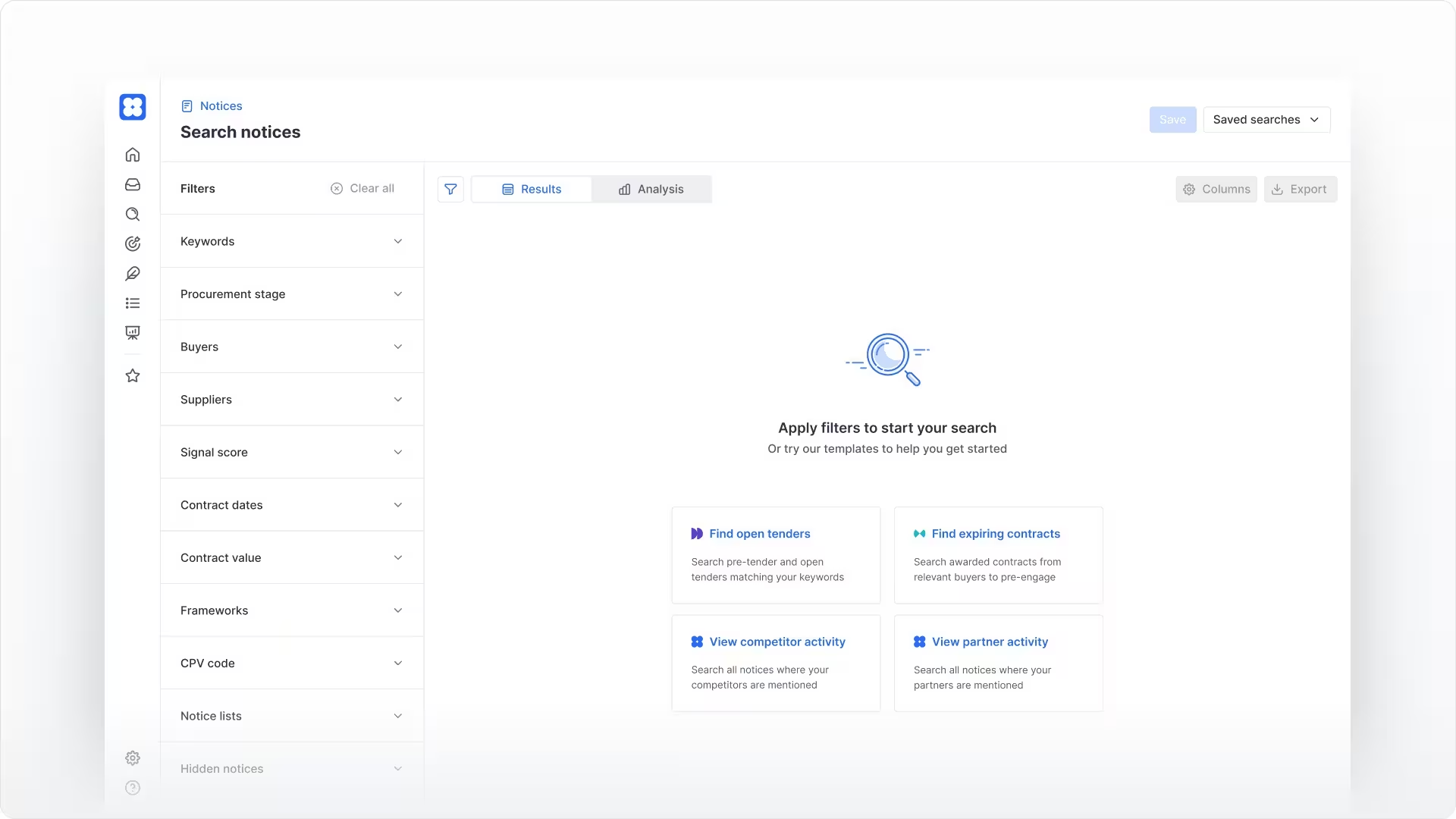
Government tenders appear across multiple platforms and sources. There are over 100 tender portals across the UK for central and local government, which can make it difficult to efficiently search for contracts or tender documentation. For many B2G suppliers, the need for a single view of every portal, tender, and contract results in the use of private tender portals, like Stotles. Stotles consolidates every tender and government award into a single view, allowing suppliers to search and find relevant tenders faster than using public portals. Below, is the Stotles notice search screen, where suppliers can search for government tenders by keyword , procurement stage, CPV code, etc.
Government tender portals include:
- Find a Tender: UK's central portal for above-threshold opportunities
- Contracts Finder: Covers lower-value opportunities in England
- Public Contracts Scotland, Sell2Wales, eTendersNI: Devolved nation portals
- Individual authority portals: Many councils and NHS trusts publish locally
Framework opportunities may not appear on public portals. Suppliers on frameworks receive direct access to call-off competitions.
Pre-tender buyer signals reveal upcoming opportunities before formal publication. Contract expiry dates, budget announcements, policy documents, and meeting minutes indicate future procurement. Platforms like Stotles aggregate buyer signals alongside open tender tracking, buyer intelligence, and incumbent supplier data.
Why suppliers use a B2G sales platform
Manual research across multiple portals creates inefficiency and missed opportunities. Suppliers often discover tenders too late to compete effectively, lack intelligence on buyer history and incumbent positions, and struggle to qualify which opportunities are worth pursuing.
Stotles addresses these challenges through open tender tracking that aggregates opportunities from hundreds of government portals into a single feed. Buyer intelligence reveals past purchases, decision-maker contacts, and spending patterns. Contract history and framework data show incumbent positions and upcoming renewals.
TLDR
- B2G (business-to-government) is a distinct sales model requiring early engagement, formal bidding, and compliance with procurement rules
- Winning requires upstream pipeline building, not just reactive tender response
- Technology platforms help suppliers find opportunities earlier and qualify them faster
Stotles brings together open tender tracking, buyer intelligence, and bid automation in one platform built specifically for government sales.
Sources & Further Reading
To ensure the accuracy of this guide, we have utilized official data and policy documentation from the following authorities:
- HM Government: Public procurement: growing British industry, jobs and skills%20and%20voluntary%2C%20community%2C). This consultation outlines the specific reforms within the Procurement Act 2023 designed to remove barriers for SMEs and voluntary/community social enterprises.
- National Audit Office (NAO): Efficiency in government procurement of common goods and services. This report provides the spend analysis for the Crown Commercial Service (CCS) and details how the government aggregates demand through central frameworks.
Start with the buyers. Explore our directory of UK public sector buyers, or search government tenders in the Stotles tender explorer.
Start Searching for Tenders


Want a custom report?