


What Is bid management? A guide for winning public sector contracts

Bid management is the structured process of planning, coordinating, writing, reviewing, and submitting a bid or tender response to win a contract. It brings together the right people, evidence, pricing, and compliance checks to meet the buyer’s requirements and deadlines. For suppliers, bid management typically covers go/no-go decisions, clarification questions, drafting responses, approvals, and final submission, often using templates and version control to reduce risk and improve consistency across bids.
Every year, numerous public and private sector suppliers miss out on contract opportunities, not because their services aren't good enough, but because of cracks in their bid management process. Coordination bottlenecks and avoidable issues, such as missing deadlines or pricing errors, can be the difference between winning and losing a bid.
The public sector offers significant opportunities. However, seizing these opportunities requires more than just having the right skills or competitive pricing. Before bidding, suppliers first need to find the right tender. Understanding the basics of what is a tender is necessary to understand which notices are good fits that are worth bidding on. This is where effective bid management comes into play.
Good bid management transforms chaotic tender responses into a repeatable, winning process.
It increases win rates, optimises resources, and improves your bottom line.
Ready to do bid management the right way? Let's show you how!
What is Bid Management?
Bid management is the process of identifying, qualifying, coordinating, and submitting tender responses. It combines people, processes, and software to turn procurement opportunities into revenue.
Public procurement operates under constraints that make structured bid management a non-negotiable requirement. The complex regulatory landscape, high competition, and intricate requirements make having a detailed process key to success.
At its core, effective bid management consists of four interconnected components:
- Opportunity Identification and Qualification This initial phase involves monitoring procurement portals, assessing contract fit against your capabilities, and deciding which opportunities warrant pursuit based on win probability and strategic value. Private suppliers can use a public or private tender search engine, filtering via keywords or CPV codes. Understanding the basics of the tender process and tender documents is helpful as every supplier must select a well-suited tender in order to have the chance of winning a bid.
- Compliance and Documentation Every bid requires meticulous attention to mandatory requirements, from financial standing evidence and insurance certificates to quality accreditations and technical specifications. Missing a single document can result in immediate disqualification.
- Content Development and Collaboration Teams must craft compelling responses that demonstrate capability, innovation, and value. This involves coordinating input from subject matter experts, finance teams, and senior leadership while maintaining consistency across all submission documents.
- Submission and Follow-up The final stage encompasses quality assurance checks, timely submission through the correct channels, and post-submission activities, including clarification responses and presentations.
Even with a solid framework, public sector suppliers encounter significant obstacles:
- Time pressure: Procurement specifications can run to hundreds of pages, yet teams often have just days or weeks to produce comprehensive, compliant responses
- Zero-tolerance compliance: A single missed requirement, whether it's a missing insurance certificate or an incorrectly completed pricing schedule, can disqualify an otherwise strong bid.
- Resource constraints: Bid teams must juggle multiple concurrent opportunities while maintaining client relationships and delivering existing contracts, stretching expertise to the limit.
- Intense competition: With multiple qualified suppliers chasing the same contracts, the quality of your bid management process becomes the differentiator between winning and losing.
Strong public sector bid management recognises these challenges and builds an infrastructure to overcome them. It establishes reliable sources of information, minimises duplication of effort, maintains high-quality standards, and implements the governance needed to deliver results.
For teams operating across multiple UK procurement frameworks or managing multiple contracts simultaneously, this organised approach to bidding turns activity into tangible results.
How to Build an Effective Bid Management Process
Successful bid teams follow six interconnected stages to create a consistent, winning process. Here's how to execute each stage effectively:
1. Identify Opportunities
Winning bids begins with finding the right bids. In public procurement, buyers publish tenders across thousands of government portals, and scanning them manually at scale is impossible.
Leading teams use platforms like Stotles that aggregate procurement data, track tenders across all these sources, and use AI to surface only the most relevant opportunities based on your criteria. Instead of checking multiple portals daily, you receive timely notifications for tenders that match your capabilities, contract values, and target buyers.
In the public sector, tender notices are theoretically organised via CPV codes; however, due to human error this filing system is frequently inaccurate. Thus finding tenders can be a time consuming affair without tender management software. Oftentimes, a supplier catching wind of an upcoming or open contract via an invitation to tender has missed a critical, pre-engagement window in which suppliers have the chance to shape a tender to suit their strengths.
When you know a major contract is ending in six months, you can engage decision-makers early, before the tender even goes live. This advanced positioning dramatically improves your win probability.
2. Decide to Bid
Not every opportunity deserves pursuit. Rigorous bid/no-bid decisions focus on three areas:
- Capability alignment: Do you have proven experience delivering this type of work? Can you provide relevant case studies and credentials that align with the buyer's requirements? Do you meet security or insurance requirements?
- Resource feasibility: Can you assemble the right team and deliver a quality response within the deadline? Do you have the capacity to deliver if you win?
- Commercial viability: Does the contract value justify the bid cost (typically 3-8% of contract value)? What's your estimated win probability, and does the expected return warrant the investment?
Innovative teams also assess incumbent strength and competitive landscape. If the buyer has a long-standing relationship with the current supplier and you've never worked with them, your win probability drops significantly; factor this into your decision.
AI-powered platforms like Stotles' Bid Studio accelerate this qualification dramatically. Upload the tender document, and within seconds, you get a comprehensive bid/no-bid report highlighting key criteria, budget limits, compliance requirements, and buried eligibility conditions. You can ask the AI specific questions about the tender instead of manually reviewing hundreds of pages, helping you make faster, data-driven decisions about where to invest your resources.
3. Planning
The planning phase consists of two parts: assembling the bid team and mapping the bid.
A sample bid team might look something like this:
- Bid manager: Owns the schedule, coordinates workstreams, and manages stakeholder communication
- Sales director: Develops the commercial model and ensures financial compliance
- Subject matter experts: Contribute specialised content and evidence
Key Bid Team Roles
For teams with limited resources, a bid team might simply consist of a bid writer alone or a member of the commercial team. In the event of having a multi-person bid team, clear roles must be defined.
Who owns each question in the tender? Who has approval authority? When are drafts due and in what format? Clearly outlining who is responsible for what tasks will help streamline your tender management process.
After delineating roles, it's time to develop a comprehensive bid plan. Identify your win themes; these are the key messages that distinguish your solution from others. Ensure these themes are consistently reflected throughout your responses.
Map tender requirements against your evidence library to identify gaps early. Do you need additional case studies? Updated certifications? Identifying these gaps during planning allows them to be appropriately addressed.
Create realistic schedules that allow sufficient time for review cycles, necessary approvals, and the inevitable unexpected complications.
4. Bid Development
Crafting your bid content requires a careful balance between efficiency and customisation. Utilise standardised responses and AI support for common questions while focusing on customised writing for sections that require more specific insights. Efficient reuse of successful templates frees up your team to concentrate on the high-impact details that can inflate evaluation scores.
Meeting Essential Bid Requirements
Before creating a bid, ensure you understand what the contracting authority requires. Your bid preparation must address:
- Mandatory compliance documents: This includes company registration certificates, tax clearance certificates, insurance policies (professional indemnity, public liability), and any required industry accreditations or certifications
- Financial standing evidence: Recent audited accounts, bank references, and financial ratios demonstrating your organisation's stability and capacity to deliver the contract
- Technical capability proof: Case studies, CVs of key personnel, details of relevant experience, and evidence of successfully delivered similar projects
- Quality and safety documentation: Quality management systems (ISO 9001), health and safety policies, environmental management credentials (ISO 14001), and safeguarding procedures where applicable
- Pricing schedules: Detailed cost breakdowns that align with the buyer's pricing structure, including day rates, overheads, and any assumptions underpinning your calculations
- Method statements: Clear responses to "how" questions that demonstrate your approach, methodology, and innovation in delivering specific requirements
Collaboration tools ensure your team works from a single source of truth, eliminating version control chaos. Platforms like Stotles' Bid Studio enable multiple contributors to work simultaneously on responses while maintaining document integrity and tracking changes in real time.
5. Reviewing and Finalisation
The importance of a detailed review process in tender management cannot be overstated. Quality assurance is what turns good bids into winning bids. It’s essential to structure multiple rounds of review, each focusing on different aspects.
- First pass - Compliance check: Verify every mandatory requirement is addressed, word counts are met, and all evidence is cross-referenced correctly.
- Second pass - Quality assessment: Ensure responses are clear, compelling, and competitive. Does your answer actually address the question? Have you provided concrete evidence, not just claims?
- Third pass - Strategic alignment: Confirm your win themes are prominent and create a cohesive narrative throughout the bid.
Having fresh eyes review your bid can make a significant difference. A person unfamiliar with the content is much more likely to notice unclear explanations and logical gaps that those deeply involved with the project might overlook.
7. Submission
Submit early, ideally 24 hours before the deadline, to eliminate technical risks and ensure everything uploads correctly.
After submission, request feedback on whether you win or lose. Buyer debriefs reveal how your bid was scored, what strengths stood out, and where competitors outperformed you.
Taking the time to capture lessons learned soon after submission, while everything is still fresh in your mind, is essential. Gathering your team for a brief retrospective allows for an open conversation about what strategies worked and what didn’t. Document these insights and weave them into your future processes to continuously improve your bid management system.
What Are Bid Management Tools?
Bid management tools are point solutions that fix parts of the bid process.
They handle specific bid management problems, such as finding the right tender and the time required to review whether a bid is a fit, but typically need to integrate with other systems to achieve complete visibility throughout the bidding process.
A bid management tool is a part solution rather than a complete platform.
These tools vary based on whether you're pursuing public or private sector contracts:
Private Sector Tools address distinct challenges in construction, professional services, and IT consulting.
A tool like Bidhive focuses on corporate RFPs with proposal automation and win-rate analytics.
PlanHub serves construction specifically, providing access to over 3,000 private projects with integrated takeoff tools and subcontractor management.
Altura combines AI with historical bid data to generate performance insights and strategic recommendations.
What Is a Bid Management Platform? Tools vs Platform
Bid management platforms are software solutions that automate and streamline your bid process. A bid management platform provides an end-to-end experience, from sourcing a bid to submission.
These powerful tools seamlessly combine opportunity intelligence, team collaboration, content management, and performance analytics into a single platform. For organisations handling a high volume of bids or navigating complex framework agreements, these platforms can significantly enhance coordination and reduce chaos.
Bid management platforms replace the entire ecosystem of tools required for bid management: fragmented workflows, scattered spreadsheets, endless email chains, and shared drives where information gets lost, with a single source of truth that enables teams to collaborate in real time, track multiple bids, store reusable content in searchable libraries, and maintain compliance with complex procurement requirements.
In addition to these immediate benefits, these platforms help cultivate a lasting knowledge base. As bid content, buyer insights, and performance data accumulate in a centralised system, your organisation can build expertise that remains even as team members change.
Benefits of Using a Bid Management Platform
Utilising the right platform can lead to measurable enhancements in your bid process:
- Time savings: Intelligent automation allows modern tools to coordinate bid management according to a defined process. This reduces the administrative workload, which often accounts for 30-40% of a bid team’s efforts.
- Consistent quality: By storing well-crafted case studies and successful past responses in an accessible library, the quality standard remains high across bids.
- Improved win rates: Bid management platforms, like Stotles, provide the capacity required to compete effectively across the complete bid lifecycle by leveraging AI and technology. This ultimately leads to higher win rates for bid teams.
Platform Features to Consider
How do you choose the right bid management platform? Here are key features to consider that can make your selection process much more straightforward:
1. Market Intelligence
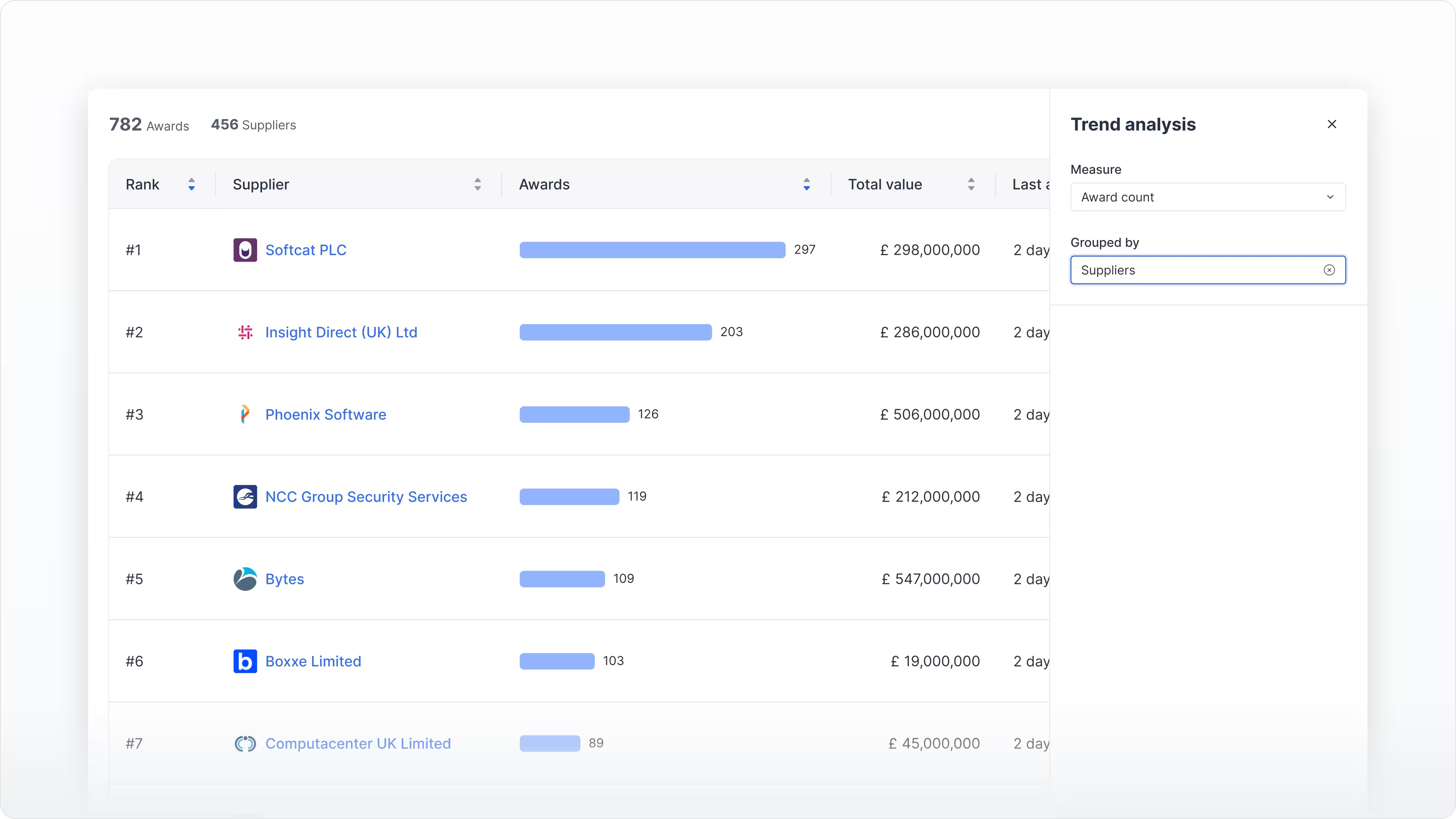
Look for a platform that provides top-tier market intelligence. Top platforms offer invaluable AI-driven insights into your target market, help you build a pipeline by connecting with buyers even before procurement opportunities, and ensure you never miss out on tenders relevant to your business.
2. Collaboration Hub
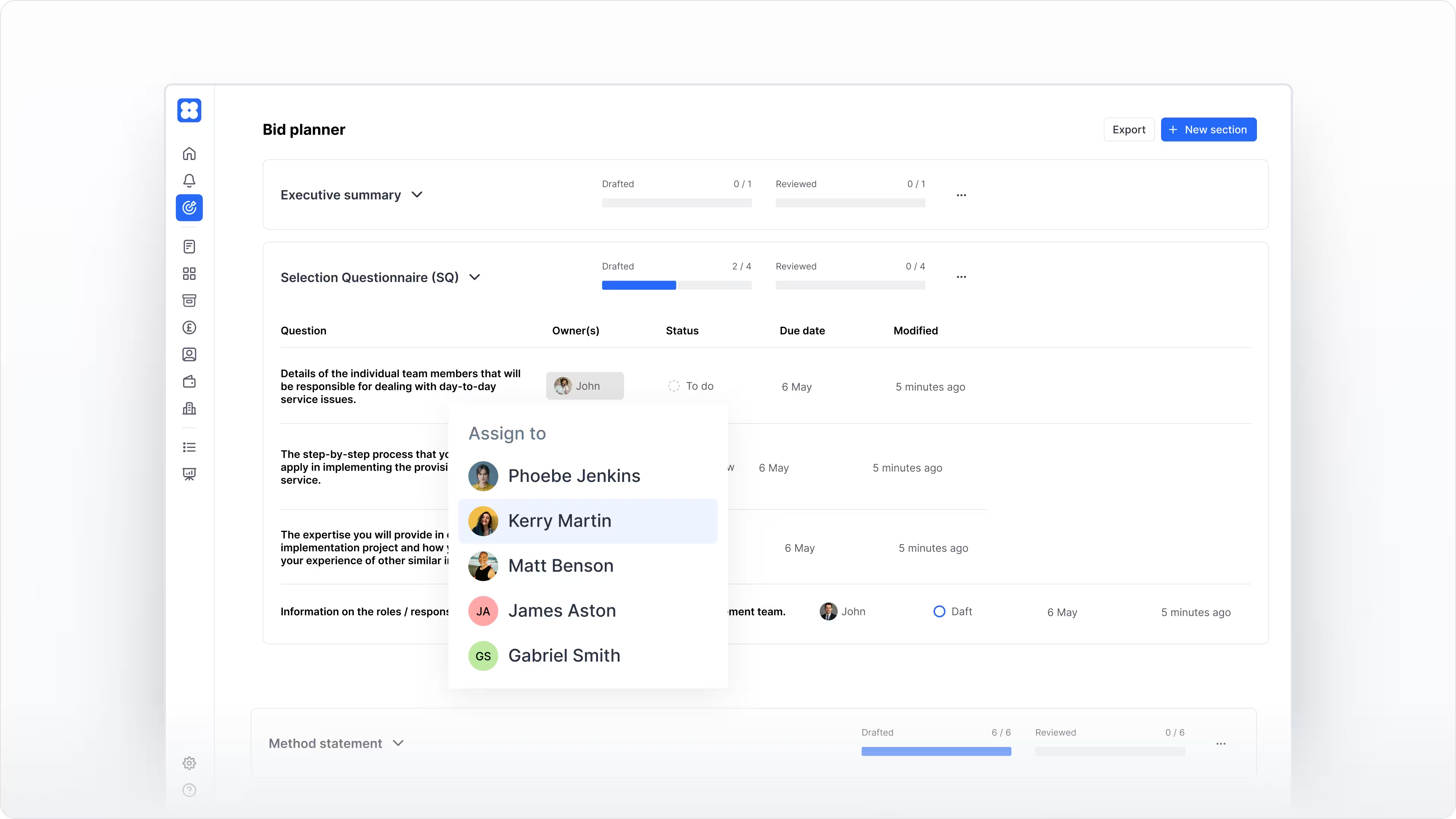
Collaboration is essential for bid teams, and a central hub significantly enhances teamwork. A space where team members can draft, comment, review, and approve content in real-time is crucial. Today's bid management platforms also assist with bid drafting, offering automated bid writing to help you move faster.
3. AI-Driven Bid/No-Bid Recommendations
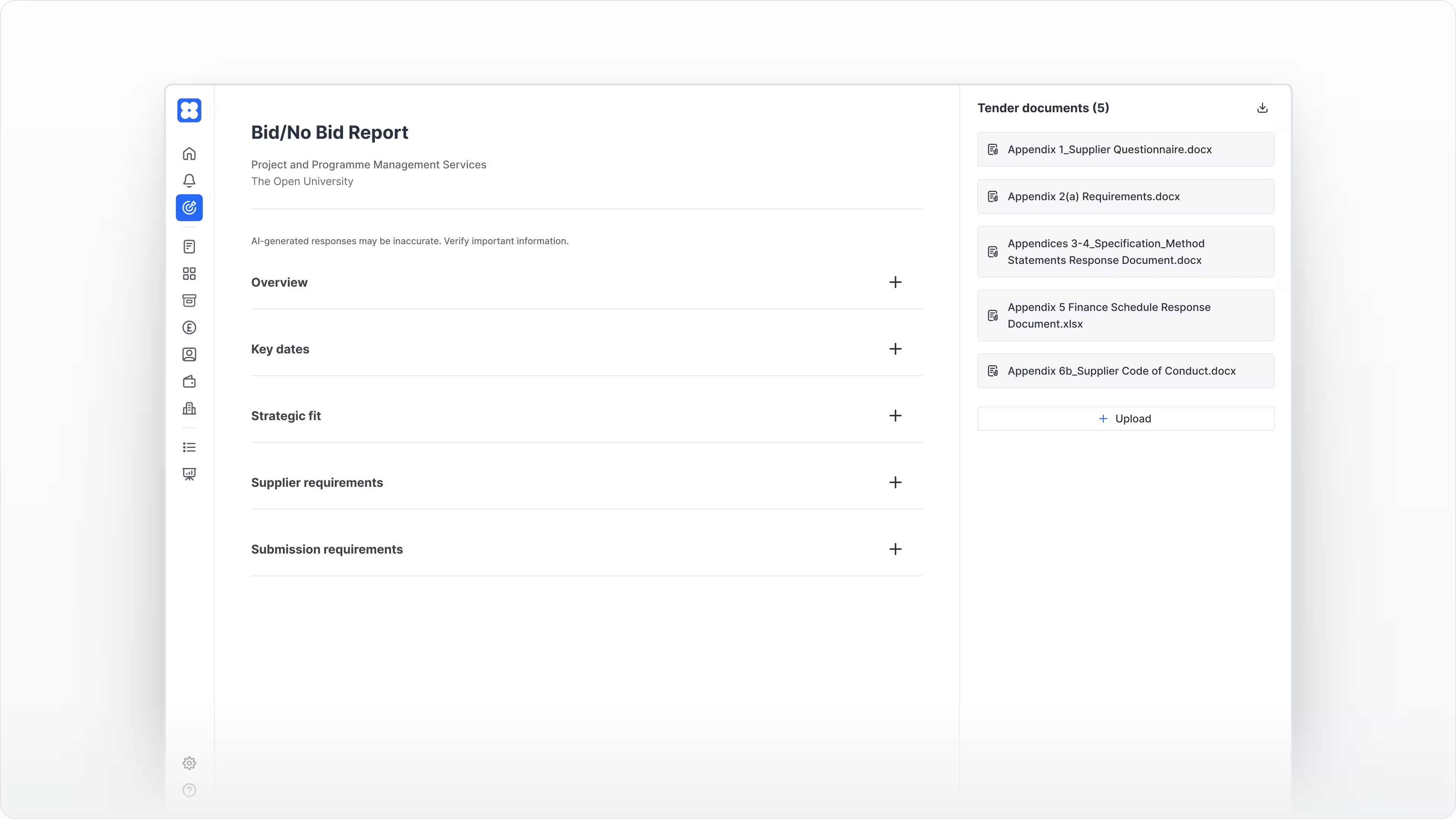
Advanced platforms leverage AI to accelerate the qualifying process. By analysing tender documents and assessing strategic fit, these tools can provide win probability scores based on past performance.
This capability helps teams qualify bids harder and faster, focusing effort where it matters most.
4. Dashboards for Performance Tracking
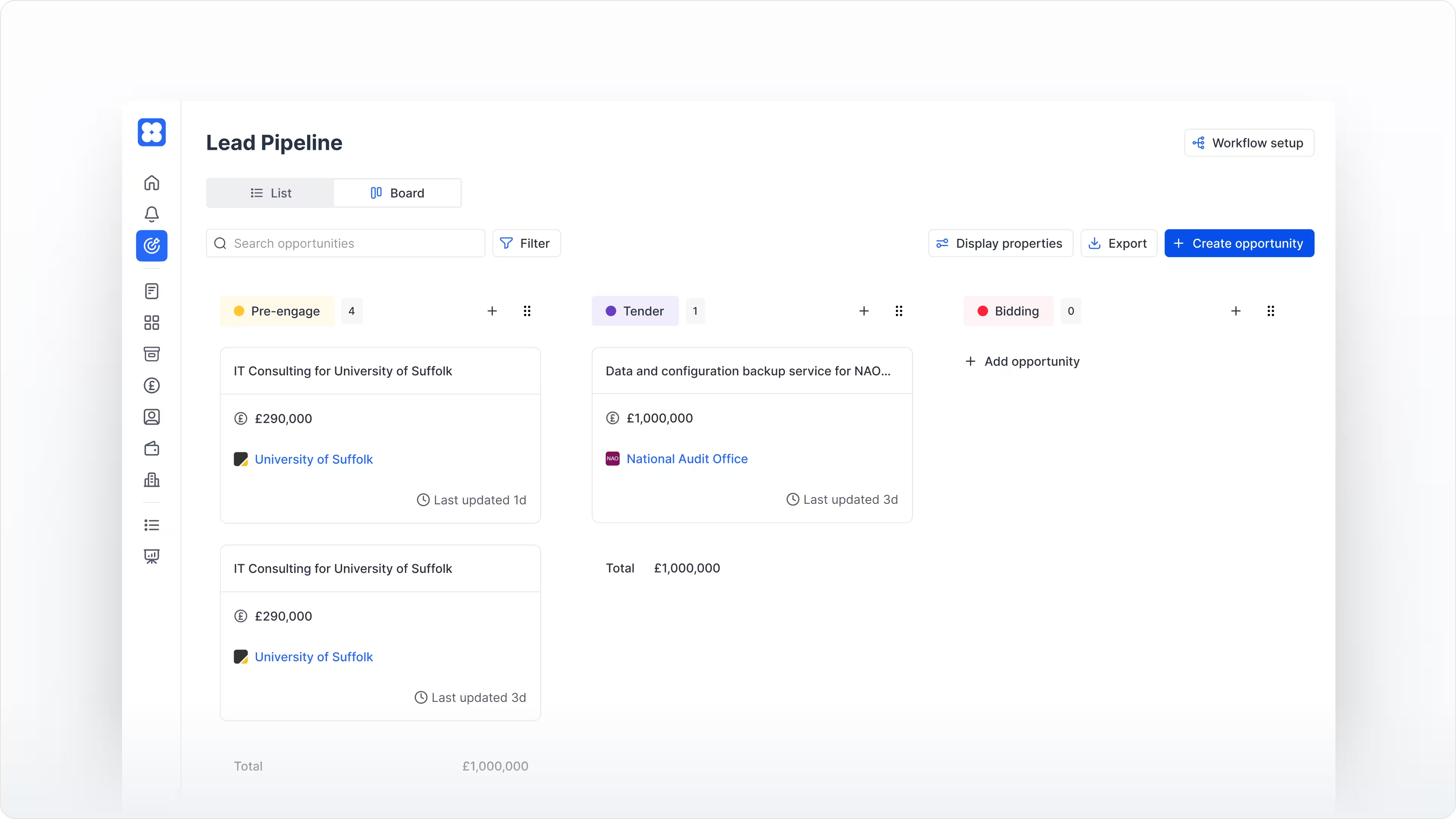
To measure the effectiveness of your bidding efforts, your platform should offer real-time performance analytics. Dashboards that provide insights into pipeline health, win rates, and resource allocation allow bid managers to make informed decisions.
5. Secure Audit Trails
Working in the public sector or regulated environments requires adherence to compliance and transparency standards. Therefore, your chosen platform should maintain a secure audit trail that documents every action in a manner that meets audit requirements.
This feature is not just a formality; it builds trust and accountability, which are essential elements when working with public tenders.
The best bid management platforms also offer flexibility. As your organisation evolves and public procurement regulations change, so should your bidding process. Look for a platform that is adaptable and can grow alongside your team, accommodating workflow shifts while supporting your core objectives.
Public Sector platforms like Stotles are tailored to government procurement. Stotles aggregates data from thousands of government portals, uses AI to surface relevant opportunities based on your capabilities, and provides intelligent bid/no-bid analysis. The platform's Bid Studio analyses tender documents in seconds, highlights key criteria and compliance requirements, and offers real-time collaboration for bid development; all within a centralised tender library.
Common Bid Management Pitfalls to Avoid
Here are the four prominent bid management mistakes bid teams often make that undermine their results:
- Pursuing every opportunity: Chasing every opportunity that presents itself can dilute resources and make it impossible to prepare effectively. Quality is far more valuable than quantity in bid management, so it’s better to focus on fewer bids that receive thorough preparation.
- Information fragmentation: Occurs when bid information is scattered across multiple platforms, leading to outdated data, duplicated efforts, and missed updates. This dysfunction can be costly, both in terms of time and lost opportunities. Embracing a centralised bid management system will significantly enhance efficiency.
- Email-based collaboration: Relying on email for collaboration creates unnecessary complications. Email threads can quickly become unwieldy, making it difficult to keep track of critical updates or document versions. Investing in dedicated bid management tools is a much better solution that helps keep work organised and accessible.
- Ignoring historical performance: Each bid should be seen as an opportunity for learning. Teams that capture feedback historically and recognise patterns in their performance can build upon their experiences, turning each bid into a stepping stone for future improvement.
Avoiding these pitfalls is crucial to success in public-sector bidding. With regulatory changes, such as the Procurement Act 2023, encouraging standardisation and transparency, suppliers that adhere to bid management best practices will find themselves at a significant advantage.
The Future of Bid Management
Advancements in artificial intelligence (AI) are revolutionising how organisations respond to tenders, and Stotles demonstrates exactly how transformative this can be.
Accelerating Bid/No-Bid Decisions
Stotles' AI analyses tender documents in seconds, extracting requirements, evaluation criteria, budget limits, and buried eligibility conditions. Upload a 200-page procurement specification and receive an instant qualification report showing whether the opportunity aligns with your capabilities and commercial objectives. This transforms bid/no-bid decisions from gut instinct to data-driven strategy. As suppliers navigate the nuances of being both a tenderer and a bidder, faster bid/no-bid management decisions can make teams more efficient.
Drafting Bid Responses at Speed
Properly configured AI gets you 70% of the way to submission by intelligently referencing your past winning bids, internal documentation (case studies, certifications, policies), and the specific tender documents. Instead of starting from scratch, Stotles generates initial draft responses tailored to each question, pulling relevant evidence from your library and adapting language to match evaluation criteria.
The AI understands context. When a local authority asks about community engagement, it surfaces your local case studies and social value commitments. When a healthcare trust requests infection control procedures, it pulls your NHS-specific experience. Your team refines these drafts with buyer-specific insights rather than wasting days on administrative assembly.
Early Opportunity Intelligence
AI monitors procurement pipelines, tracks expiring contracts, and analyses buyer activity patterns. You identify opportunities months before RFPs are published, giving you time to engage decision-makers and position your solution.
Stotles AI bundles all these features to help organisations like yours navigate the complexities of the bid lifecycle. In the current competitive bidding environment, investing in technology now will not only enhance your bid management but also set the stage for sustainable growth.
To learn how Stotles bid studio can revolutionise your bid process, request a demo below:
Frequently Asked Questions
What are bid management best practices?
Bid management best practices include: rigorously qualifying opportunities before committing resources; establishing clear roles and responsibilities; using collaborative tools; maintaining content libraries; conducting multiple review cycles; submitting early; and capturing lessons learned after each bid.
What is the difference between bid management and tender management?
Bid management and tender management are often used interchangeably. Both refer to the process of responding to procurement opportunities. However, "tender management" typically emphasises the buyer's perspective, while "bid management" focuses on the supplier's response process.
How much does bid management software cost?
Bid management software costs vary widely depending on features and scale. Standalone tools may start at £50-200 per month, while comprehensive bid management platforms typically range from £500 to £5,000+ per month for enterprise solutions, depending on user count and functionality.
What documents are typically required in a public sector bid?
Public sector bids typically require compliance documents including company registration certificates, insurance policies, health and safety policies with details of enforcement notices or prosecutions, environmental management policies, financial statements, and various accreditations. Additionally, quality question sets require detailed responses on delivery approach, resourcing, quality management, and business continuity planning.
What should I do if my bid is unsuccessful?
Request feedback on all bids, even those you win, to refine responses and ensure case studies remain current and positive. Don't burn bridges with buyers—use the opportunity to obtain feedback on your bid and gather as much information as possible about the winning bid to improve next time.


Want a custom report?