

What is a competitive flexible procedure?

The Competitive Flexible Procedure is a UK public procurement tendering route under the Procurement Act 2023 that lets a contracting authority design a bespoke competitive process to fit the purchase. The buyer can choose how many stages to run and what each stage covers, provided it follows the published rules and treats suppliers fairly and transparently. For suppliers, this can mean multi-stage shortlisting and different assessment methods, including written submissions and, where stated in advance, evaluated presentations or demonstrations.
Public procurement in the UK has shifted under the Procurement Act 2023. Instead of several rigid EU-style routes, buyers now have two main competitive options: the Open Procedure and the Competitive Flexible Procedure (CFP). The CFP is the more adaptable route. It lets buyers design their own stages, timelines, and engagement methods, as long as the tender process stays fair, open, and transparent.
In practice, this means buyers can add dialogue, negotiation, testing, or shortlisting where it makes sense, and remove steps that add little value. Used well, the CFP can support innovation, deliver better value for money, and make it easier for suppliers, especially SMEs, to access.
In this guide, we explain what the competitive flexible procedure is, when to use it, how many stages it can include, how to design it, and the main benefits and risks to watch. If you want more context on the wider reforms first, you can read our guide on preparing for the new competitive flexible procurement procedure in the Procurement Act.
What is the purpose ofthe Competitive Flexible Procedure?
The competitive flexible procedure replaces several older EU-era tools, including Competitive Dialogue and the Negotiated Procedure, which were often seen as complicated and slow. Under the new Act, all of these have been brought together and simplified into this single flexible route.
Any contracting authority can use the competitive flexible procedure. This includes central government, local authorities, NHS bodies, housing associations, and other public sector organisations that run competitions for goods, works, or services. It is beneficial when the buyer needs more market information or when the solution cannot be defined up front.
Typical situations where the competitive, flexible procedure works well include complex digital projects, outcome-based contracts, redesign of community services, or technical solutions in which supplier input helps shape the final requirements. It provides space for testing, prototyping, and direct dialogue with suppliers, so buyers can refine their requirements before final tenders are submitted.
Suppose you’re new to tendering and want a refresher on the basics. In that case, you can read our guide on tenders in public procurement, which explains how suppliers move through a public sector competition step by step.
Benefits for Buyers and Suppliers
The competitive flexible procedure is designed to benefit both sides of a public sector competition. For buyers, it offers room to build a process that truly fits the project. For suppliers, it opens clearer and more engaging routes into public contracts.
Benefits for Buyers
- Freedom to tailor the competition to match the complexity of the requirement.
- Better innovation because suppliers can share ideas, prototypes, or solutions during the process.
- Reduced risk of failed tenders, since the process allows refinement before final submissions.
- Ability to shape the market through early engagement and open dialogue.
Benefits for Suppliers
- Clearer engagement routes, especially during early market engagement and dialogue.
- More opportunities to provide input, which helps suppliers shape solutions that match buyer needs.
- Fairer and more transparent competitions, thanks to clear criteria and published stages.
- Better access for SMEs, because the flexible structure supports proportional, manageable requirements.
Overall, the competitive flexible procedure supports a more collaborative environment. Buyers understand the market better, and suppliers get a fair chance to demonstrate value.
When Can the Competitive Flexible Procedure Be Used?
The competitive flexible procedure can be used in a wide range of situations because the Act does not restrict it to specific types of projects. It is designed for any procurement where buyers want more interaction, better market insight, or a more adaptable process than a one-stage open procedure can provide. It works well for:
Standard requirements:
Where the buyer expects a large number of suppliers and wants an initial participation stage to make the competition manageable.
Simple or low-risk requirements:
The requirement is clear, but early engagement or limited dialogue would help deliver better value for money.
Niche or specialist requirements:
When the market is small, discussions with suppliers help clarify the technical solution or enable them to tailor their offer.
Complex or innovative projects:
Digital platforms, technology solutions, community service redesigns, infrastructure proposals, or anything that benefits from negotiation, testing, demonstrations, or prototypes.
Research and development:
Where the buyer may want to design, test, refine, and purchase an innovative solution through a single, continuous, multi-stage process.
Because the rules are flexible, buyers can build a process that matches the size, risk, and complexity of the requirement. This is why many authorities are using the competitive flexible procedure to achieve better supplier engagement, more innovation, and stronger final tenders.
How the Competitive Flexible Procedure Fits Into the Procurement Act 2023
The Procurement Act 2023 aims to simplify the UK’s procurement system by reducing the number of competitive procedures. Under the new rules, there are now only two main competitive routes a buyer can choose from:
- The Open Procedure, and
- The Competitive Flexible Procedure (CFP).
The Open Procedure is a simple, single-stage process. The competitive flexible procedure, on the other hand, is designed for situations where buyers need more freedom to shape the competition. This reflects the Act’s shift away from rigid EU-style processes and towards a system built on flexibility, proportionality, transparency, and more room for supplier engagement.
While the competitive flexible procedure gives buyers broad control, it still operates within strict principles. Buyers must treat suppliers equally, publish the proper notices, provide clear criteria, record their decisions, and follow transparency rules. This ensures that even though the process is flexible, it remains fair and accountable.
The competitive flexible procedure also supports the Act’s broader goals, such as encouraging SME participation and improving the overall quality of public sector competitions. Because buyers can design a process that truly fits the contract, they are more likely to receive strong bids and achieve better value.
To understand how this fits into the broader changes happening across the UK’s procurement landscape, you can explore our recent analysis on the impact of the Procurement Act on tender volumes.
When to Use the Competitive Flexible Procedure
The competitive flexible procedure is the best choice when a project needs more interaction, discussion, or testing before final requirements can be set. Buyers use this route when a simple, one-stage tender is not enough to understand the market or evaluate options properly.
It works well for:
- Complex projects with many moving parts
- Services that require dialogue, such as social care or community programmes
- Digital or technology solutions needing prototypes
- Outcome-based delivery, where the end result matters more than the exact method
- Projects with uncertain or evolving needs
- Long-term solutions where negotiation is important
Example situations include:
- A local authority developing a new digital platform
- A renewable energy project that requires testing and modelling
- A council redesigning community care services with multiple delivery options
In these cases, buyers may need several stages, supplier discussions, trial runs, or different evaluation checkpoints. The competitive, flexible procedure gives them the freedom to build a process that aligns with the contract.
How it compares to the Open Procedure
The competitive flexible procedure is the better choice when buyers need deeper understanding and collaboration before awarding a contract. When requirements are clear and simple, the Open Procedure may be enough.
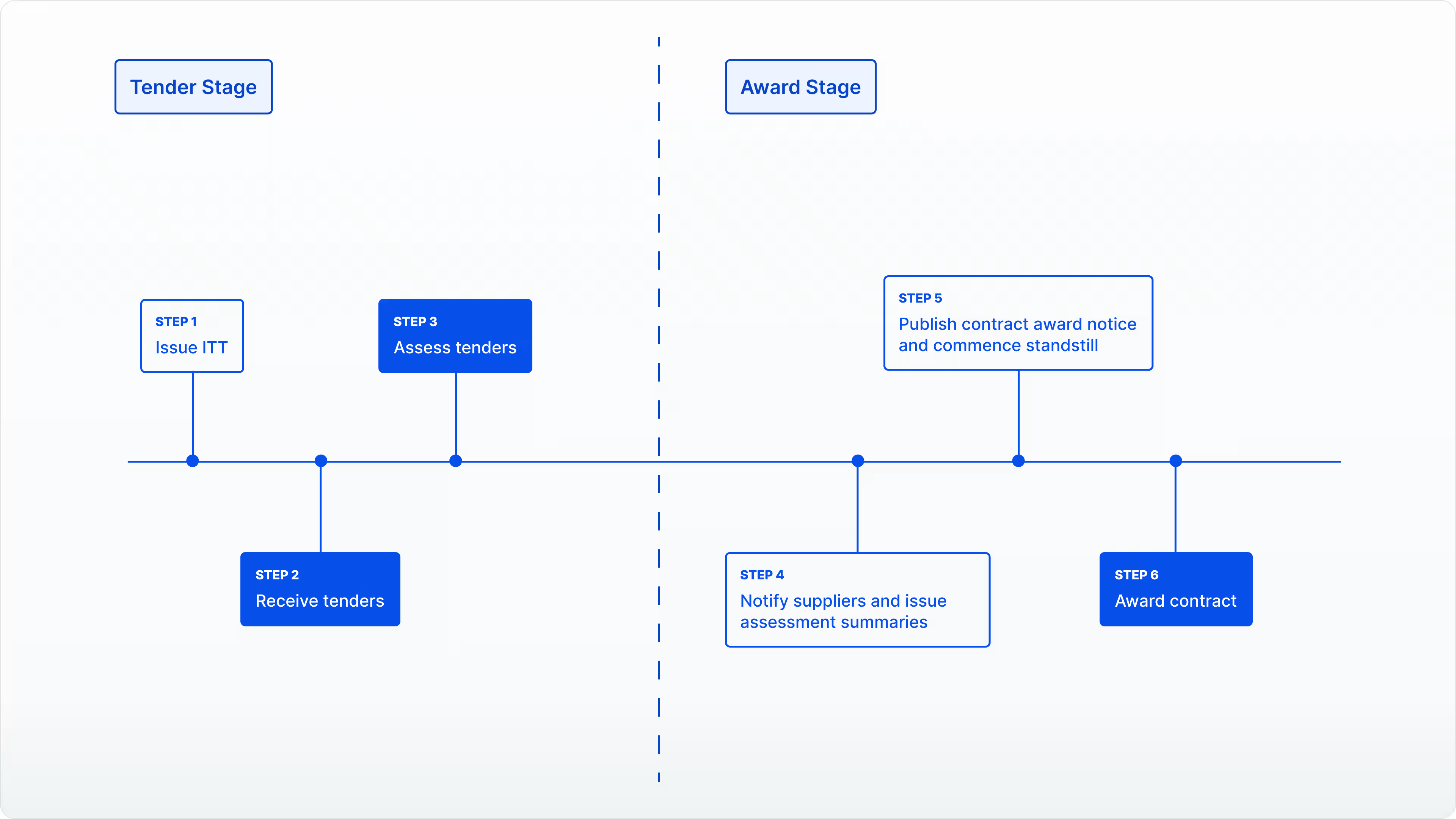
Below is a diagram of the a traditional open procedure tender. It consists of tender stage and an award stage.
Key Stages of the Competitive Flexible Procedure
Even though the competitive flexible procedure gives buyers a lot of freedom, it still follows a clear path from early interest to final award. The process can be brief or detailed, depending on the contract's complexity. What makes the CFP unique is that buyers can design the stages to support intense competition, supplier engagement, and better outcomes.
The Act sets only one main rule: there must be at least one competitive stage before the award. Everything else, from how many stages there are to what happens inside each stage, can be shaped by the buyer. Because of this, the CFP can look very different from one project to another. A simple digital tool might use two stages, while a complex infrastructure project may need five or more.
Buyers also need to publish their planned stages in advance and keep the structure visible to all suppliers. This ensures fairness and transparency throughout the process. While the flexibility is helpful, buyers still need to ensure the competition is proportionate and well-documented.
Below, we break down two key parts of this route: how many stages a buyer can include, and what a typical structure looks like in practice.
How Many Stages Are Permitted?
A competitive flexible procedure may have any number of stages. There is no upper limit set by the Procurement Act 2023. Buyers can include one, two, four, or more stages, depending on the project's needs.
However, this freedom comes with responsibilities. Buyers must:
- Justify the number of stages
- Keep the stages clear and transparent
- Publish the structure in advance as part of the tender notice
The only legal requirement is that the process must include at least one competitive stage before the award. This ensures all suppliers have a fair chance to compete before the contract is decided.
Because the rules are simple, buyers can tailor the process to the scale and complexity of the project while remaining aligned with the Act.
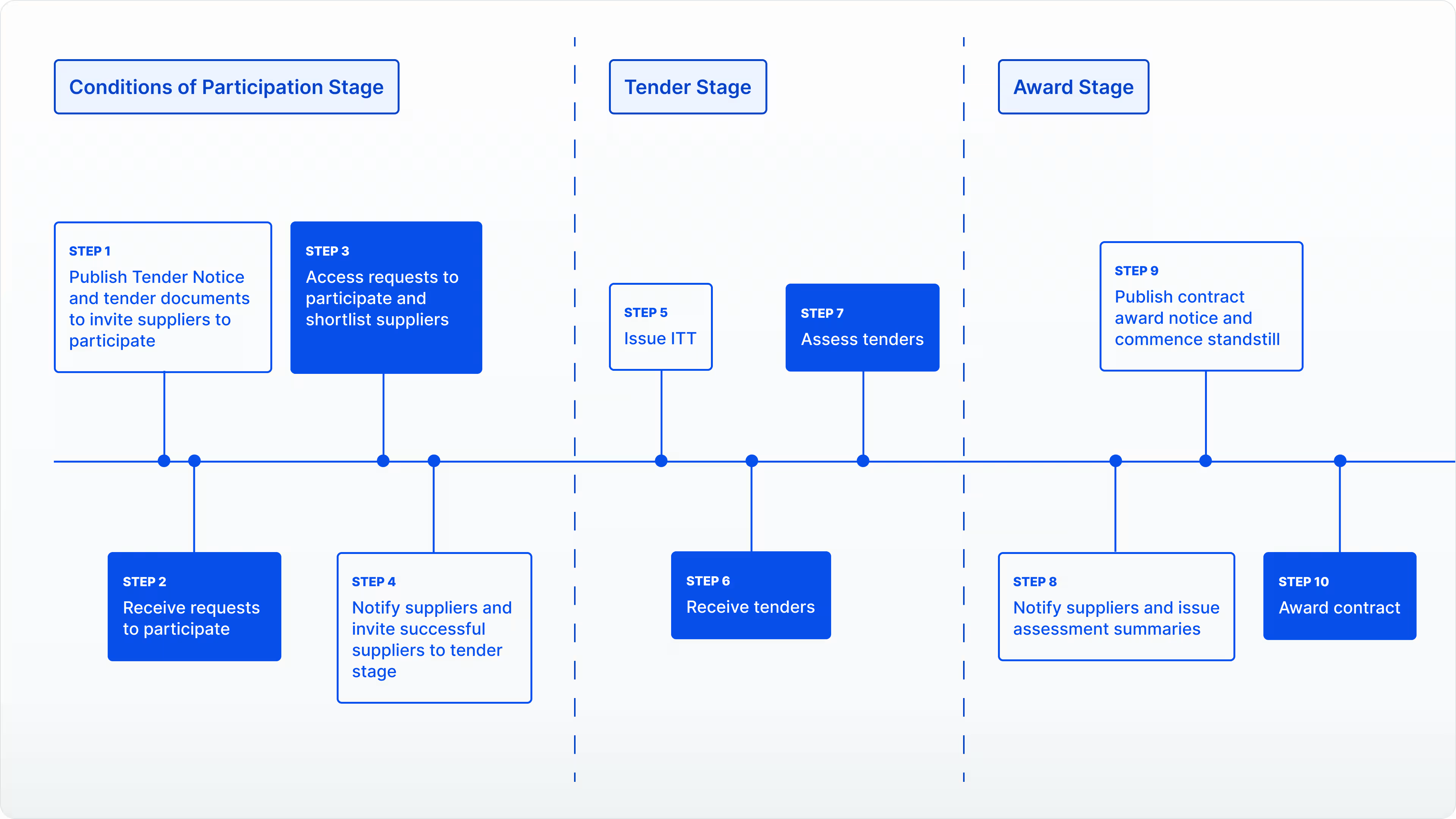
Here are two examples of how a competitive flexible procedure example. In the first example a participation stage prior to the tender stage:
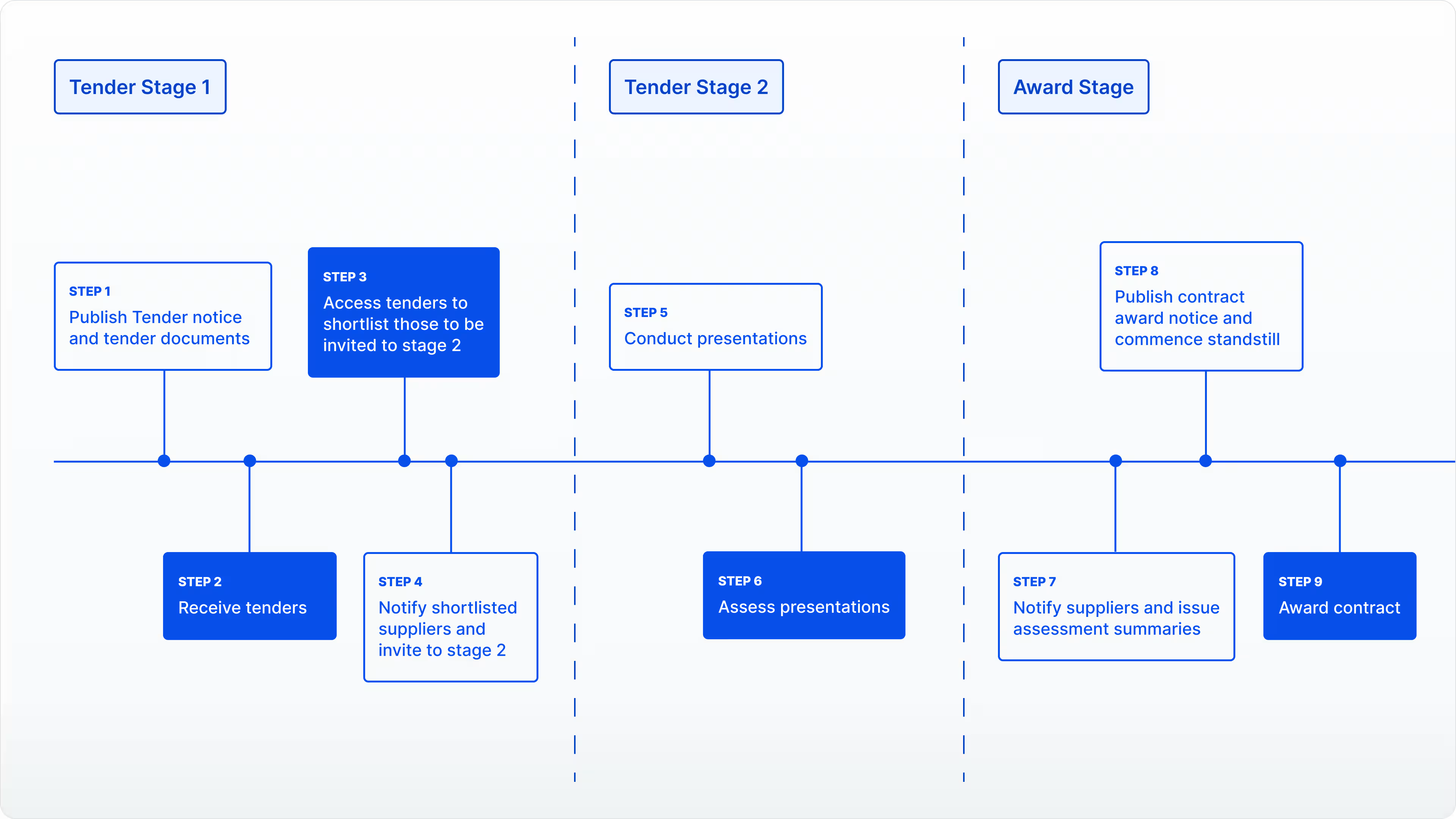
In this second screenshot, a one stage tender process is swapped for a two stage tender process.
Typical Stage Structure
While the Procurement Act does not prescribe a fixed structure, many buyers use a practical and straightforward four-stage model when running a competitive flexible procedure:
- Expression of Interest / Selection – Suppliers share basic information so the buyer can understand the market and confirm eligibility.
- Shortlisting / Invitation to Participate – A smaller group is invited to the next stage based on capability, experience, or initial responses.
- Dialogue or Negotiation – Buyers and suppliers talk through requirements, explore solutions, test ideas, or discuss risks.
- Final Tenders and Evaluation – Suppliers submit their final bids, which are evaluated using published criteria.
Buyers can add, remove, or combine stages as needed. For example, a technology project might include a prototype stage, while a care service redesign may include interviews or presentations.
The Act also sets common minimum timeframes for notices. Depending on the notice type and urgency, buyers may use either a 25-day or a 10-day response period. These timelines help keep the process fair while allowing flexibility.
Supplementary Processes Under the Competitive Flexible Procedure
One of the most significant advantages of the competitive flexible procedure is the freedom to add extra steps that help buyers better understand solutions and help suppliers craft stronger proposals. These steps are known as supplementary processes. They are optional, and buyers can use them at any point as long as they are clearly described in the tender notice and applied fairly to everyone.
Common supplementary processes include:
Dialogue: Used when buyers need to explore ideas with suppliers. It helps clarify needs or refine technical requirements before final tenders.
Negotiation: A structured conversation aimed at improving the offer. It is not about driving prices down, but about building a better, more workable solution.
Supplier Presentations: Useful for checking whether what suppliers propose is realistic and deliverable.
Product Demonstrations or Prototypes: Ideal for tech, equipment, or software procurements where buyers need to test functionality before moving forward.
Site Visits: Helps buyers confirm that suppliers have the infrastructure, processes, or systems required.
Intermediate Assessments: A way to reduce the number of suppliers based on the quality of their current proposals. This keeps the competition manageable and helps all sides focus on the most promising solutions.
Clarification Rounds: A simple way for buyers or suppliers to ask questions and resolve unclear areas in the tender documents.
These tools give buyers more flexibility and give suppliers a clearer idea of what is expected. For complex and innovative projects, they can make the competition more practical and more productive for everyone.
Timeline Expectations Under the Competitive Flexible Procedure
The competitive flexible procedure does not follow a single fixed timeline. Instead, the process can be adjusted based on the number of stages the buyer designs and the complexity of the requirement. Even with this flexibility, the Procurement Act sets a few minimum time limits that every buyer must follow.
Participation Stage (if used):
- 25 days minimum
- Can be reduced to 10 days in urgent situations
Tendering Periods:
These apply to each stage where suppliers submit a tender.
- 25 days if all tender documents are available at the start
- 30 days if some documents are not ready until later
- 10 days if a qualifying planned procurement notice was issued, or if there is a genuine urgency
- For non-central authorities: 10 days when only pre-selected suppliers are invited
Buyers can shorten timelines in some cases, but only when it remains fair and proportionate for suppliers. The Act also allows the tendering period to be shorter if suppliers are only updating a previous tender (e.g., after negotiation), rather than preparing a brand-new one.
As the competition progresses, buyers may release additional documents, refine criteria (if stated in advance), or add stages. When this happens, they must update all suppliers simultaneously and adjust deadlines as needed.
A clear, predictable timeline helps suppliers plan their workload and supports more competitive bids. This is why the Act emphasises fairness, transparency, and consistency throughout every stage.
Can I Use the Competitive Flexible Procedure Under a Framework?
The competitive flexible procedure cannot be used inside an existing framework agreement. Framework call-offs follow their own rules, and buyers must use the mechanisms already built into those frameworks.
However, the competitive flexible procedure can be used to establish a new framework if a buyer wants more flexibility when designing the initial competition. In that case, the CFP is used at the start to run the procurement that creates the framework itself. Once the framework is in place, future call-offs must follow the call-off rules set out in that framework, not the CFP rules.
This distinction matters because frameworks operate as closed systems once awarded. They cannot adopt new processes that were not defined during their creation.
So in simple terms:
- To create a framework? Yes, you can use the CFP.
- To run a call-off inside a framework? No, you must follow the framework’s call-off process.
This keeps the framework fair, compliant, and predictable for all suppliers who originally won a place.
How to Design a Competitive Flexible Procedure
Designing a competitive, flexible procedure requires thoughtful planning. Since buyers have the freedom to build the structure themselves, the best results come from a clear, simple, and well-documented process. Below is a practical step-by-step approach buyers can follow:
- Define goals and outcomes
Start by identifying what the organisation wants to achieve. Clear outcomes make it easier to choose the right stages and evaluation methods. - Choose the stages wisely
Add only the stages the project truly needs. Keep the process proportionate so suppliers are not overburdened. - Set transparent evaluation criteria early
Buyers must publish the criteria upfront. This builds trust and reduces the risk of challenge. - Publish a clear tender notice
The notice should explain the stages, rules, timelines, and how the competition will run from start to finish. - Engage suppliers early
Use early market engagement or pre-market notices to shape the requirement. This helps suppliers prepare and improves overall competition. - Keep strong audit trails
Record decisions, meeting notes, clarifications, and changes. This helps show fairness and compliance. - Follow the Act’s notice rules
Move through pre-market → tender → award notices correctly, as outlined in the Act.
Use trusted templates
Guidance from GOV.UK and toolkits such as DLA Piper’s can help structure the process correctly.
Risks and Compliance Considerations
Even though the competitive flexible procedure offers freedom, buyers must still manage risks carefully. Too much flexibility can create problems if the process is not well planned or documented. The goal is to design a competition that is fair, simple, and transparent for all suppliers.
One common risk is creating too many stages. While the Act allows any number, adding extra phases can make the process slow, costly, and burdensome for suppliers. Another risk is unclear evaluation criteria, which can lead to confusion or even legal challenges. If suppliers do not clearly understand how their bids will be assessed, the competition can become unfair.
Weak procurement tender documentation is also a problem. Without proper records, buyers may struggle to justify decisions during audits. Unequal communication, for example, giving extra information to one supplier but not another, creates serious fairness issues. And finally, some buyers over-engineer the process, adding more steps than the project needs, which wastes time and resources.
How to avoid these risks
- Keep the structure proportionate and straightforward
- Document decisions, notes, and clarifications
- Share updates equally with all suppliers
- Follow the Act’s rules on transparency and equal treatment
- Review each stage to make sure it is genuinely needed
When managed well, the competitive flexible procedure stays flexible without losing fairness or compliance.
Example Scenarios
Below are three short examples that show how a competitive, flexible procedure can work in real public-sector projects. Each one illustrates how buyers can shape the process to match their needs.
1. Technology Solution (IT Project)
A council needs a modern case-management system but is unsure which approach will work best. The buyer runs a two-stage competitive flexible procedure. Stage one includes short dialogue sessions with suppliers. Stage two asks for a working prototype and final tenders. This helps the buyer compare real solutions instead of just written proposals.
2. Infrastructure Project
A large transport project requires cost modelling, risk analysis, and design refinement. The buyer creates a multi-phase procedure with negotiation stages. Suppliers first submit outline designs, then take part in discussions to refine cost and risk positions. Final tenders are submitted after negotiation. This structure supports clarity, collaboration, and realistic pricing.
3. Health or Social Care Commissioning
A local authority redesigns its community support service. The buyer uses an iterative evaluation process, in which suppliers provide service models and receive structured feedback. Requirements are adjusted based on what works best for residents. This leads to stronger, more tailored final tenders.
For more details on how these routes compare with the framework options under the Act, see our guide to changes to frameworks under the Procurement Act.
Frequently Asked Questions
Below are simple, clear answers to common questions about the competitive flexible procedure.
1. How does a competitive flexible procedure work?
It is a flexible competition under the Procurement Act 2023 that lets buyers design their own stages, rules, and timelines.
2. How many stages are permitted in a competitive flexible procedure?
There is no fixed limit. Buyers may include as many stages as the project needs, as long as the structure is fair and transparent.
3. What documentation do buyers need to publish?
Buyers must publish tender notices, stage structures, evaluation criteria, timelines, and award justifications. Clear documentation keeps the process fair and compliant.
4. Can buyers negotiate with suppliers?
Yes. Buyers can use dialogue, negotiation, testing, or prototypes as long as all suppliers are treated equally.
5. Is the CFP better for complex contracts?
Yes. The competitive flexible procedure is ideal for projects that require discussion, refinement, or innovation. Simple projects may still use the Open Procedure.
Conclusion and Next Steps
The competitive flexible procedure gives buyers a powerful way to run competitions that match the real needs of their projects. It replaces older, rigid processes with a system built on flexibility and clear rules. When well-designed, the CFP supports strong competition, greater innovation from suppliers, and fair outcomes for everyone involved.
For buyers, the key is to keep the process proportionate, transparent, and easy to follow. For suppliers, understanding how each stage works can help you ensure better bid management and take part earlier in the journey.
If you want to explore related topics, you can read more about Understanding the Procurement Act 2023, how to choose the right procurement procedure, public sector procurement thresholds, and how organisations are adapting to the Procurement Act.
When used correctly, the competitive flexible procedure helps government and suppliers work together more effectively, delivering better services and better value for the public.


Want a custom report?