

What is procurement reform in government contracting?

Procurement reform is the process of changing procurement laws, policies, and procedures to improve how organisations buy goods, services, and works. In public sector procurement, new legislation and updated regulations often aim to simplify rules, increase transparency, strengthen competition, and improve value for money and integrity. For suppliers, procurement reform can change how opportunities are advertised, which procedures buyers use, what data must be shared, and which requirements apply at selection and contract award.
Governments have a dual obligation when spending public money: get it right, and don't take forever doing it. Procurement regulation exists to balance those two pressures, ensuring public spending is fair, transparent, and competitive without burying buyers and suppliers in process for process's sake.
When that balance tips too far in one direction, reform follows. The UK's Procurement Act 2023 is the latest example, representing the most significant overhaul of public sector buying rules in a decade. For suppliers selling to the government, these changes affect everything from when contracts become visible to how bids are evaluated.
A procurement reform example
Reform goes further. It rewrites the legal structure itself, changing how contracts are advertised, how suppliers are evaluated, and how awards are made.
In the UK, the Procurement Act 2023 is the most significant procurement reform since the UK left the EU. The Act replaces the Public Contracts Regulations 2015 with streamlined procedures, stronger transparency requirements, and new rules designed to open up competition. It governs over £400 billion in annual public sector spending across England, Wales, and Northern Ireland.
That £400 billion translates into thousands of contract awards every month. The chart below shows the volume of government awards over time, and the scale of the market that procurement reforms affect.
Why governments pursue procurement reform
Procurement regulation always involves trade-offs. Rigorous oversight protects public money but adds process. Simplified rules speed things up, but can reduce accountability. Over time, the balance shifts as markets change, policy priorities evolve, and practical experience reveals what works and what creates friction without adding value.
In the UK, the trigger for the current reform was Brexit. The Public Contracts Regulations 2015 (PCR 2015) were derived from EU procurement directives designed to ensure fair competition across a 28-member single market.
Those directives prioritised cross-border consistency, which made sense for a continental trading bloc but imposed structural rigidity that didn't always serve domestic policy goals.
Leaving the EU created both the obligation and the opportunity to replace inherited rules with a framework tailored to UK priorities.
The result was the Procurement Act 2023. But Brexit was the catalyst, not the sole cause. The underlying problems with the old system had been building for years.
Reducing complexity and administrative burden
The PCR 2015 required contracting authorities to choose from several distinct procedures: open, restricted, competitive procedure with negotiation, competitive dialogue, and innovation partnership. Each carried specific conditions and timelines, and selecting the wrong one could expose a procurement to legal challenge.
In practice, this meant procurement teams defaulted to familiar procedures rather than selecting the approach best suited to their requirements. Suppliers, in turn, faced inconsistent processes across different buyers, making it difficult to build efficient response workflows. The system is optimised for legal compliance over practical outcomes.
Improving SME access to public sector contracts
Small and medium-sized enterprises historically faced disproportionate barriers to public sector work. Lengthy pre-qualification questionnaires, complex evaluation criteria, and limited visibility into upcoming contracts all favoured larger, established suppliers with dedicated bid teams and existing buyer relationships.
The government has a stated policy goal of increasing SME participation in public procurement. Reform aims to address the structural imbalance through simplified qualification requirements, earlier market engagement, and better pipeline visibility so smaller suppliers can plan resource allocation around upcoming opportunities.
The gap between policy ambition and reality remains significant. Despite years of stated government targets, the SME share of direct spend is still low.
Increasing transparency in government spending
Under the previous system, transparency requirements varied across contract types and values. Suppliers often had limited visibility into what buyers had purchased before, who held incumbent contracts, and when those contracts were due for renewal. This information asymmetry benefited incumbents and made it harder for new entrants to compete effectively.
Enhanced transparency serves two purposes. It strengthens public accountability over how taxpayer money is spent, and it improves supplier market intelligence. When contract data flows more freely, suppliers can make better-informed decisions about which open tenders to pursue and where to invest in relationship building.
Since the Act went live, the volume of pre-tender notices published through the new transparency regime has been climbing month on month, giving suppliers earlier sight of upcoming opportunities than ever before.
How procurement reform changes the bidding process
The practical impact of reform touches every stage of supplier engagement with public sector buyers. Under the Procurement Act 2023, the key shifts are:
Earlier market engagement: Buyers are encouraged to engage suppliers before formal tender publication through pipeline notices and preliminary market engagement activities. Suppliers who participate gain insight into buyer priorities before the formal process begins.
Simplified procedures: The Act replaces multiple rigid procedure categories with greater flexibility for buyers to design processes suited to their requirements. This means suppliers encounter more varied procurement processes and need to read each set of tender documents carefully rather than assuming a standard format.
Enhanced transparency: More information is published at each stage of the procurement lifecycle, from planned procurement notices through to contract performance reporting. Suppliers have better visibility into what is coming, what has been awarded, and how contracts are performing.
Outcome-based evaluation: The shift from Most Economically Advantageous Tender (MEAT) to Most Advantageous Tender (MAT) reflects a broader move away from lowest price as the default. Social value, environmental commitments, and delivery quality carry more explicit weight in evaluation criteria.
The shift from cost to quality is being tracked. Under the Act, contracts over £5 million must include mandatory KPIs. Early data shows how suppliers are performing against the three most common measures.
Suppliers who engage early gain an advantage. By the time a tender is formally published, those who participated in market engagement have already shaped their understanding of what the buyer needs and how to position their offer.
What the Procurement Act 2023 changes
The Act came into force in October 2024 and applies to procurements initiated after that date. It introduces new procedure types, including the Competitive Flexible Procedure, a new Central Digital Platform to replace Find a Tender and Contracts Finder, reformed framework agreement rules, and Dynamic Markets as a replacement for Dynamic Purchasing Systems.
For a full breakdown of the Act's provisions and how they affect suppliers, see our guide to the Procurement Act 2023.
Procurement reform in practice
Consider how procurement reform plays out in a realistic scenario. An NHS trust plans to procure a patient records management system. Under the reformed process, the trust publishes a pipeline notice 12 months before the intended contract start date.
Suppliers monitoring pipeline notices identify the opportunity early. Several request meetings with the trust's digital team to understand requirements and demonstrate relevant capabilities. This market engagement phase shapes the trust's understanding of available solutions and gives participating suppliers a clearer picture of what the eventual tender will prioritise.
Six months later, the trust publishes a tender using the competitive flexible procedure. The process includes an initial capability assessment, followed by detailed proposals and demonstrations from three shortlisted suppliers. Evaluation criteria weight social value at 15%, including commitments to local apprenticeships and carbon reduction.
The winning supplier had engaged during the market engagement phase, understood the trust's priorities, and tailored their proposal accordingly. Suppliers who first learned of the opportunity at tender publication faced a significant disadvantage.
Where to find public sector procurement news and guidance
Staying current on procurement reform implementation requires monitoring several official sources.
The Cabinet Office publishes Procurement Policy Notes (PPNs) that provide guidance on implementing the Act.
Notable recent PPNs include PPN 001, which requires central government departments to set and publish targets for direct SME and VCSE spending, and PPN 002, which mandates a minimum 10% social value weighting in evaluations for in-scope procurements from October 2025.
The National Procurement Policy Statement (NPPS), published alongside the Act's go-live in February 2025, sets out the government's strategic priorities that contracting authorities must have regard to when procuring.
Knowledge Drops, the government's procurement training materials, offer practical guidance for both buyers and suppliers navigating the reformed system.
Crown Commercial Service framework information
Crown Commercial Service (CCS) manages central government frameworks covering common categories including technology, professional services, and facilities management. Framework updates, call-off guidance, and supplier lists are published on the CCS website.
Framework rules have changed under the Act, so suppliers on existing frameworks benefit from reviewing updated call-off procedures.
How suppliers can take advantage of procurement reform
The reforms outlined in this guide create real, structural advantages for suppliers who adapt their approach. Pipeline notices mean contracts are visible earlier. The competitive flexible procedure rewards suppliers who engage before the formal tender. Social value weighting opens new ways to differentiate beyond price. And for SMEs specifically, PPN 001's spending targets and the Act's duty on buyers to consider SME participation mean the playing field is shifting in your favour.
But more transparency also means more data, and that data is scattered across multiple portals, notice types, and buyer organisations. The suppliers who benefit most from reform are the ones who can act on early signals: identifying pipeline notices, tracking buyer purchasing history, spotting contract expiries before renewal, and understanding who the incumbent is before deciding whether to compete.
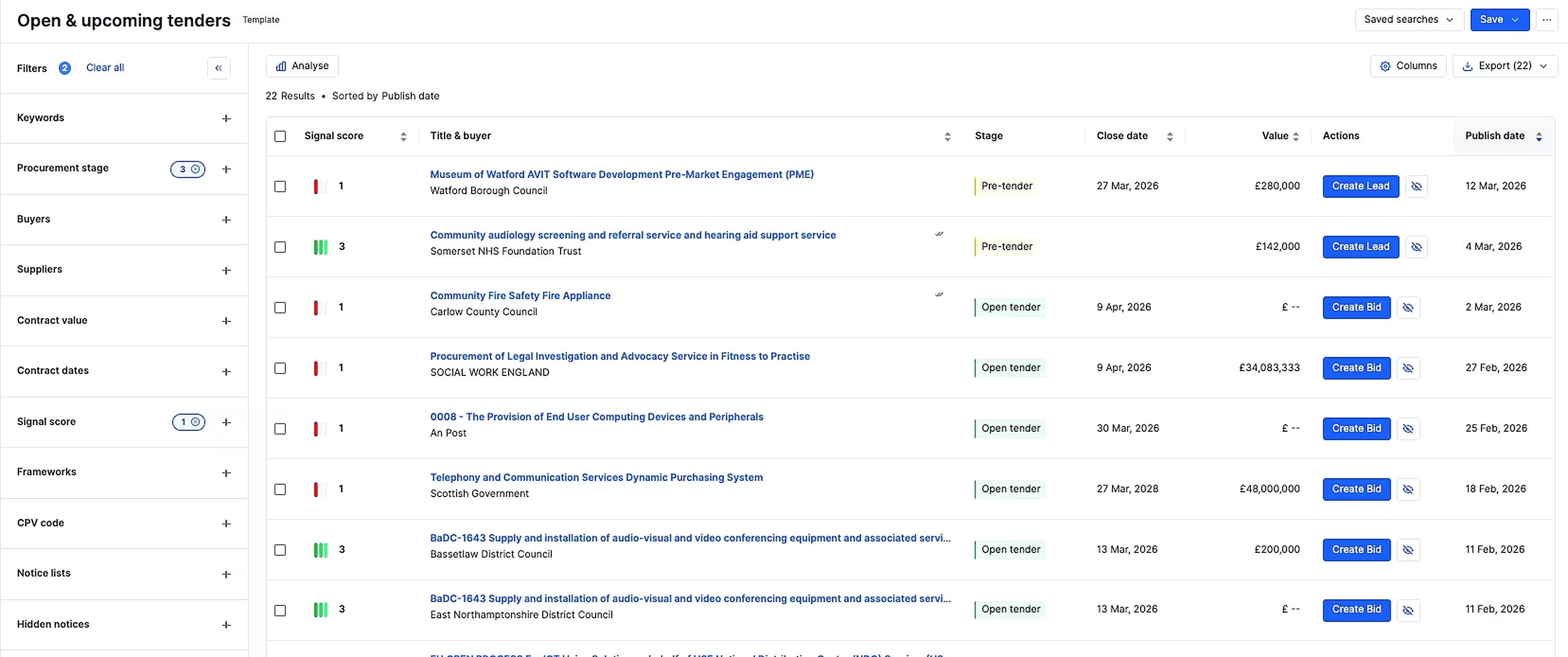
Stotles brings all of this into a single workspace. Open tender tracking aggregates notices from Find a Tender, Contracts Finder, and a 100+ other portals. In the below screenshot, you can see dozens of aggregated tenders pulled into the Stotles platform.
Buyer intelligence surfaces purchasing history so you can see what specific organisations have bought before.
Contract expiry data identifies upcoming renewals 6-18 months ahead, enabling the early engagement that the reformed system rewards. Suppliers can build a live pipeline of expiring contracts matched to their sector and capabilities, tracking renewal timelines alongside buyer details and estimated values.
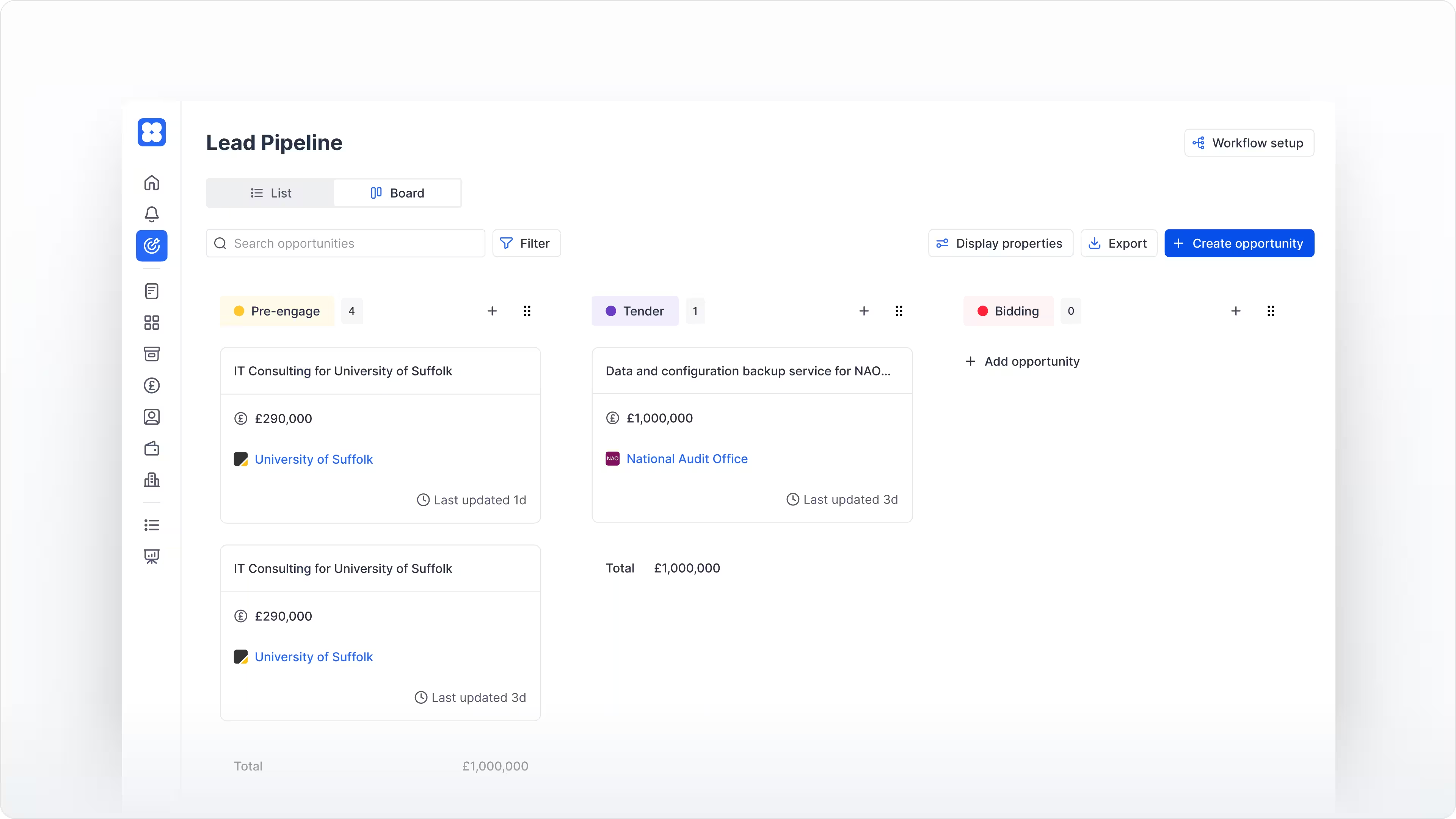
Incumbent supplier data shows who currently holds contracts, helping you make sharper qualify-or-disqualify decisions before investing in a bid. Stotles' trend analysis ranks suppliers by award count and contract value within any market or buyer, so you can see exactly who you're competing against and how entrenched they are before you commit resource to a pursuit.
.avif)


Want a custom report?