

PCR 2015 Procurement Thresholds: Values, Rules, and Requirements

PCR 2015 thresholds were the financial values in the UK Public Contracts Regulations 2015 that determine when a public sector contract must follow the full “above-threshold” procurement rules. Contracting authorities estimate the total contract value (usually inclusive of VAT) and compare it to the relevant threshold for works, supplies/services, or light-touch services. Thresholds are reviewed and updated periodically (for example, from 1 January 2024), and crossing them changes the notice, procedure, and timescale requirements that suppliers will see.
PCR 2015 thresholds were established under The Public Contracts Regulations 2015 (SI 2015/102), under the World Trade Organization's Government Procurement Agreement (GPA).
They existed to ensure that contracts above a certain value were subject to open competition and transparency: preventing public money from being spent through opaque or preferential award processes.
The threshold that applied depended on both the contract type and the buying organisation.
When a contract's estimated value met or exceeded the relevant threshold, contracting authorities faced mandatory requirements: advertising on the Find a Tender Service (FTS), following prescribed procedures, and observing standstill periods before signing.
Below threshold, authorities retained more discretion, though transparency obligations still applied above certain values.
These values are now part of the legacy regime, governing only procurements commenced before 24 February 2025, after which the Procurement Act 2023 took effect for all new procurements.
What were the final PCR 2015 thresholds figures?
The last thresholds set under PCR 2015 came into effect on 1 January 2024, established by Procurement Policy Note (PPN) 11/23 and inclusive of VAT. They were £139,688 for central government goods and services, £214,904 for sub-central authorities, and £5,372,609 for works contracts. These values applied to any procurement commenced before 24 February 2025.
The threshold that applied depended on two factors: the type of contract and the type of contracting authority making the purchase.
Supplies and services
Supplies contracts covered the purchase or hire of products; services covered everything from IT support to consultancy. Central government faced a lower threshold than sub-central authorities, reflecting stricter GPA obligations on central government purchasing. Mixed contracts followed specific rules based on the main subject matter.
Works contracts
Works contracts covered construction, civil engineering, and building projects, with a single threshold applying regardless of buyer type. Many significant building projects still fell below it and followed more flexible below-threshold procedures.
Light-Touch Regime services
The LTR applied to specific categories listed in Schedule 3 of PCR 2015: health, social care, education, and legal services among them. Above the threshold, authorities could design their own procedure provided it met transparency requirements and the principles of equal treatment and non-discrimination.
Central government vs sub-central authorities
Central government bodies were listed in Schedule 1 of PCR 2015. Sub-central authorities included local councils, police forces, fire authorities, and universities. The higher sub-central threshold meant more contracts could be procured without triggering the full PCR 2015 regime.
Central government accounts for 46.61% of all published contracts by volume, with local government at 18.75% and healthcare at 15.25%. (Source: Stotles, based on contracts awarded 1 January 2022–14 November 2025)
How was contract value calculated under PCR 2015?
Contracting authorities estimated total contract value at the point procurement began, determining which threshold applied and which rules governed the process.
The estimated value included all payments across the full contract duration, not just the first year or initial phase. Where contracts included optional extension periods, the calculation assumed those options would be exercised.
Getting the calculation wrong mattered. If actual spend exceeded the threshold, unsuccessful bidders could challenge the contract award on the grounds that the authority had failed to follow required procedures.
One rule worth noting: Regulation 6(9) prevented authorities from artificially splitting contracts to stay below thresholds. Requirements forming a functional whole had to be aggregated, with the total value determining which threshold applied.
Thresholds were calculated net of VAT: worth noting since guidance documents often quoted VAT-inclusive figures. The estimated value excluded VAT regardless of whether the contracting authority could recover it.
How PCR 2015 thresholds changed over time (2015–2024)
Under PCR 2015, thresholds were reviewed every two years to reflect exchange-rate movements and the UK's obligations under the WTO Government Procurement Agreement. They shifted six times between 2015 and 2024, with the final values taking effect on 1 January 2024.
Central Government Supply: Goods and services bought by central government departments (e.g. MoD, HMRC). Lowest threshold due to stricter GPA obligations.
Sub-central Authorities: Goods and services bought by local councils, NHS trusts, police, universities, etc. Higher threshold than central government.
Light-Touch Regime: Health, social care, education, and other Schedule 3 services. Much higher threshold with lighter procedural requirements.
Note: Light-touch regime thresholds before 2016 were defined at EU level (€750,000 under Directive 2014/24/EU). A UK-specific GBP value was not published for the short period between February and December 2015. From 2022 onwards, figures are inclusive of VAT following a change in methodology under PPN 10/21. Not included in this chart are thresholds for works which are set at £5,372,609 as of January 2024.
Where to find official threshold information
Procurement Policy Notes (PPNs) are the mechanism through which threshold updates are communicated and published on GOV.UK. PPN 11/23 set the final PCR 2015 values effective from 1 January 2024. For procurements commenced on or after 24 February 2025, the Procurement Act 2023 applies, with updated thresholds set out in PPN 023, effective from 1 January 2026.
Above-threshold contract notices are published on the Find a Tender Service (FTS). Below-threshold opportunities from central government (above £12,000) and sub-central authorities (above £30,000) are published on Contracts Finder.
Monthly FTS publications peaked at approximately 2,200 in February 2025, then fell sharply to 200–350 in the months that followed — the direct result of the Procurement Act replacing PCR 2015 as the governing regime from 24 February 2025. (Source: Stotles)
Never miss an above-threshold opportunity
Every public sector contract that crosses the threshold must be published on a tender portal. The problem is there are hundreds of them: FTS, Contracts Finder, and a sprawling network of framework portals, buyer-specific platforms, and regional procurement hubs.
Monitoring them all manually is practically impossible, but the public sector opportunity is massive.
Below, you can see a Stotles graph with the number of contract awards between 2017-2025:
Stotles aggregates every above-threshold tender published across 110+ major UK portals into a single searchable feed. No more jumping between platforms, no more missed opportunities because a notice appeared on a portal you weren't watching.
.avif)
Set up your criteria once and Stotles surfaces relevant tenders as they're published, whether they're central government contracts just above £139,688 or major works contracts running into the millions.
Filter by buyer, contract type, CPV code, or keyword to find the opportunities that actually match your market.
In the below table, you can see how Stotles filters results on the notice page.
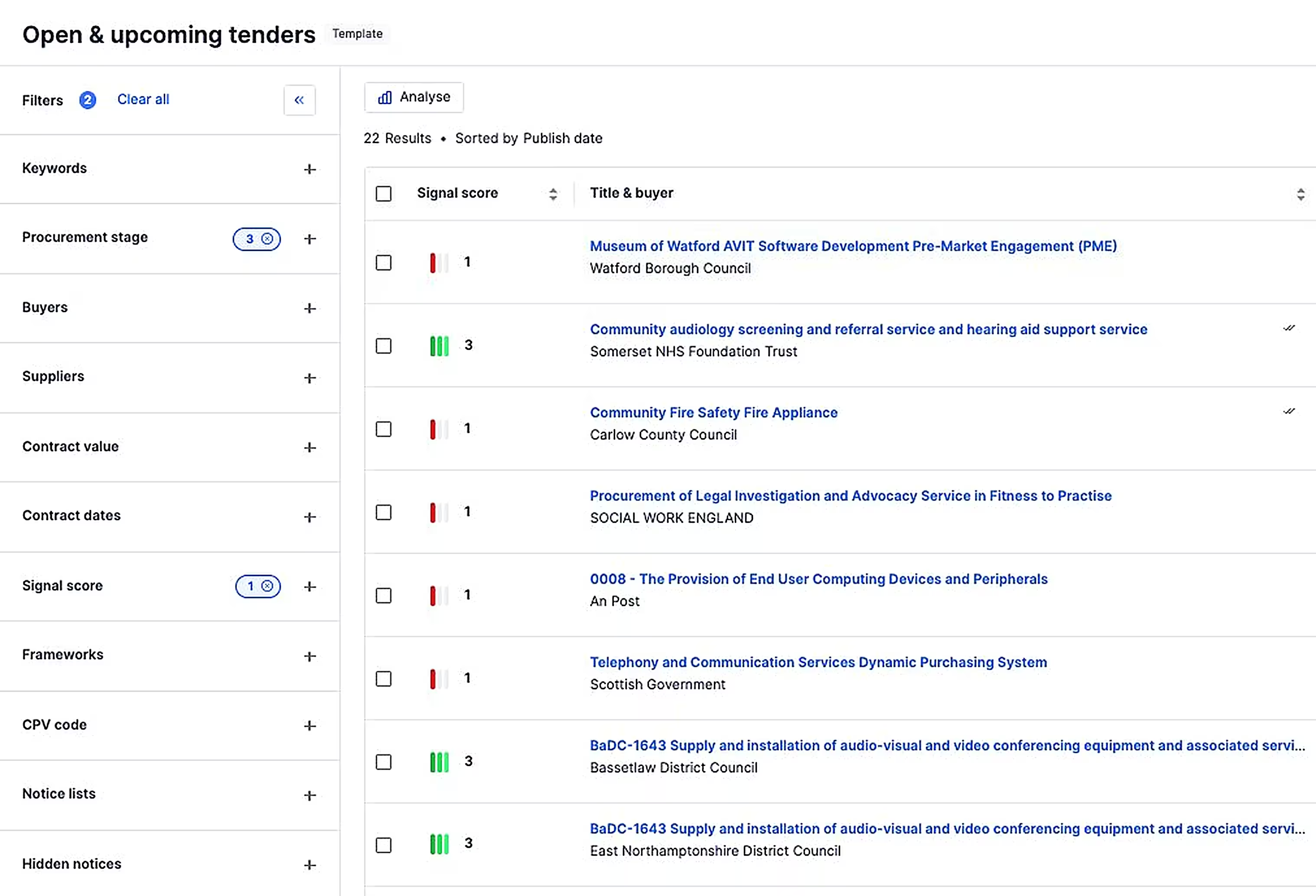
Beyond the tender itself, Stotles shows you the buyer behind it: their spending history, incumbent suppliers, and upcoming contract renewals. That context is what turns a tender alert into a qualified opportunity. In the below screenshot, you can see a view of the Ministry of Defense buyer profile.

Stotles is used by hundreds of suppliers across the UK to find, qualify, and win public sector contracts. To see every contract over threshold, set up a free profile.


Want a custom report?