Sopra Steria is suing the Department for Work and Pensions after losing the Synergy Business Process Services contract to Capita. The contract was advertised at £958.7m over up to 10 years, and Capita's winning bid was around £370m. Synergy aims to move DWP, MoJ, Defra and the Home Office onto one cloud finance and HR system for about 250,000 civil servants.
The allegations: DWP failed to treat Capita's bid as "abnormally low", issued a clarification after the evaluation end date, and renegotiated with Capita after naming it preferred bidder.
DWP's position: it says it ran a robust procurement focused on continuity and value for money.
Wider programme: Oracle and IBM hold a linked £710.9m ERP and integration contract, and Sopra Steria's SSCL is the incumbent shared services provider.
For suppliers, the lessons are to treat large programmes as accounts rather than single tenders, target work around the platform, prepare a "how we deliver at this price" case and document change control.
Quick answers
Sopra Steria is suing the UK Government after losing the Synergy Business Process Services contract, advertised at £958.7m over up to 10 years, to Capita. Capita's winning bid came in at around £370m. The claim argues the Department for Work and Pensions (DWP) mishandled an “abnormally low” bid assessment and made post-selection changes. If you sell into central government, treat this as a reminder to build your position months before the tender goes live: map the supplier chain, pressure-test pricing, and pre-build delivery evidence, then search UK government tenders to spot the next one early.
What happened with the Sopra Steria and DWP Synergy contract?
DWP leads Synergy, a programme to put DWP, MoJ, Defra and the Home Office on the same cloud finance and HR system, with shared processes. The aim is to simplify how these departments run payroll and back-office work for around 250,000 civil servants, and cut the cost and complexity of running different systems in parallel.
Synergy has three linked contracts:
Business Process Services (BPS): the competition was published September 2024, with an estimated value of £958.7m (ex VAT) over up to 120 months (84 months initial term plus up to 36 months extension).
Incumbent shared services: Sopra Steria owns SSCL, which runs the Oracle EBS-based Single Operating Platform for three of the departments referenced in the reporting.
The dispute centres on the BPS award to Capita. The Register reports Sopra Steria’s claim argues the procurement failed to identify Capita’s bid as “abnormally low”, and that DWP renegotiated with Capita after naming it the preferred bidder, excluding Sopra Steria.
What Sopra Steria alleges went wrong
Based on reporting from The Register on the court filings:
Abnormally low tender risk: Capita's bid came in at around £370m against an estimated contract value of £958.7m Sopra Steria claims DWP’s assessment showed Capita’s implementation charges were “assessed as appearing abnormally low” in July 2025. It also alleges DWP issued a clarification request in August 2025 after the evaluation end date.
Changes made after the preferred bidder was chosen: Sopra Steria alleges DWP renegotiated Capita’s tender after selection to align with a change request affecting the Oracle and IBM project, including consolidated go-live dates.
Deliverability concerns tied to platform experience: The reporting summarises Sopra Steria’s claim that Capita had limited examples of running BPS services on an Oracle SaaS ERP system.
DWP’s public position in the same reporting: it says it ran a robust procurement process and prioritises continuity of service and value for money.
Why this matters to suppliers
This case lands in the middle of a much bigger shared services development across the UK public sector. The government has already scrutinised shared services delivery, and DWP’s role as lead for the Synergy programme sits inside that wider reform push.
Suppliers should read this as a signal confirming what is already assumed. Buyers will continue to push large, multi-department platforms. We are seeing more and more large-value projects being set to consolidate legacy infrastructure, improving efficiency and cutting cross-departmental costs. Those programmes create big, complex procurements where evaluation detail and change control matter.
For suppliers monitoring the legal and compliance narrative, two areas drive disputes like this in central government.
Very low pricing: When a bid comes in far below expectations, the buyer usually needs to check whether it can be delivered safely at that price. If you are bidding aggressively, assume the buyer will ask you to explain your costs and your delivery plan.
Changes after a preferred bidder is chosen: If requirements or commercial terms shift late in the process, losing bidders often argue the buyer should have run the tender differently, or run it again. For suppliers, the practical point is simple: track changes early and document your assumptions so you can defend them later.
Note: the legal framework depends on when the procurement started. For older competitions, the Public Contracts Regulations 2015 will be what this is measured on, however, following February 2025, the 2023 Procurement Act will apply.
What suppliers should take from this
Treat these big programmes like accounts, not tenders: In this case, Synergy is a multi-year delivery chain, not a single contract. If you only engage at the tender stage, you’re reacting to decisions made months earlier. Pre-engagement is a recommended strategy for all suppliers pursuing contracts of all sizes.
What can suppliers do? Create a one-page map of departments, outcomes, timelines, and the supplier chain that will ultimately make up the core delivery.
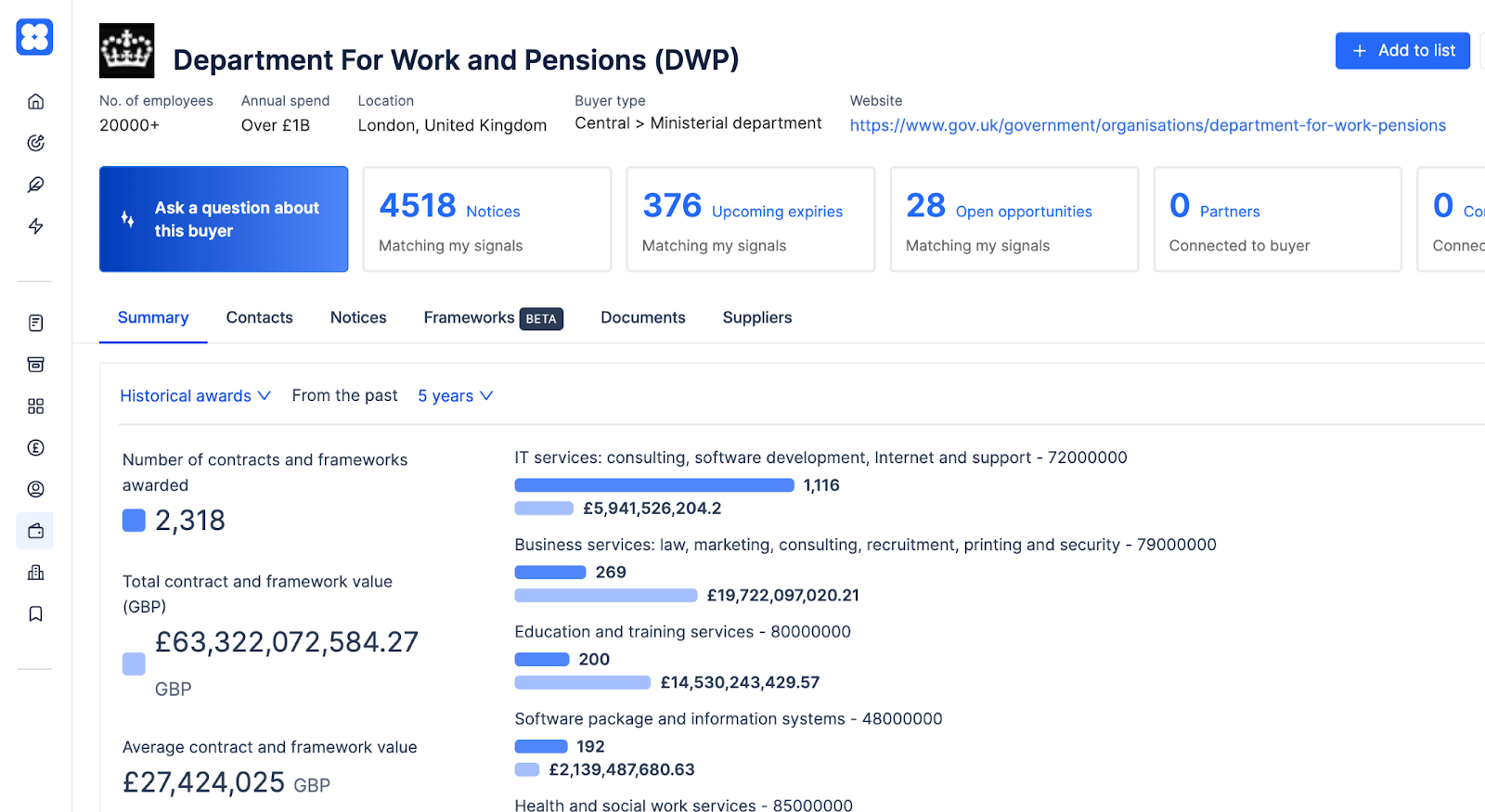
Follow the money and build pipeline around the strategic partners to central government projects: Since 2024, Stotles data shows IBM and Oracle dominate on high-value, core infrastructure projects with DWP. The best work often is around the platform, not in the headline BPS tender.
What can suppliers do? Use past awards to spot who’s embedded, then target adjacent workstreams: migration, testing, data, security, training, change, run support, continuity.
Make your bid easy to defend: Challenges can come from very low pricing and late-stage changes. You can’t control the buyer, but you can control how robust your offer is.
What can suppliers do? If price is where you can win, it’s recommended to set your “how we deliver at this price” narrative during bid build. Make change control explicit: who decides, what changes, and how cost stays controlled.
Stay close after selection: Delays and shifts create new work, even when the main contract stalls.
What can suppliers do? Monitor milestones and changes, and keep your account plan live so you can move fast if timelines slip or the competition resets.
Frequently asked questions
Who is Sopra Steria? Sopra Steria is a European IT and business process services company with a significant presence in UK public sector delivery. Through its subsidiary SSCL (Shared Services Connected Ltd), it runs back-office services including payroll, HR, and finance for several central government departments.
What is the DWP Synergy programme? Synergy is a DWP-led programme to move DWP, MoJ, Defra, and the Home Office onto a single cloud-based finance and HR system. It covers around 250,000 civil servants and is structured across three linked contracts: business process services, ERP technology, and incumbent shared services.
What is an “abnormally low tender” in UK procurement? Under PCR 2015, if a tender appears abnormally low, the authority must require the bidder to explain the price or costs.
Key takeaways from the Sopra Steria DWP case
Sopra Steria’s claim alleges that the DWP mishandled an “abnormally low” bid assessment and then made post-selection changes, with a disputed clarification timeline in 2025.
Synergy sits on a large commercial platform: BPS (estimated £958.7m) plus Oracle and IBM’s ERP and integration contract (£710.9m, concluded 30 Aug 2024).
Suppliers reduce risk by tracking programmes early, building evidence of deliverability on the target platform, and treating price realism and change control as core to the bid strategy.
EXPERT VOICE
EXPERT VOICE
Synergy shows how much is decided before a tender goes live. Spot the next one early by searching UK government tenders with Stotles.